

Sindh is one of the oldest regions of South Asia, and its places to visit carry that age in stone, brick, tile and song. In one province a traveller can stand in a 4,500 year old city, walk through a necropolis of a million tombs, climb the walls of a fort that runs for miles across a mountain ridge, and end the day listening to Sufi music at a shrine that has drawn visitors for centuries. This guide brings together the Places to Visit in Sindh that are worth a real journey, with the practical detail that helps a traveller plan: how far each place is, when to go, and what to expect on arrival.
In this article (22)
- Places to Visit in Sindh at a Glance
- Mohenjo Daro, the Ancient Indus City
- Makli Necropolis, a City of the Dead
- Shah Jahan Mosque, the Jewel of Thatta
- Ranikot Fort, the Great Wall of Sindh
- Kot Diji Fort above the Indus Plain
- Sehwan Sharif, the Shrine of Lal Shahbaz
- Bhit Shah, the Town of the Poet Bhittai
- Gorakh Hill Station, the Cool Roof of Sindh
- Keenjhar Lake, the Great Lake of Sindh
- Tharparkar and Karoonjhar Hills
- Chaukhandi Tombs, the Carved Necropolis
- Karachi Beaches, from Clifton to Manora
- When to Visit Sindh, the Best Months
- How to Plan Your Trip across Sindh
- Frequently Asked Questions about Sindh
- What is the best time to visit Sindh?
- How many days do I need to see the main places in…
- Is Mohenjo Daro open to visitors now?
- Which places in Sindh are UNESCO World Heritage Sites?
- Can I visit Ranikot Fort and Gorakh Hill in one trip?
- Sources and Further Reading on Places to Visit in Sindh
Most visitors to Pakistan head north to the mountains. Sindh offers a different journey, and its season runs on the opposite calendar. The best months are November to February, when the days are mild and the nights are cool. October and March are also good. The summer months from April to September bring hard heat to the plains, and the monsoon rains of July and August can cut the hill roads. Plan Sindh in winter, and the province opens up.
Karachi is the natural base for this journey. Thatta, Makli, Chaukhandi, Banbhore and Keenjhar Lake all work as day trips from the city. Mohenjo Daro, Sehwan, Bhit Shah and Khairpur need an overnight stay, and the sensible route is a loop north through Sehwan and Larkana, then back down through Khairpur. Tharparkar is a separate trip to the southeast, best done on its own. Five to seven days cover the main places in this guide at a calm pace.
Places to Visit in Sindh at a Glance
| Place | Why go | Best months | From Karachi |
|---|---|---|---|
| Mohenjo Daro | A 4,500 year old Indus city | November to February | About 440 to 510 km, near Larkana |
| Makli Necropolis | A vast necropolis of a million tombs | November to February | About 100 km, near Thatta |
| Shah Jahan Mosque | A Mughal mosque of 93 domes | November to February | About 100 km, in Thatta |
| Ranikot Fort | The Great Wall of Sindh | November to February | About 262 km, via Sann |
| Kot Diji Fort | A Talpur fort above a pre Harappan town | November to February | About 430 km, near Khairpur |
| Sehwan Sharif | The shrine of Lal Shahbaz Qalandar | November to February | About 280 km, 4 hours |
| Bhit Shah | The shrine of Shah Abdul Latif Bhittai | November to February | About 210 km, near Hyderabad |
| Gorakh Hill Station | Sindh’s cool hill station | November to March | About 423 km, via Wahi Pandhi |
| Keenjhar Lake | Boating and winter birds | November to February | About 120 km, 2 hours |
| Tharparkar | Karoonjhar Hills and Jain temples | November to February | About 470 km, via Mithi |
| Chaukhandi Tombs | Carved sandstone tombs | November to February | 29 km east, 40 minutes |
| Karachi Beaches | Clifton, French Beach and Manora | October to March | In the city |
Mohenjo Daro, the Ancient Indus City
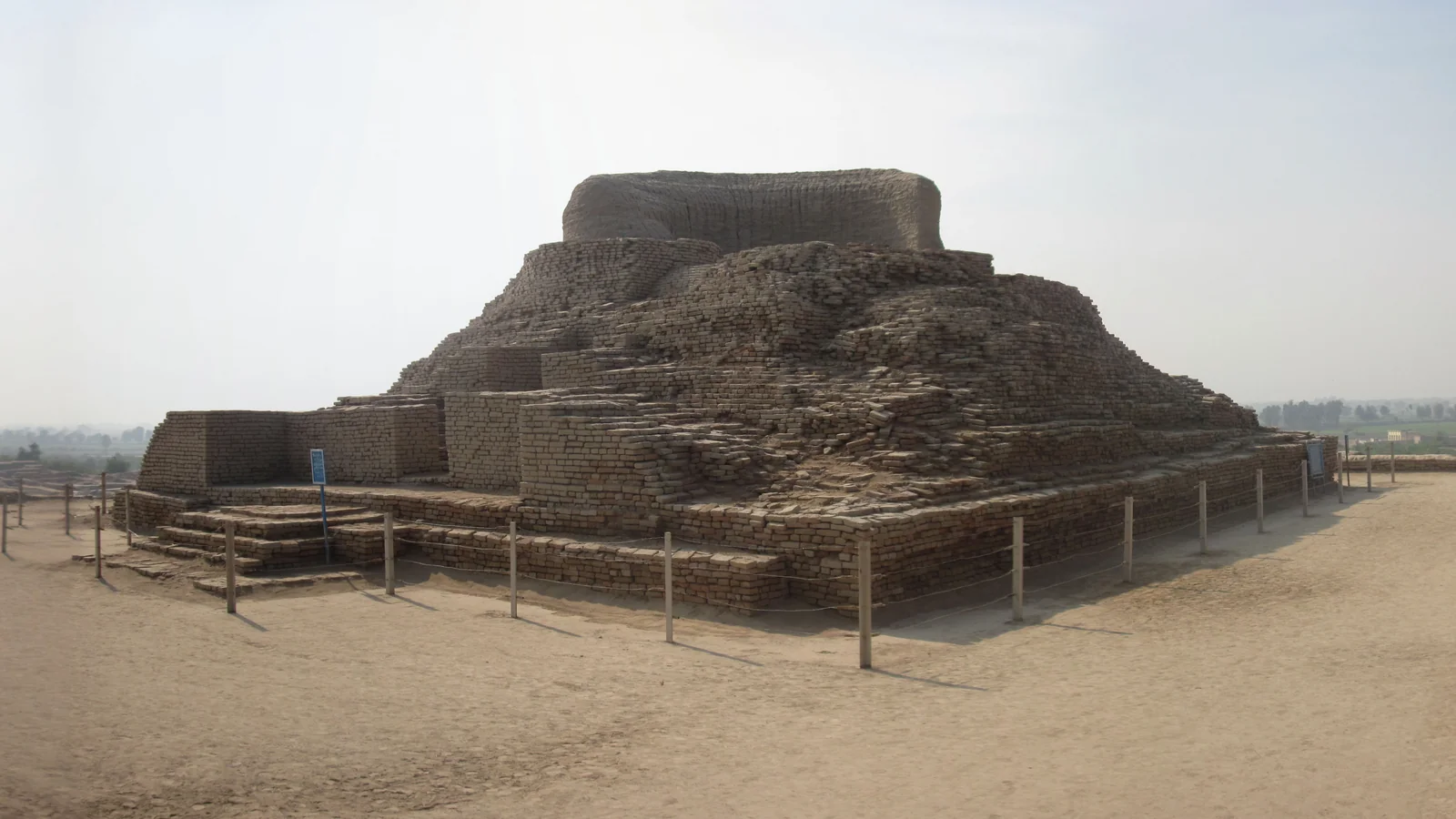
Mohenjo Daro is the place everything else in Sindh is measured against. It was one of the two great cities of the Indus Valley Civilisation, spread across roughly 250 hectares near Larkana, and it is a UNESCO World Heritage Site. The city dates to about 2500 BCE, and its streets, drains, wells and the Great Bath still show a level of town planning that was far ahead of its time. The stupa mound rises above the ruins, and the museum nearby holds the seals, pottery and jewellery found at the site.
The site lies about 28 km from Larkana. Ticket prices have changed over the years, and sources give a wide range for local visitors, from about PKR 20 to PKR 500, so it is best to confirm the price at the gate. The museum is open from 9 in the morning to 5 in the evening and is closed on Wednesdays, while the ruins themselves are open from sunrise to sunset. In August 2022 the site took heavy rain, close to 780 mm in eleven days, and parts of the walls were damaged. Conservation work has been going on since then, so visitors should expect scaffolding and some restricted areas in places.
A new way to reach the site began on 31 January 2026, when the Mohenjo Daro Train Safari was inaugurated. The two day package costs PKR 25,000 per person, with meals, accommodation and a guided tour included, and runs from Karachi Cantt through Sehwan to Larkana. For a first visit, the train safari is the simplest way to see the site with a guide. Read the full guide to the site in our post on Mohenjo Daro.
Makli Necropolis, a City of the Dead
Makli Necropolis near Thatta is one of the largest historic graveyards in the world. It covers about 10 square km, and holds between 500,000 and a million tombs, built from the 14th to the 18th century. UNESCO placed the Historical Monuments at Makli on the World Heritage List in 1981. The tombs belong to kings, queens, saints and scholars of Sindh, and their carved sandstone and glazed blue tile work show four centuries of change in style, from the Samma period to the Mughal period.
The most visited tombs are those of Jam Nizamuddin II, Isa Khan Tarkhan and Diwan Shurfa Khan, whose tomb is known for its blue tile work. The site is about 98 to 100 km east of Karachi, roughly two hours by road, and it pairs naturally with the Shah Jahan Mosque in the same town. No general entry fee is reported for the site, though small charges apply for a golf cart ride or a guide. The necropolis is open ground with little shade, so an early morning visit in the winter months is the most comfortable way to see it. Read the full guide in our post on Makli Necropolis.

Shah Jahan Mosque, the Jewel of Thatta
The Shah Jahan Mosque in Thatta is one of the finest Mughal buildings in Pakistan. It was built between 1644 and 1647 by the emperor Shah Jahan, and it is famous for two things: its 93 domes, the most of any structure in Pakistan, and its blue tile work, which covers the walls in geometric patterns. Some counts put the number of domes as high as 100, but 93 is the standard figure. The mosque is lined with 33 arches, and its brickwork and tile work have survived nearly four centuries of use.
The mosque stands in Thatta, about 100 km east of Karachi, and it is the Jamia Mosque of the town, still in daily use. Visitors are welcome outside prayer times, and the quiet morning hours are the best time to see the tile work in soft light. The mosque, Makli Necropolis and the old town of Thatta make a full day trip from Karachi, and the three places together tell the story of Thatta when it was a great port and capital of Sindh. Read the full guide in our post on the Shah Jahan Mosque.

Ranikot Fort, the Great Wall of Sindh
Ranikot Fort is known as the Great Wall of Sindh, and it earns the name. Its walls run for about 26 to 31 km across the Kirthar hills, and the figure varies by source. The fort is often called the largest fort in the world, though that claim is not settled, and it is safest to say it is believed to be among the largest. It was built in the first half of the 19th century, and its four gates are Sann in the east, Mohan in the west, Amri in the north and Shah Pir in the south. The Sann Gate is the entrance most visitors use, reached by a rough road from the town of Sann.
The fort lies about 262 km from Karachi and about 90 km north of Hyderabad. The best months are November to February, and the summer heat from April to September makes the climb hard. A visit needs a full day, a sturdy vehicle, and plenty of water, since there is little shade on the walls and no shops inside the fort. The view from the walls, across the dry hills of the Kirthar range, is the reward for the climb. Read the full guide in our post on Ranikot Fort.

Kot Diji Fort above the Indus Plain
Kot Diji Fort stands on a hill above the town of Kot Diji, near Khairpur, and it is one of the most complete Talpur forts in Sindh. UNESCO gives its year of construction as 1797, built under Mir Sohrab Khan, though some sources give a range from 1785 to 1795. The fort has three towers, strong bastions and a clear view over the plains, and it was built to guard the route between Khairpur and the Indus. On 18 March 2026 the fort was added to the UNESCO Tentative List, a step that may lead to full World Heritage status.
Below the fort lies an older story. The Kot Diji settlement of the pre Harappan period dates to about 3300 BCE, and it is one of the earliest town sites of the Indus Valley. The fort and the settlement together cover more than five thousand years of history in a single view. The fort is about 25 km south of Khairpur city and about 50 km from Sukkur, and it pairs well with a visit to Faiz Mahal in Khairpur on the same day. Read the full guide in our post on Kot Diji Fort.
Sehwan Sharif, the Shrine of Lal Shahbaz
Sehwan Sharif is the town of Lal Shahbaz Qalandar, one of the great Sufi saints of Sindh, and his shrine is one of the most visited places in the province. The shrine is known for its golden dome and for the dhamal, the devotional dance to the beat of giant kettledrums, which takes place every day after the Maghrib prayer. Thursdays are the busiest day, when devotees gather in large numbers and the courtyard fills with music and movement.
The annual Urs of Lal Shahbaz Qalandar falls on 18 to 20 Sha’ban, and the town fills with hundreds of thousands of visitors for the three days. The 774th Urs began on 7 February 2026, and the date moves about eleven days earlier each year. Sehwan lies about 280 km from Karachi, roughly four hours by road on the Indus Highway. Visitors should dress modestly, keep their shoes in the racks at the entrance, and expect crowds on Thursdays and during the Urs. Read the full guide in our post on Sehwan Sharif.

Bhit Shah, the Town of the Poet Bhittai
Bhit Shah is the town of Shah Abdul Latif Bhittai, the greatest Sufi poet of Sindh, and his shrine is a place of music as much as of prayer. The shrine complex was built in 1772, and the singing of the Risalo, the book of his poetry, goes on there every night after the evening prayers, without a break. Eighty faqirs, organised into fourteen groups, take turns through the days and nights, so that the singing never stops.
The town lies about 50 to 60 km from Hyderabad, on the road to Hala. The annual Urs lasts three days, beginning on 13 Safar, and draws up to 500,000 visitors. Outside the Urs, Bhit Shah is a quiet town, and the best time to visit is in the evening, when the singers gather and the shrine glows in the warm light. The town is also known for its Ajrak and pottery, and the small shops near the shrine sell both. Read the life of the poet and the story of the shrine in our post on Shah Abdul Latif Bhittai.
Gorakh Hill Station, the Cool Roof of Sindh
Gorakh Hill Station is the one place in Sindh where winter brings cold. The hill station stands at 1,734 metres in the Kirthar range, and on winter nights the temperature can fall near freezing. In summer it is a cool escape from the heat of the plains, with daytime temperatures of 15 to 25 degrees. The road from Wahi Pandhi is a rough 4×4 track of 50 to 54 km, and only a jeep can climb it. Jeeps are hired at Wahi Pandhi, and recent guides quote about PKR 5,000 to 12,000, so it is best to confirm the price there before the climb, as it changes with season and group size.
The most popular season is November to March, and summer is also pleasant for a cool break. The monsoon months of July and August should be avoided, since the road becomes dangerous in the rain. At the top there are simple huts and a small bazaar, and the sunset over the Kirthar hills is the reason most visitors make the climb. The park around the hill is part of Kirthar National Park, one of the largest national parks in Pakistan, spread over 3,087 square km and established in 1974. Read the full guide in our post on Gorakh Hill Station, and the park in our post on Kirthar National Park.

Keenjhar Lake, the Great Lake of Sindh
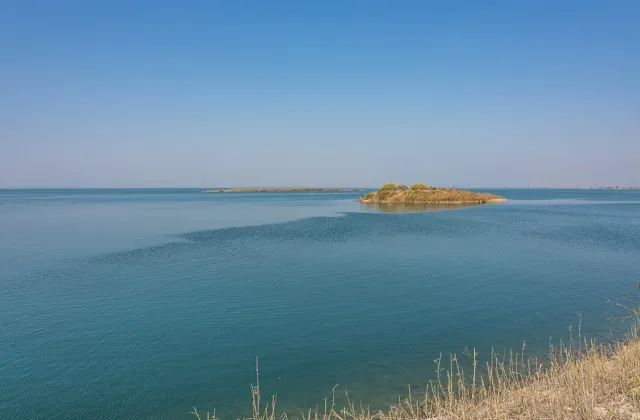
Keenjhar Lake, also called Kalri Lake, is the largest freshwater lake in Sindh and the second largest freshwater lake in Pakistan. It is about 24 km long and 6 km wide, and it lies about 120 km east of Karachi, roughly two hours by road, and about 36 km from Thatta. The lake supplies water to Karachi and Thatta, and in winter it draws migratory birds, which makes it a quiet place for bird watching.
Boats are hired at the shore for rides on the lake and for trips to the shrine of Noori on an island in the lake. Visitors should ask locally about boating before they go, since the local administration stopped boating after a boat capsized in August 2020, and it is not clear from public notices that the ban has been formally lifted. The lake pairs well with Makli and the Shah Jahan Mosque on a Thatta day trip, and the nearby Haleji Lake is another stop for birds in the same season. Read the full guide in our post on Keenjhar Lake.

Tharparkar and Karoonjhar Hills
Tharparkar is the desert district of Sindh, and it is unlike any other part of the province. Its heart is the Karoonjhar Hills, a granite ridge about 19 km long that rises about 305 metres above the desert at Nagarparkar. The hills are sacred to Hindus and Jains, and the town of Nagarparkar holds about fourteen Jain temples, built mostly between the 12th and 15th centuries. The Gori Temple, built in 1375 to 1376, is the largest of them. The Nagarparkar Cultural Landscape was placed on the UNESCO Tentative List in 2016.
The best months are November to February. The heat of April to June is hard, and the monsoon rains of July to September can cut the dirt tracks. Nagarparkar is about 131 km from Mithi, the district town, and the journey crosses open desert with villages of painted houses and women in bright dress. Tharparkar is a trip of its own, best done over two or three days from Karachi, and it rewards travellers who like quiet places and old stone. Read the full guide in our post on Tharparkar.

Chaukhandi Tombs, the Carved Necropolis
Chaukhandi Tombs lie 29 km east of Karachi, close to the National Highway, about forty minutes by car. They are a necropolis of carved sandstone tombs, built mainly between the 15th and 18th centuries, and attributed mostly to the Jokhio tribe. The tombs are known for their stone carving: geometric patterns, rosettes and figures of horsemen and weapons, cut into sandstone that has weathered to a warm brown. The tombs were placed on the UNESCO Tentative List in 1993.
Chaukhandi is the easiest historic place to reach from Karachi, and it works as a short morning visit on the way to Thatta and Makli. There is little shade and no shop at the site, so water and a hat are worth carrying. The tombs stand in open ground, and the morning light brings out the carving at its best. Read the full guide in our post on the Chaukhandi Tombs.
Karachi Beaches, from Clifton to Manora
No list of the Places to Visit in Sindh is complete without the coast of Karachi. Clifton Beach, known locally as Sea View, is the family beach of the city, with camel rides, horse rides and street food along the shore. French Beach is a private beach of huts and clear water, best for swimming and day trips with a booked hut. Manora, reached by boat from Keamari, has a lighthouse and a small fort, and Hawkes Bay and Sandspit are known for quiet sand and turtle nesting in the autumn months.
The best months for the beaches are October to March, when the sea breeze is cool and the sun is mild. Swimming needs care at every Karachi beach, since the currents are strong and there are few lifeguards, so it is safest to swim only where local people swim and never alone. For distances, hut prices and safety tips for each beach, read our full guide to the Best Beaches in Karachi.
When to Visit Sindh, the Best Months
The season for Sindh is winter. November to February brings mild days, cool nights and clear light at the archaeological sites, and the migratory birds arrive on the lakes in the same months. October and March are also good, with warm days and cool evenings. From April to September the plains are hot, and the heat makes long walks at Mohenjo Daro, Makli and Ranikot hard. The monsoon months of July and August bring rain to the hills, and the road to Gorakh Hill becomes risky. For a first trip, choose December or January, when the whole province is at its best.
How to Plan Your Trip across Sindh
Karachi is the base for this journey, and the places in this guide fall into three groups. The first group is the day trips from Karachi: Chaukhandi Tombs, Thatta with Makli Necropolis and the Shah Jahan Mosque, Keenjhar Lake and Haleji Lake. These are all within two hours of the city and can be done in two days. The second group is the northern loop: Sehwan Sharif, Mohenjo Daro near Larkana, and Kot Diji Fort near Khairpur, with Bhit Shah on the way back through Hyderabad. This loop needs three to four days, with nights in Larkana and Khairpur. The third group is the desert: Tharparkar and the Karoonjhar Hills, which need two to three days of their own from Karachi through Mithi.
Gorakh Hill Station and Ranikot Fort are best done from the north of Karachi as well, with a jeep hired at Wahi Pandhi for Gorakh and a sturdy vehicle for Ranikot. For a first trip of five to seven days, take the Thatta day trips first, then the northern loop, and keep Tharparkar and Gorakh Hill for a second journey. The Heritage Map of Sindh on this site shows all these places on one map, and it is a useful companion to this guide.
Frequently Asked Questions about Sindh
What is the best time to visit Sindh?
November to February is the best time to visit Sindh. The days are mild, the nights are cool, and the migratory birds are on the lakes. October and March are also good. Avoid April to September for long walks at the open sites, and avoid July and August on the hill roads.
How many days do I need to see the main places in Sindh?
Five to seven days cover the main places at a calm pace. Two days cover the day trips from Karachi, including Thatta, Makli, Keenjhar Lake and Chaukhandi. Three to four days cover the northern loop through Sehwan, Mohenjo Daro and Kot Diji Fort. Tharparkar needs two to three days of its own.
Is Mohenjo Daro open to visitors now?
Yes, Mohenjo Daro is open to visitors. The ruins are open from sunrise to sunset, and the museum is open from 9 in the morning to 5 in the evening, closed on Wednesdays. Conservation work has been going on since the floods of August 2022, so some areas are restricted and scaffolding is visible in places. The Mohenjo Daro Train Safari, which began on 31 January 2026, is a guided way to visit the site.
Which places in Sindh are UNESCO World Heritage Sites?
Two places in Sindh are UNESCO World Heritage Sites: Mohenjo Daro, placed on the list in 1980, and the Historical Monuments at Makli, placed on the list in 1981. Kot Diji Fort was added to the UNESCO Tentative List on 18 March 2026, and the Nagarparkar Cultural Landscape and the Chaukhandi Tombs are also on the Tentative List.
Can I visit Ranikot Fort and Gorakh Hill in one trip?
Yes, Ranikot Fort and Gorakh Hill can be visited in one trip, since both lie in the Kirthar range north of Karachi. Ranikot Fort is reached through Sann, and Gorakh Hill is reached by jeep from Wahi Pandhi. Both need a sturdy vehicle, a full day each, and plenty of water. The best months for both are November to February.
Sources and Further Reading on Places to Visit in Sindh
- UNESCO World Heritage Centre, Historical Monuments at Makli, Thatta. whc.unesco.org
- UNESCO World Heritage Centre, Kot Diji Fort, Tentative List entry. whc.unesco.org
- Dawn, Mohenjo Daro Train Safari begins. dawn.com
- Dawn, Ranikot Fort, the world’s largest fort. dawn.com
- Wikipedia, Makli Necropolis. en.wikipedia.org
- Wikipedia, Shah Jahan Mosque, Thatta. en.wikipedia.org
- Wikipedia, Shrine of Shah Abdul Latif Bhittai. en.wikipedia.org
- Trek.pk, Ranikot Fort. trek.pk
- Traventigo, Top Tourist Attractions in Sindh, Pakistan, 2026 Guide. traventigo.com
- Sindh Culture Department, Mohenjo Daro Train Safari. sindhculture.gov.pk

Leave a Comment