

The Kalhora dynasty ruled most of Sindh for much of the 18th century. Its rulers began as the hereditary leaders of a Sufi following in upper Sindh. Within a few generations they became governors under the Mughals, then rulers in their own right, paying tribute first to Nadir Shah of Persia and then to the Durrani kings of Afghanistan. Their rule ended in 1783, when the Talpurs defeated the last Kalhora ruler at the Battle of Halani.
In this article (31)
- Kalhora Dynasty at a Glance: Rulers and Dates
- Origins of the Kalhoras and the Mianwal Sufi Movement
- Mian Adam Shah and the Early Faqirs
- Mian Nasir Muhammad and the First Local Rule
- Rise Under the Mughals: Yar Muhammad and Khudabad
- Mian Noor Muhammad Kalhoro and the Unification of Sindh
- Nadir Shah’s Invasion of Sindh in 1739
- Relations with the Durrani Afghans
- Mian Ghulam Shah Kalhoro and the Founding of Hyderabad
- Khudabad, Muhammadabad and Other Capitals
- Hyderabad and the Pacca Qila Fort
- Canals and Agriculture Under the Kalhoras
- Kalhora Tombs and Monuments in Hyderabad
- The Tomb of Ghulam Shah Kalhoro
- Other Kalhora Tombs in the Same Area
- Noor Muhammad Kalhoro’s Tomb Near Daulatpur
- Art and Architecture: Kashi Tiles and Khudabad Mosque
- The Jamia Mosque at Khudabad
- Culture, Trade and Daily Life in the Kalhora Era
- Shah Abdul Latif Bhittai and Sachal Sarmast in Kalhora Sindh
- Decline of the Kalhoras and the Battle of Halani
- Transfer of Power to the Talpur Mirs
- Legacy of the Kalhora Dynasty in Sindh
- Visiting Kalhora Sites in Sindh Today
- FAQ About the Kalhora Dynasty of Sindh
- Who founded the Kalhora dynasty?
- When did the Kalhoras rule Sindh?
- Who founded Hyderabad in Sindh?
- Where is the Kalhora tomb in Hyderabad?
- Why did the Kalhora dynasty come to an end?
- Sources and Further Reading on the Kalhoras
This article follows that story from start to end. It covers the family’s religious roots, the main rulers, the capitals at Khudabad, Muhammadabad and Hyderabad, the invasion of Nadir Shah, the canal work that changed farming in Sindh, and the tombs and mosques the Kalhoras left behind. It closes with the decline of the Kalhora dynasty and a short guide to the sites you can still visit.
Dates for this period are not always settled. Persian chronicles, Sindhi histories and British era writers sometimes give different years for the same event. Where reliable sources disagree, this article gives both dates and names the source for each.
Kalhora Dynasty at a Glance: Rulers and Dates
The table below lists the main figures in the order most histories give them. The reign years follow Mohammad Qasim Soomro and other contributors in Studies in Kalhora History, Economy and Architecture (2017), with other dates noted where they differ.
| Name | Role and approximate dates |
|---|---|
| Mian Adam Shah Kalhoro | Religious leader of the family in the 16th century; killed on the orders of the Mughal governor of Multan; buried at Sukkur |
| Mian Nasir Muhammad Kalhoro | Leader from 1657; local ruler in upper Sindh from about 1680; died 1692 |
| Mian Din Muhammad Kalhoro | Ruled 1692 to 1700; executed after surrendering to Prince Muiz al Din at Multan |
| Mian Yar Muhammad Kalhoro | Ruled 1701 to 1719 with the Mughal title Khuda Yar Khan |
| Mian Noor Muhammad Kalhoro | Ruled from 1719; given Thatta in 1737; died 1753 according to Kalhora historians (some sources give 1755) |
| Muradyab Khan Kalhoro | Ruled briefly after his father; removed by the tribal chiefs in 1757 |
| Mian Ghulam Shah Kalhoro | Ruled 1757 to 1772, with a short break; founded Hyderabad in 1768 |
| Sarfraz Khan Kalhoro | Son of Ghulam Shah; ruled from 1772 until he was deposed in the 1770s |
| Ghulam Nabi and Abdul Nabi Kalhoro | The last rulers; Abdul Nabi lost the Battle of Halani in 1783 |
Origins of the Kalhoras and the Mianwal Sufi Movement
The Kalhoras were a Sindhi tribe from upper Sindh, in the area that now forms the Larkana and Sukkur districts. Historian L. Jiskani, writing in the University of Sindh journal Grassroots, describes them as a tribe of the type later classed as Jamot, meaning original inhabitants of the Indus valley who were not Baloch. The family later claimed descent from Abbas, an uncle of the Prophet. Scholars treat that claim with caution, and most modern accounts focus on the tribe’s local roots.
What gave the family its early power was religion rather than land. Its leaders were known as Mians, and their followers called themselves faqirs. This following is often called the Mianwal movement. Under Mughal rule it grew from a circle of disciples into an armed group that held land and fought imperial officials.
Mian Adam Shah and the Early Faqirs
The first well known figure in the family is Mian Adam Shah Kalhoro, who rose to religious prominence in the 16th century. According to the account summarised in Studies in Kalhora History, he was a disciple of the Mahdavi teacher Sayyid Muhammad of Jaunpur and gathered a large body of followers in the Chandka area near Larkana.
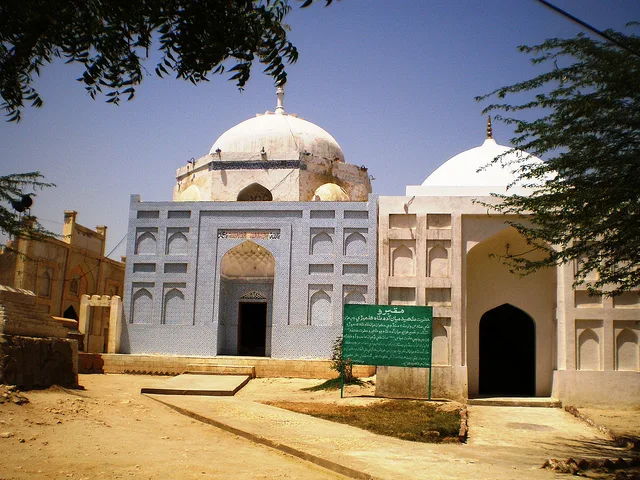
His followers took over land from neighbouring zamindars. The neighbours complained to the Mughal governor of Multan, who had Adam Shah arrested and put to death. His body was carried back and buried on a hill at Sukkur, still called Adam Shah Takri. His simple tomb there is counted as the earliest building of the Kalhora family.
Mian Nasir Muhammad and the First Local Rule
Adam Shah’s successors kept the movement alive. One of them, Shahal Muhammad, was killed fighting a Mughal army near Chandka in 1657. Leadership then passed to his nephew, Mian Nasir Muhammad Kalhoro.
Nasir Muhammad was arrested at least twice. Accounts say he was held in a Mughal prison and released on conditions. Over time the Mughal authorities chose to work with him. He was given land and built a headquarters at Garhi, in present Dadu district, which served as the family’s base for about twenty years. The historian M.H. Panhwar dated the start of his local rule in upper Sindh to about 1680. Nasir Muhammad died in 1692 and was buried at Garhi.
Rise Under the Mughals: Yar Muhammad and Khudabad
Nasir Muhammad’s son Din Muhammad ruled for about eight years. He then clashed with the Mughal authorities at Bhakkar. Prince Muiz al Din, the son of Emperor Aurangzeb and governor of Multan, sent troops against him. Din Muhammad surrendered, was taken to Multan and was executed around 1700.
His brother, Mian Yar Muhammad Kalhoro, took shelter in Kalat for a time. He returned to Sindh in 1701 and won back the lands his brother had held. He then took a Panhwar town near Dadu. Accounts differ on whether he renamed the town or built a new one nearby, but the result was his capital, Khudabad.
The Mughals could not dislodge him. In the end Prince Muiz al Din recognised Yar Muhammad as a governor, Aurangzeb accepted the arrangement, and Yar Muhammad received the title Khuda Yar Khan. When he died in 1719, his authority ran from Sibi in the north to Sehwan in central Sindh.
Mian Noor Muhammad Kalhoro and the Unification of Sindh
Mian Noor Muhammad Kalhoro succeeded his father in 1719. He spent the next eighteen years pushing south and west. His army took Shikarpur from the Daudpotras. In 1733 the Brahui ruler of Kalat, Abdullah Khan, attacked Sindh and was killed in battle against Noor Muhammad’s forces.
The decisive step came in 1737. The Mughal court gave Noor Muhammad the province of Thatta, which covered lower Sindh. For the first time, one Sindhi ruler held upper, central and lower Sindh together. Jiskani notes that the Kalhoras were the first Sindhi dynasty to hold lasting power since the fall of the Samma rulers of Thatta, a story told in our article on the Samma dynasty and Jam Nizamuddin.
Noor Muhammad was also close to the Sufi world of his day. A copy of Rumi’s Masnavi that he presented to Shah Abdul Latif Bhittai is mentioned in Sahitya Akademi’s study of the poet. Accounts of the period say the relationship between ruler and poet was tense for years before it improved.
Nadir Shah’s Invasion of Sindh in 1739
The Kalhora rise met its first great shock from Persia. In 1739 Nadir Shah sacked Delhi and forced the Mughal emperor Muhammad Shah to give up the lands west of the Indus. On his way back, Nadir Shah turned on Sindh, where Noor Muhammad had not come to meet him.
Jiskani’s account, drawn from older histories, says Nadir Shah trapped Noor Muhammad in the fort of Umarkot and forced him to submit. Noor Muhammad was pardoned in return for a promise to pay a tribute of twenty lakh rupees. As security, three of his sons, including Ghulam Shah and Muradyab, were taken to the Persian court as hostages. They came home only after Nadir Shah was murdered in 1747.
The invasion did more than drain the treasury. Territories such as Shikarpur and Sibi were taken from Noor Muhammad and given to other chiefs. The Kalhoras now held Sindh as tributaries of Persia rather than as servants of Delhi.
Relations with the Durrani Afghans
After Nadir Shah’s death, Ahmad Shah Durrani built a new empire based in Afghanistan and claimed Sindh as a tributary. Noor Muhammad tried to avoid paying. In 1753 Ahmad Shah came to Sehwan to collect the money, and Noor Muhammad fled into the Thar desert.
He died in exile at Jaisalmer. Studies in Kalhora History gives the date as 9 December 1753, based on Ijaz ul Haq Quddusi and other Sindhi historians. Other modern sources, including the dates widely repeated online, give 1755. His body was taken back and buried near Muhammadabad.
For the rest of the Kalhora dynasty, the Afghan kings acted as overlords and kingmakers. After Noor Muhammad’s death his sons fought each other for the throne, and the Afghan court gave its sanad, or royal grant, to different brothers at different times. Ahmad Shah finally recognised Ghulam Shah as ruler of Sindh in 1761 and gave him the title Shah Wardi Khan.
Mian Ghulam Shah Kalhoro and the Founding of Hyderabad
Mian Ghulam Shah Kalhoro came to power in 1757, when the Kalhora chiefs replaced his elder brother Muradyab with him. His rule was interrupted when another brother, Atur Khan, obtained the Afghan sanad. Baloch chiefs then brought Ghulam Shah back, and by 1758 or 1759 he had defeated his rivals.
He was a soldier as much as a ruler. A Dawn report on his tomb says he led three campaigns against the Rao of Kutch between 1762 and 1765 and earned the title Samsam ud Daula, meaning Sword of the State. Jiskani writes that he won the hard fought Battle of Jhara and forced Kutch to cede the ports of Lakhpat and Basta. In 1758 he also allowed the East India Company to open a trading factory at Thatta, which stayed until 1775.
Some writers, including a 2016 Dawn feature, say Ghulam Shah also fought beside Ahmad Shah Durrani at the Third Battle of Panipat in 1761. I could not confirm this in the older scholarly accounts consulted for this article, so it is best read as a claim rather than a settled fact.
Khudabad, Muhammadabad and Other Capitals
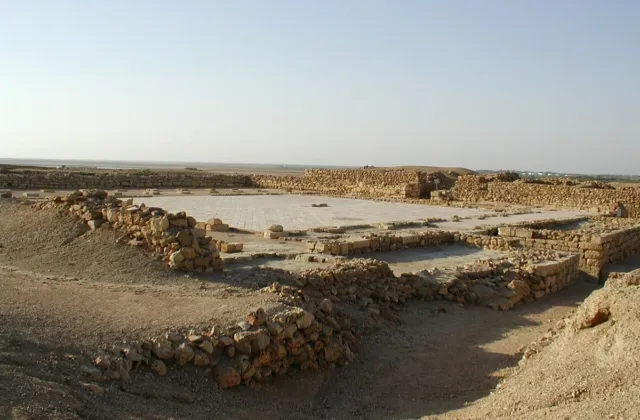
The Kalhoras moved their seat several times. Khudabad, near Dadu, was the main capital for most of the period. Near the end of his life Noor Muhammad handed Khudabad to Muradyab and moved to Muhammadabad, a new town he founded in what is now the Moro area of Shaheed Benazirabad district. The Sindh Antiquities Directorate dates this new capital to 1750. It survives today only as a small village. (Some popular histories write the name as Mahmudabad, but the scholarly sources used here call it Muhammadabad.)
The river made these towns unsafe. A flood destroyed Muradabad, the town built by Muradyab, around 1756 or 1757. Ghulam Shah then built Khanot near Hala, and later Shahpur. Khudabad itself was looted and burned by Khosa raiders in 1759 during the succession war, and Ghulam Shah resettled it on new ground.
Hyderabad and the Pacca Qila Fort
Ghulam Shah’s lasting answer was to build on high ground. He chose the Ganjo Takkar hills, the site of the old town of Nerun Kot, which stood above the reach of floods. Encyclopaedia Britannica states that Hyderabad was founded there in 1768 by Ghulam Shah Kalhora and named after Ali, the son in law of the Prophet, who was also called Haidar.
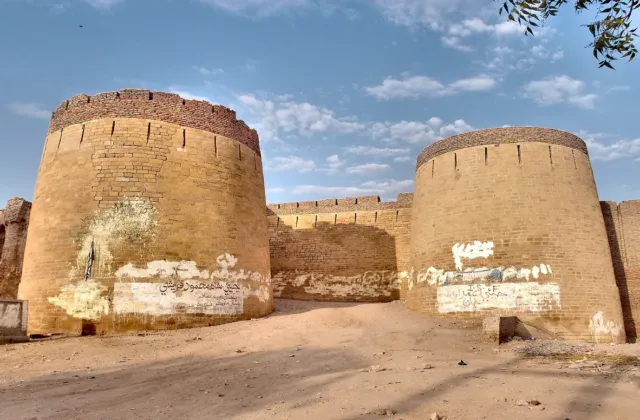
The centre of the new capital was the Pacca Qila, or strong fort. Kalhora historians date the start of its building to 1768 (1182 AH), and Jiskani says it became the ruler’s residence in 1770. Its brick outer wall stands between about 9 and 15 metres high, depending on the ground and the source, and runs for roughly two miles around an irregular hilltop. Britannica’s entry mentions “a fort (built 1782)” at Hyderabad, which may refer to later Talpur work, so the dates in different sources should be read with care.
In 1772 Ghulam Shah began a second, smaller mud fort, the Katcha Qila, on a hillock sacred to the saint Haji Muhammad Makki. Graves had to be cleared for it. Soon afterwards, on 1 August 1772, Ghulam Shah suffered a stroke, and he died the next day. Local tradition blamed the saint’s displeasure.
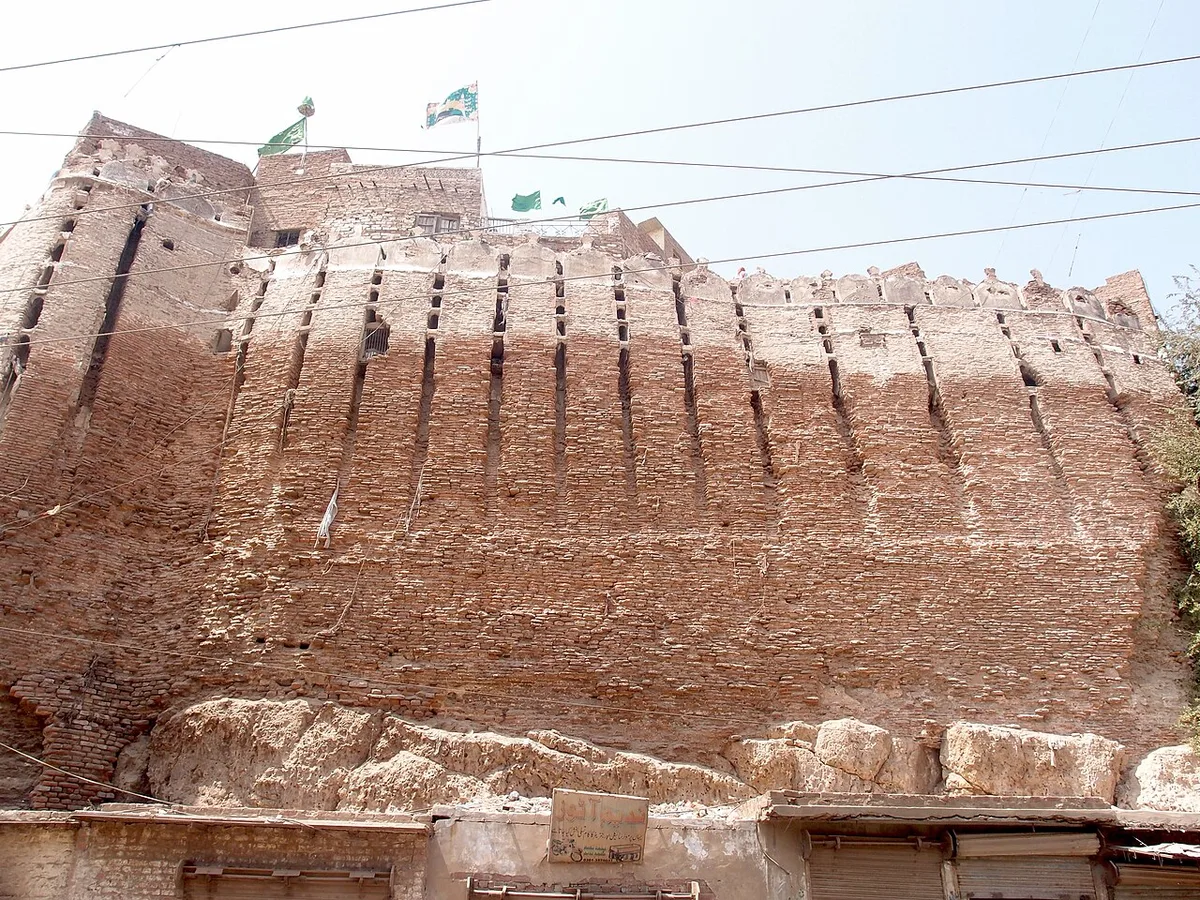
In 1857 the British cleared nearly all of the old buildings inside the fort and used it for troops and stores. Today the walls are hemmed in by houses and lanes. To read more about the old city that grew below the fort, see our story of Mukhi House in Hyderabad.
Canals and Agriculture Under the Kalhoras
Many historians see farming as the Kalhoras’ biggest achievement. Under Mughal rule, according to M.H. Panhwar, the canal system in Sindh had fallen into poor repair, and large areas had gone out of cultivation. The Kalhoras reversed this by digging new canals, clearing old ones and settling farmers on the land they watered.
Panhwar, in his study Irrigation under Noor Muhammad Kalhora, estimated that the Kalhoras built or renewed about 700 to 900 canals. He accepted an estimate of about 2.2 million acres under cultivation by the middle of the century, though the British officer H.T. Lambrick put it higher, near 3 million acres. These figures are estimates, not records, and they should be read that way.
Some canal names survive. Panhwar lists the Nur Wah, named after Noor Muhammad, the Nusrat Wah, dug by Nusrat Khan Chandio, and the Sarfraz Wah, dug in Sarfraz Khan’s time. The Shah ji Kur was linked to Shah Baharo, a minister and general of Noor Muhammad.
Nature then turned against the Kalhora dynasty. Around 1758 the Indus shifted to a new course below Hala. Panhwar argues that this change cut off hundreds of canals in the south and roughly halved the farmed area. In his reading, that loss of land helped set off the feuds that ended Kalhora rule.
Kalhora Tombs and Monuments in Hyderabad
The best known group of Kalhora buildings stands in Hyderabad, north of the old city. Here lie Ghulam Shah, his son Sarfraz Khan and his relative Ghulam Nabi, among others.
The Tomb of Ghulam Shah Kalhoro
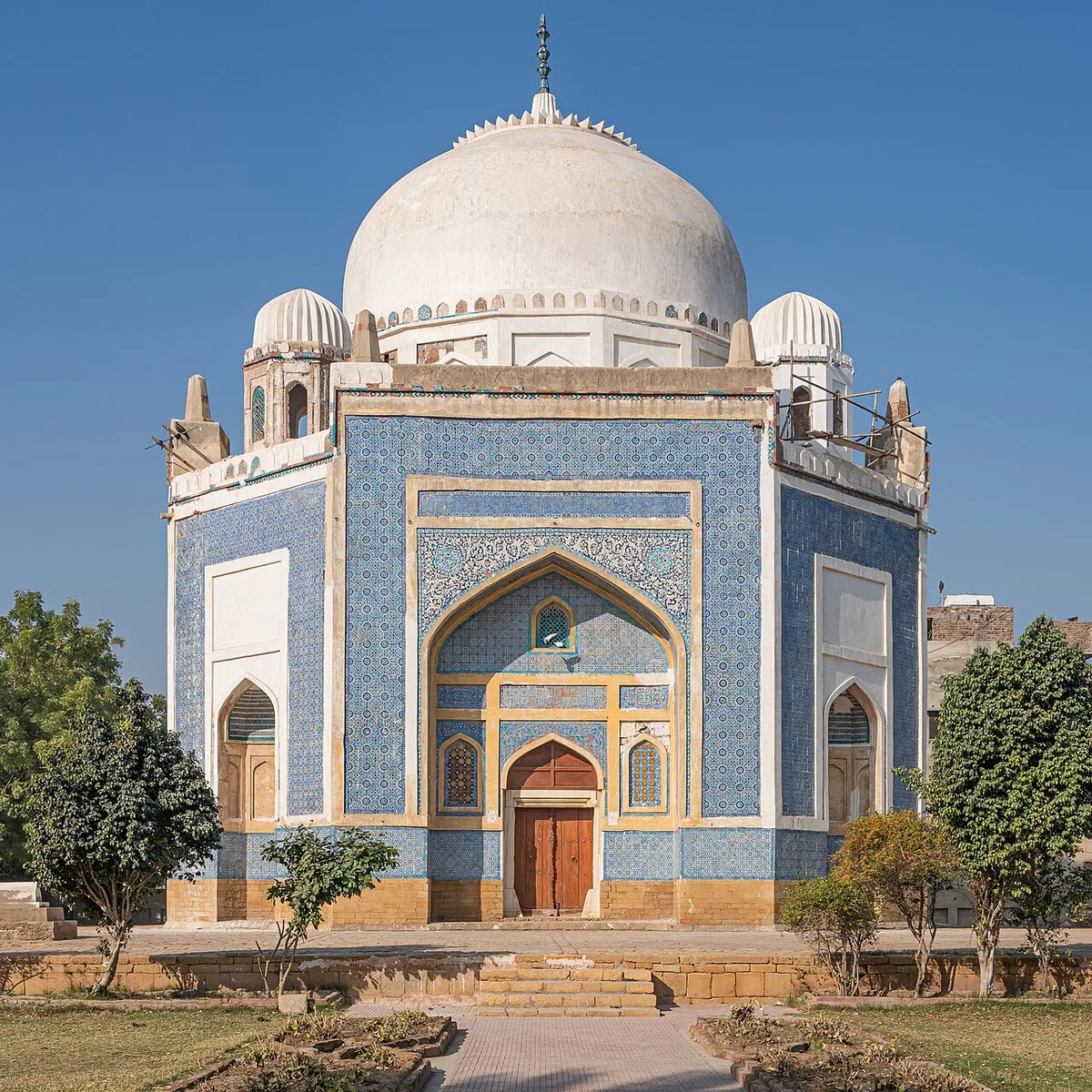
The Sindh Antiquities Directorate calls the tomb of Ghulam Shah Kalhoro the oldest and most refined of the Kalhora monuments in the city. It stands on a high platform inside a brick wall built like a small fort. The directorate says his son Sarfraz Khan built it in 1772.
A small grave beside his inside the chamber belongs to his grandson Fazal Ali and carries the date 1764. A 2015 Dawn report notes that this leaves two possibilities: the tomb may have been begun in Ghulam Shah’s lifetime after the boy died, or it was built after Ghulam Shah’s own burial next to him.
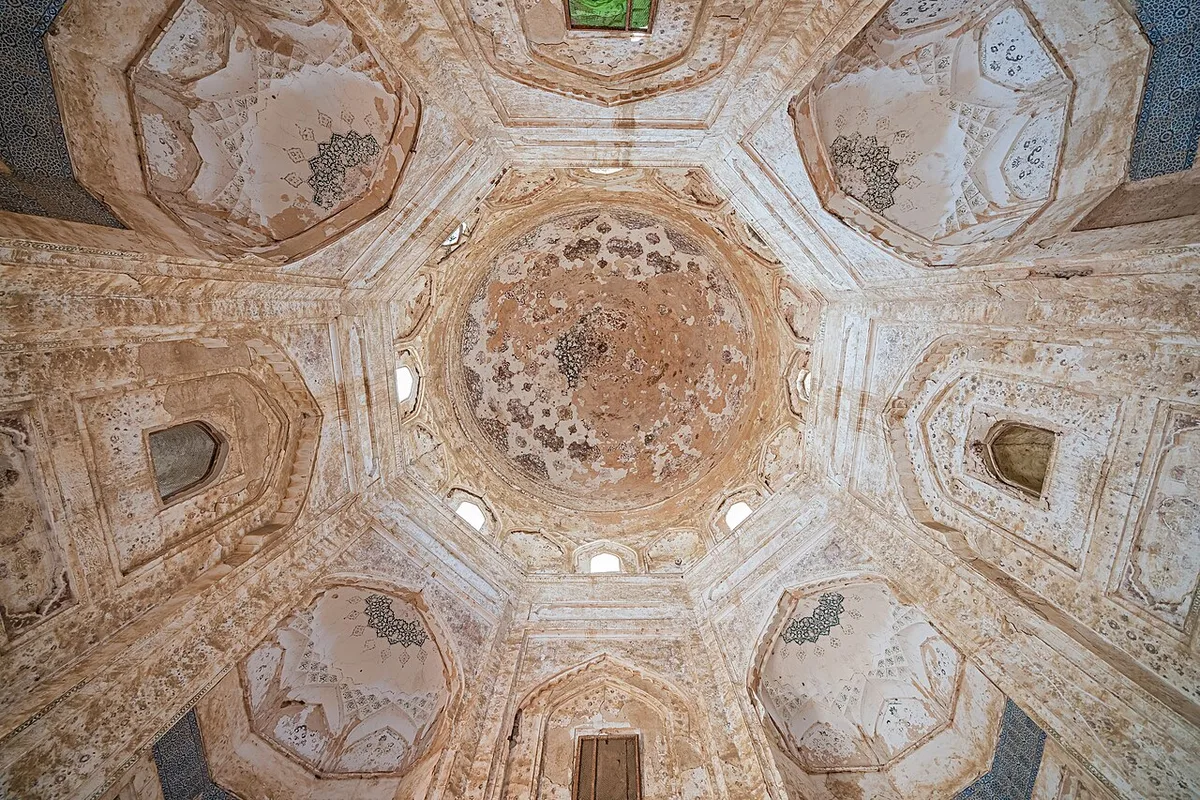
The outer walls carry blue, white and turquoise glazed tiles in floral and geometric panels. Inside, painted plaster covers the arches and dome. During cleaning in 2015, restorers found real gold in the painted interior. The original dome fell in the 1890s, as recorded by the archaeologist Henry Cousens, and the Endowment Fund Trust for Preservation of the Heritage of Sindh began restoring it in 2015, with plans that included rebuilding the missing dome.
Other Kalhora Tombs in the Same Area
Near Ghulam Shah’s tomb stand the tombs of Sarfraz Khan and Ghulam Nabi Kalhoro. Scholars in Studies in Kalhora History note a common feature of Kalhora burial places: a mosque is often built beside each tomb. They also note that later Kalhora buildings use less tilework and more plain lime plaster.
Noor Muhammad Kalhoro’s Tomb Near Daulatpur
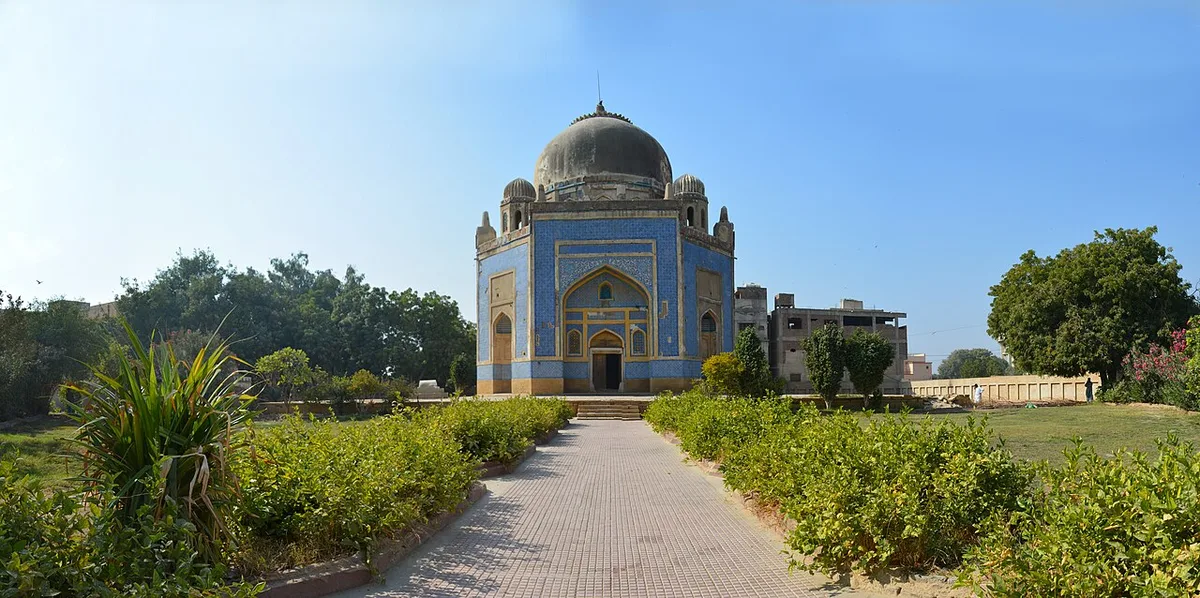
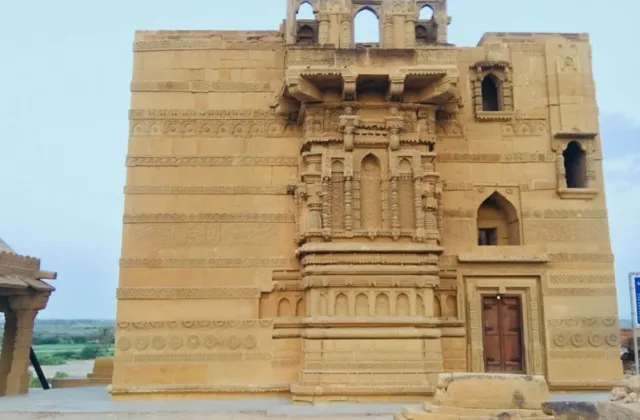
The tomb of Mian Noor Muhammad stands far from Hyderabad, in a graveyard known as Mian ja Qubba in deh Noor Muhammad, taluka Daulatpur, district Shaheed Benazirabad. According to the Sindh Antiquities Directorate, the graveyard is thought to lie near the site of Muhammadabad. The directorate says Ghulam Shah ordered the mausoleum around 1758, and it was finished in 1763.
The federal Department of Archaeology and Museums describes a rectangular building on a raised platform of about 24 by 21 metres. The lower walls are stone and the upper parts are brick, covered with kashi tiles in geometric and floral designs. The inside is octagonal, with a sixteen sided drum holding up the dome and four small octagonal kiosks on the roof.
Repairs have not always been kind to it. A 2012 Dawn feature noted that crumbling parts of the tomb had been whitewashed, which damaged the original finish.
Art and Architecture: Kashi Tiles and Khudabad Mosque
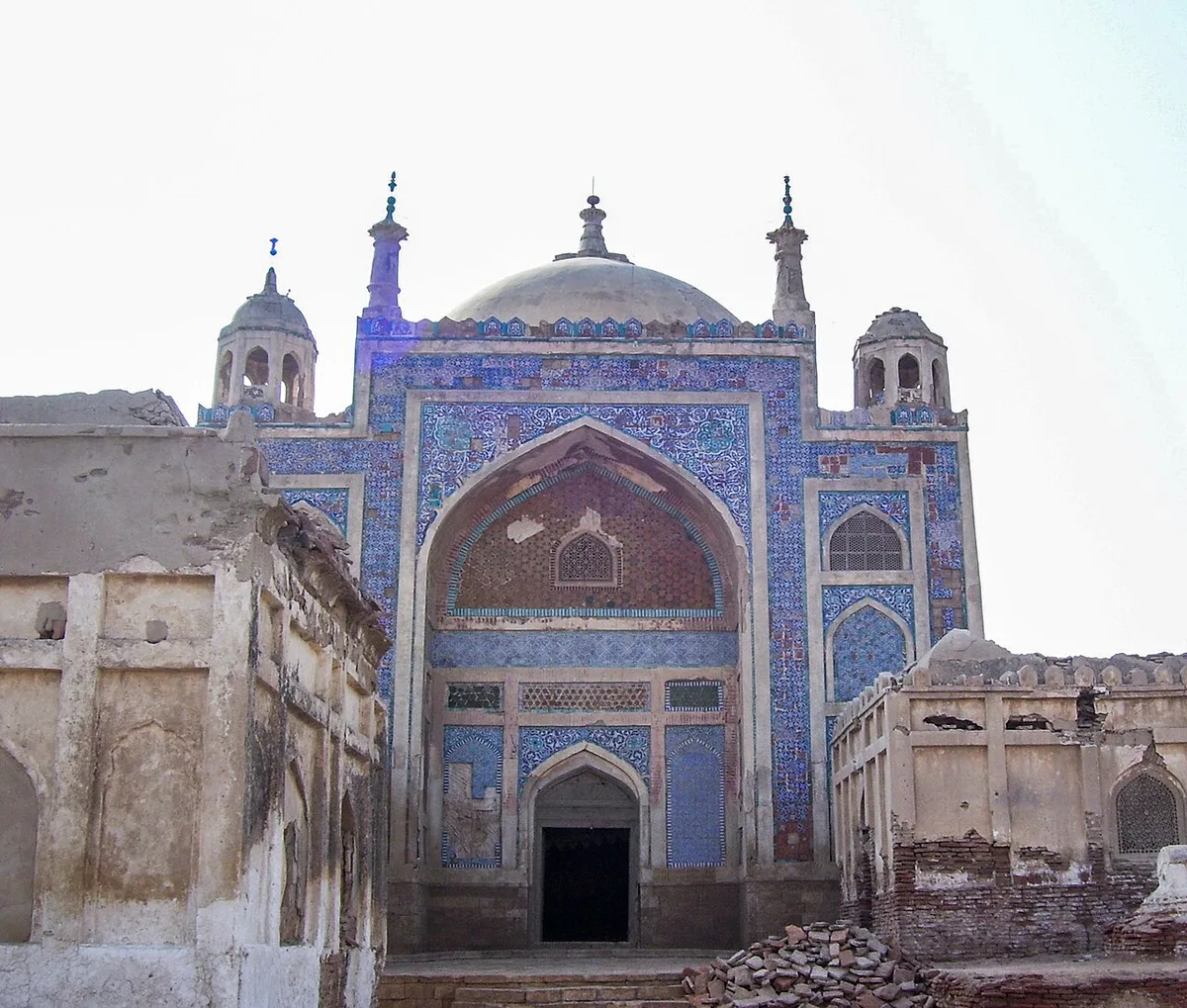
Kalhora builders worked mostly in burnt brick and decorated their buildings with kashi tiles, the glazed tiles of Sindh, along with fresco painting. The Department of Archaeology and Museums describes the tiles on Ghulam Shah’s tomb as Hala tiles, after the town of Hala that is still known for this craft.
The Jamia Mosque at Khudabad
The finest early example is the Jamia Mosque at Khudabad, about 13 kilometres south of Dadu. Sources link it to Yar Muhammad’s reign. The Open Heritage 3D project dates its building to between 1700 and 1718, and a 2013 Dawn report names Yar Muhammad as its builder.
The mosque stands on a raised platform reached by a semicircular flight of steps. Its prayer hall is decorated inside with kashi tiles and fresco paintings, and blue tiles cover the parapet. The heritage group CyArk notes that earlier Kalhora mosques were plain, while this one was covered in geometric and floral designs, including lily patterns.
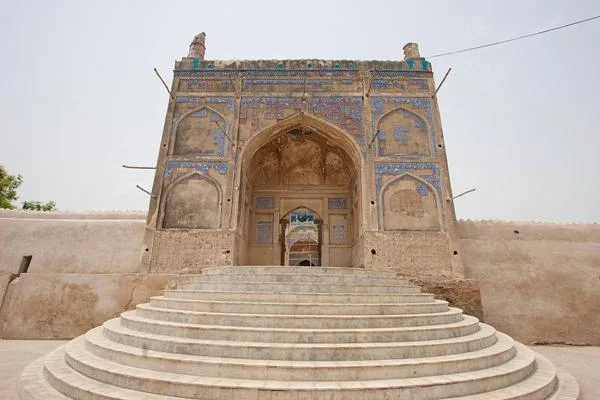
The mosque has had a hard modern history. Heavy rain in 1994 damaged its domes, and repair work since then has drawn repeated criticism. Dawn reported in 2013 that new tiles brought from Hala did not match the originals, and experts warned about poor materials.
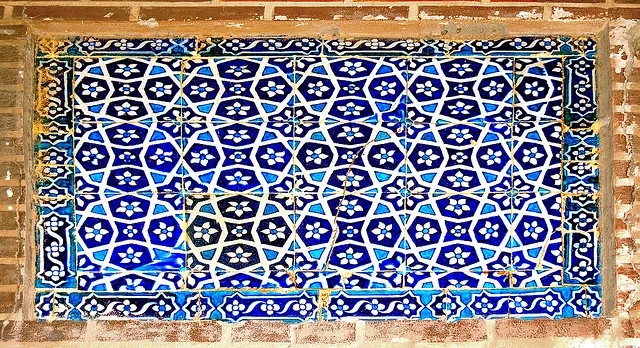
Yar Muhammad’s own tomb stands about a kilometre west of Khudabad. Its front was once fully tiled, and its side windows have pierced terracotta screens with geometric patterns. Scholars in Studies in Kalhora History argue that Yar Muhammad built it in his own lifetime.
Culture, Trade and Daily Life in the Kalhora Era
Jiskani gives a picture of the Sindh economy under Ghulam Shah. The main industries were cotton cloth, saltpetre, indigo, leather and fish. Glazed tiles were made with high skill for tombs and mosques, while ordinary houses were built of mud, reeds and branches. By this time, he writes, Thatta was declining, while Karachi, Hyderabad and Shikarpur were rising as trade centres.
Dress is harder to date, but one common view links the shape of the embroidered Sindhi cap to this period. We weigh that claim, and the other theories about its origin, in our article on the Sindhi topi.
Contemporary accounts, reported by Wikipedia from the historian Ali Sher Qani, say the Kalhora court used Sindhi. The period also saw the growth of Sindhi poetry, which brings us to two of the greatest poets of the language.
Shah Abdul Latif Bhittai and Sachal Sarmast in Kalhora Sindh
Shah Abdul Latif Bhittai, the author of the Shah Jo Risalo, lived almost his whole life under Kalhora rule. The Encyclopaedia Iranica gives his birth as 1689 at Haveli near Hala and his death in 1752. Britannica’s Hyderabad entry gives 1753, so the year of his death is given differently in different works.
After the poet’s death, Ghulam Shah Kalhoro had a mausoleum built for him at Bhit. The year is also disputed. The federal Department of Archaeology and Museums gives 1772, while a 2015 Dawn report gives 1762. Either way, the shrine at Bhit Shah owes its first form to a Kalhora ruler. Read more in our article on the life and poetry of Shah Abdul Latif Bhittai.
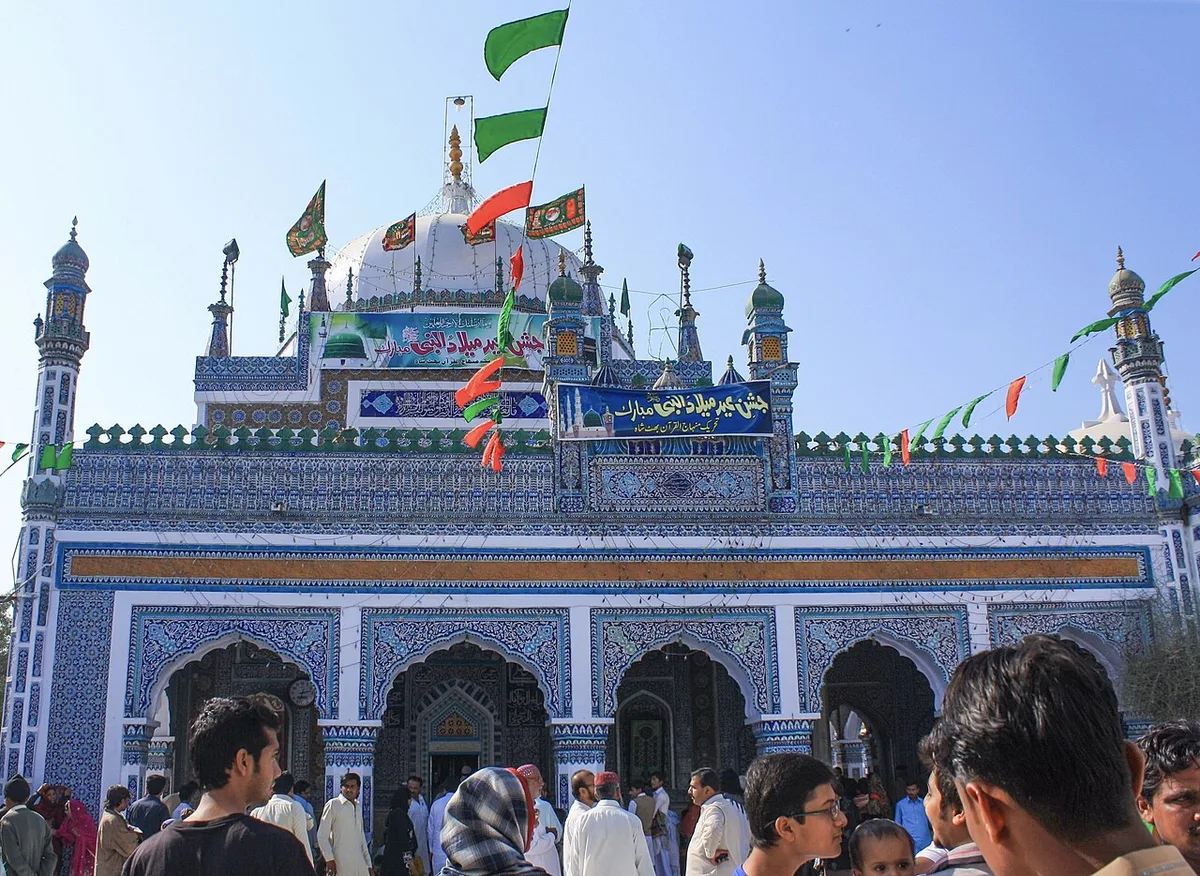
The second great poet of the age, Sachal Sarmast, was born in 1739 at Daraza near Ranipur, the same year Nadir Shah invaded Sindh. The Encyclopaedia Iranica notes that he wrote mystical poetry in Sindhi, Siraiki, Urdu and Persian. He lived through the last decades of Kalhora rule and well into the Talpur period. Iranica gives his death as 1826, while other sources give 1827 or 1829.
Decline of the Kalhoras and the Battle of Halani
Ghulam Shah’s death in 1772 opened a long crisis. His son Sarfraz Khan became ruler, but Jiskani describes his rule as harsh. The Kalhora court split into rival groups, and the strongest of them were the Lekhis and the Baloch Talpurs, who had long served the dynasty as soldiers and commanders.
According to Soomro in Studies in Kalhora History, open bloodshed between these groups began in 1775 and turned into a civil war that lasted about ten years. The East India Company closed its Thatta factory in 1775 because trade had become impossible in the disorder. Jiskani notes that Ghulam Nabi Kalhoro was defeated and killed in 1778 by forces under Mir Bijar Khan Talpur.
The final break came under Abdul Nabi Kalhoro. He had the Talpur chiefs Mir Abdullah Khan and Mir Fateh Khan killed. In response the Talpurs burned Khudabad, an event Kalhora historians date to 1781. The two sides then met near the village of Halani in central Sindh. In the Battle of Halani in 1783, the Talpurs under Mir Fateh Ali Khan defeated Abdul Nabi.
Transfer of Power to the Talpur Mirs
Halani ended Kalhora rule over Sindh. The Talpurs divided the country among branches of their family, with seats at Hyderabad, Khairpur and Mirpur Khas. Mir Fateh Ali Khan at first kept Khudabad as his capital and moved to Hyderabad in 1789, after the Indus flooded Khudabad, according to the Wikipedia account based on Sindhi local histories.
Jiskani adds that the Kalhoras did not vanish overnight. Abdul Nabi and his family remained a disturbing force until the end of the 18th century. The Talpurs, for their part, ruled Sindh from Hyderabad until the British conquest of 1843. Their story is told in our article on the Talpur dynasty and the Mirs of Sindh.
Legacy of the Kalhora Dynasty in Sindh
The Kalhora legacy can be seen in three places: on the map, in the fields and in the buildings. Hyderabad, the second city of Sindh today, began as Ghulam Shah’s fortress capital and remained the seat of government under the Talpurs. Many of the canals the Kalhoras dug or renewed were later absorbed into the British and modern barrage systems, according to Panhwar.
Their buildings set a regional style. The use of brick, kashi tiles and fresco painting, and the habit of placing a mosque beside a tomb, carried on into the Talpur period. Historians also credit the Kalhora dynasty with supporting Sindhi as a language of court and poetry, at the same time that Bhittai and Sachal were writing.
The record is not only one of success. The dynasty depended on foreign overlords for much of its life, and its last decades were marked by family feuds and violence. Writers such as Panhwar argue that a change in the river’s course did as much to end Kalhora rule as any battle.
Visiting Kalhora Sites in Sindh Today
The Kalhora sites are spread across central and northern Sindh. Here is what you can expect at each of the main ones.
- Ghulam Shah Kalhoro’s tomb, Hyderabad: north of the National Highway near the City Gate area, according to the Sindh Antiquities Directorate. Lanes around it are narrow and crowded, so it is easier to walk the last stretch.
- Pacca Qila, Hyderabad: the fort walls can be seen from the surrounding streets. The area inside is now a dense residential neighbourhood.
- Jamia Mosque and Yar Muhammad’s tomb, Khudabad: about 13 kilometres south of Dadu. The mosque is still used for prayer, so dress modestly and visit outside prayer times.
- Noor Muhammad Kalhoro’s tomb: about 15 kilometres east of Daulatpur in Shaheed Benazirabad district, according to the Endowment Fund Trust. It lies in open country, so plan a road trip with a local driver.
- Adam Shah’s tomb, Sukkur: on Adam Shah Takri hill above the old city.
- Bhit Shah: the shrine of Shah Abdul Latif lies about 6 kilometres east of Hala, according to Britannica, and is often visited on the same trip as Hyderabad.
Many of these buildings are fragile. Do not touch or pick at loose tiles, and do not climb on platforms or walls. Most sites have no ticket office or guide, so it helps to read about each tomb before you go.
FAQ About the Kalhora Dynasty of Sindh
Who founded the Kalhora dynasty?
Most historians treat Mian Yar Muhammad Kalhoro as the real founder of the ruling dynasty. He returned to Sindh in 1701, made Khudabad his capital and received the title Khuda Yar Khan from the Mughals. His father Mian Nasir Muhammad had earlier ruled parts of upper Sindh.
When did the Kalhoras rule Sindh?
The usual dates for the Kalhora dynasty are 1701 to 1783. Some scholars start the count around 1680, when Nasir Muhammad began ruling locally, and Jiskani dates the Kalhoras as rulers of Sindh as a whole from 1736 to 1737, when they gained Thatta.
Who founded Hyderabad in Sindh?
Mian Ghulam Shah Kalhoro founded Hyderabad in 1768 on the site of the old town of Nerun Kot. He built the Pacca Qila fort as the centre of his new capital and moved there around 1770.
Where is the Kalhora tomb in Hyderabad?
The best known Kalhora tomb in Hyderabad is that of Mian Ghulam Shah Kalhoro, north of the National Highway near the City Gate area. The tombs of Sarfraz Khan and Ghulam Nabi Kalhoro stand in the same part of the city.
Why did the Kalhora dynasty come to an end?
Several causes worked together. The Kalhoras paid heavy tribute to Persia and Afghanistan, fought among themselves after 1753, and lost much farmland when the Indus changed course around 1758. Their quarrel with the Talpurs turned into civil war, and the Talpurs won the Battle of Halani in 1783.
Sources and Further Reading on the Kalhoras
- Zulfiqar Ali Kalhoro (ed.), Studies in Kalhora History, Economy and Architecture, Sindh Books, 2017, digitised by the M.H. Panhwar Institute of Sindh Studies (essays by Mohammad Qasim Soomro and others).
- L. Jiskani, “A Study of Social Conditions in Sind under Ghulam Shah Kalhora, 1761 to 1772”, Grassroots, University of Sindh.
- M.H. Panhwar, Irrigation under Noor Muhammad Kalhora, and “The Environments that Lead to the Rise and Fall of Kalhoras”, panhwar.com.
- Encyclopaedia Britannica, “Hyderabad, Pakistan”.
- Encyclopaedia Iranica, entries on Abd al Latif Bhetai and Abd al Vahhab Sachal.
- Sindh Antiquities Directorate, entries on the tombs of Mian Noor Muhammad Kalhoro and Mian Ghulam Shah Kalhoro.
- Department of Archaeology and Museums, Pakistan, site entries on the tombs of Noor Muhammad and Ghulam Shah Kalhoro and the shrine of Shah Abdul Latif Bhittai.
- Dawn: “Kalhoro mausoleum: Where no one comes to offer fateha” (2015); “Kalhoro dynasty mosque faces threat of collapse” (2013); “Kalhora dynasty: Domes and debris” (2012); “The enchanting beauty of Sachal Sarmast’s shrine” (2014).
- CyArk and Open Heritage 3D, Jamia Masjid Khudabad project pages.
- Sahitya Akademi, Shah Latif (biographical study).

Leave a Comment