

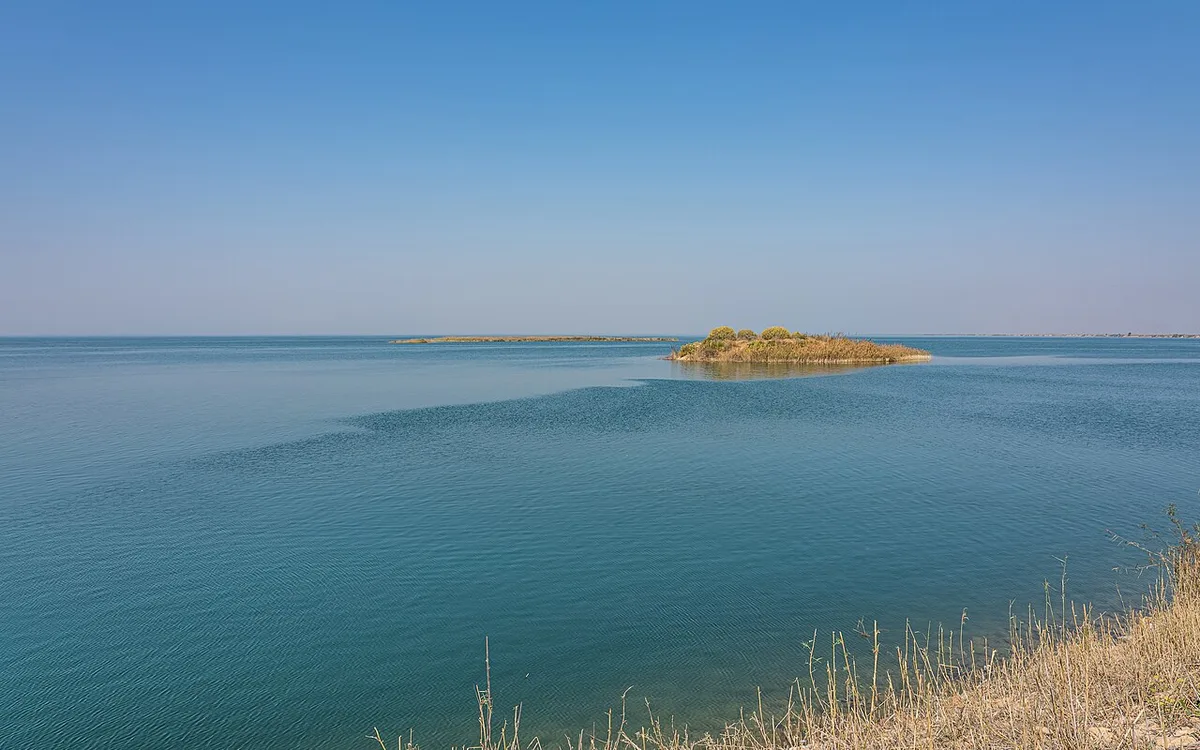
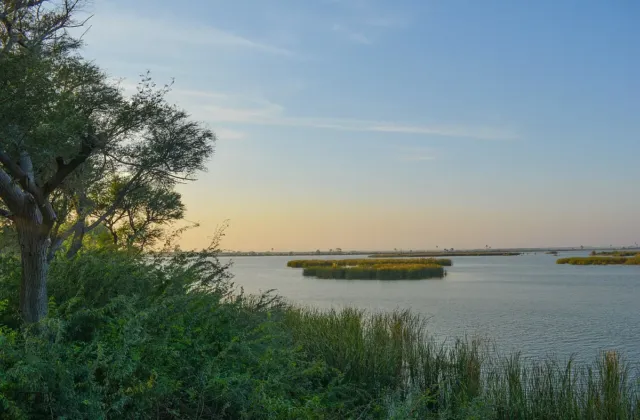
Keenjhar Lake, also called Kalri Lake, lies in Thatta district in southern Sindh. It is a working reservoir, a protected wetland and a weekend picnic spot all at once. Most of the drinking water used in Karachi passes through it. Families from Karachi, Hyderabad and Thatta come here to ride boats, picnic on the shore and visit a small white shrine in the middle of the water.
In this article (25)
- Keenjhar Lake Quick Facts: Size, Depth and Status
- How Kalri and Sonehri Became One Large Reservoir
- The Two Older Lakes Before the Embankment
- Building the Reservoir in the 1950s
- Karachi Water Supply and the K IV Project
- From the KG Canal to Dhabeji Pumping Station
- Where the K IV Project Stands in 2026
- The Legend of Noori and Jam Tamachi
- Noori’s Tomb in the Middle of the Lake
- Shah Abdul Latif Bhittai and Sur Kamod
- Ramsar Site Status and the Birds of Keenjhar
- Mallah Fishing Communities Around the Lake
- Pollution and Other Environmental Pressures
- How to Reach Keenjhar Lake from Karachi and Thatta
- Best Season and Time of Day to Visit
- Boating, the STDC Resort and the Huts
- Safety Tips: Boats, Drownings and Swimming Risk
- Nearby Places: Makli, Shah Jahan Mosque and Haleji
- Frequently Asked Questions About Keenjhar Lake
- Is Keenjhar Lake the Same as Kalri Lake?
- How Far Is Keenjhar Lake from Karachi?
- Is Noori Really Buried in Keenjhar Lake?
- Is It Safe to Swim in Keenjhar Lake?
- Which Months Are Best for a Keenjhar Trip?
- Sources and Further Reading on Keenjhar Lake
This guide covers the lake in order. First comes its history as two smaller lakes, then its role in Karachi’s water supply, then the folk tale of Noori and Jam Tamachi. After that come the birds, the fishing villages and the pollution problems. The last part is practical: how to get there, where to stay, how to stay safe on the water and what to see nearby.
Numbers for Keenjhar Lake vary widely, because its area, depth and distance from the cities all depend on the water level and on how they were measured. When two sources give different figures, both appear below with the name of each source.
Keenjhar Lake Quick Facts: Size, Depth and Status
| Item | Details and source |
|---|---|
| Location | Thatta district, Sindh, Pakistan |
| Other names | Kalri Lake; listed by the Ramsar Convention as Kinjhar (Kalri) Lake |
| Distance from Karachi | About 120 to 122 km (Herald; Sindh Irrigation Department; STDC) |
| Distance from Thatta | About 18 to 36 km, depending on the source and the point measured |
| Area | 13,468 ha (Ramsar); 52 square miles at full level (Sindh Irrigation Department); about 9,842 ha (WWF Pakistan) |
| Depth | Average about 20 feet (Sindh Irrigation Department); maximum 26 feet (WWF Pakistan) |
| Main water source | Kalri Baghar Feeder (Upper), which leaves the right bank of Kotri Barrage |
| Protected status | Ramsar site no. 99, designated 23 July 1976; wildlife sanctuary |
| Places to stay | Keenjhar Lake Resort, run by the Sindh Tourism Development Corporation (STDC) |
How Kalri and Sonehri Became One Large Reservoir
The Two Older Lakes Before the Embankment
Before the 1950s there was no single Keenjhar Lake. There were two natural lakes close to each other. WWF Pakistan names them Sonehri and Keenjhar. A 2014 report in the Herald magazine calls them Sunehri Lake and Kalri Lake. Whatever the names, both sources are talking about the same two basins.
WWF Pakistan’s lake brochure records what local people remember about that time. The two lakes joined every year in the rainy season when they overflowed. Their water then came mainly from about a dozen hill torrents on the western side. According to the same brochure, the two basins were left behind long ago when the Indus shifted to a new bed.
The folk tale of Noori and Jam Tamachi also remembers more than one lake. The version given on Wikipedia mentions three lakes between Jherruk and Thatta: Keenjhar, Chholmari and Sonahri.
Building the Reservoir in the 1950s
In the 1950s an embankment, or bund, was built on the eastern side of the two lakes. This joined them into one large body of water. WWF Pakistan says the purpose was to supply drinking water to Karachi. The Herald adds that the new lake was also linked to the Indus to irrigate 352,000 acres of land in Thatta.
One limnological study published in a Pakistani science journal gives a more exact story. It says the two lakes were joined in 1958 by blasting the hills that separated them, and that the lake was renamed Keenjhar in 1972. I found no second source for 1958 or 1972, so I give both years with that warning.
The Sindh Irrigation Department describes the lake today as an artificial reservoir. Its earthen embankments run for about 15 miles and rise to a maximum height of 34 feet. Water arrives through the Kalri Baghar Feeder, a canal that leaves the right bank of Kotri Barrage and has a design discharge of 9,100 cusecs.
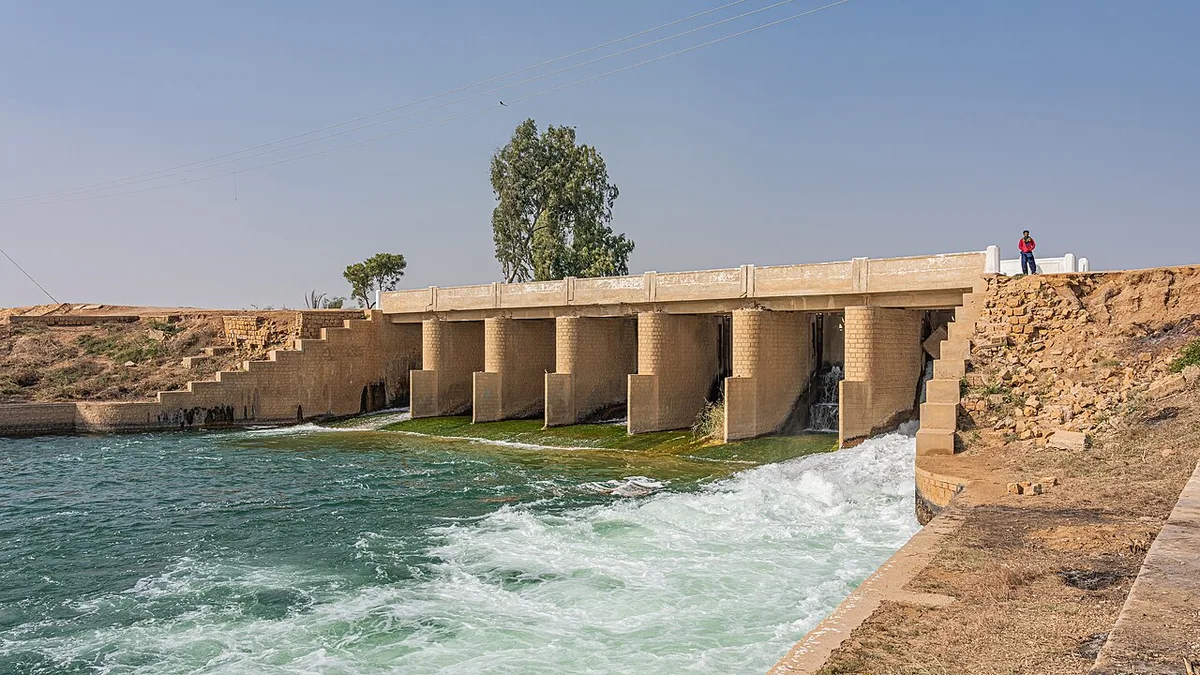
The department also lists the lake’s weak point: silt. About 4,335 acre feet of silt settle in the lake every year. Its original design life was 132 years. Siltation cut that estimate to 87 years, according to the same table.
Karachi Water Supply and the K IV Project
The Sindh Irrigation Department says the main purpose of the reservoir is a reliable water supply for Karachi’s homes and industries. It puts Keenjhar’s share at about 80 percent of the city’s total requirement. The Herald, in 2014, called Keenjhar “the major source of potable water for Karachi”, with the Hub Dam as the other main source.
From the KG Canal to Dhabeji Pumping Station
Water leaves the lake at a point called Chilya at its southern end. From there the 29 km Keenjhar Gujjo canal, usually called the KG canal, carries it south. The Herald reports that this canal was built in 1978. Before that, Karachi’s share went through the lower part of the Kalri Baghar Feeder.
At Gujjo the water splits into two canals. At Gharo they go underground into conduits that reach the Dhabeji pumping station, which was set up in 1959. From Dhabeji, pipelines lift the water and carry it on to Pipri on the eastern edge of Karachi. From the lake to the city the water travels roughly 120 km, part in open canal and part in pipe.
Each new supply scheme for Karachi carries a K and a number. The irrigation department’s table lists K I at 520 cusecs, K II at 380 cusecs and K III at 300 cusecs. The Herald reports that K II was completed in 1998 and K III in 2006.
Where the K IV Project Stands in 2026
The K IV project, also called the Greater Karachi Bulk Water Supply Scheme, was planned to bring a further 650 million gallons a day from Keenjhar. Planners drew it up in 2006, the government approved it in 2014, and Chief Minister Qaim Ali Shah inaugurated the work in June 2015.
Progress has been slow. A June 2026 column in Dawn by journalist Zofeen T. Ebrahim says the cost has risen from Rs25 billion to Rs171 billion. She gives the latest completion deadline as December 2028. She also notes that a pumping complex near Keenjhar needs a 50 MW power supply, and that work on this power line only began in March 2026.
The Legend of Noori and Jam Tamachi
In Sindh the lake is best known for the folk tale of Noori and Jam Tamachi. The story is one of the seven romances that Shah Abdul Latif Bhittai used in his poetry, often called the Seven Queens of Sindh.
In the usual telling, Jam Tamachi was a ruler of the Samma dynasty at Thatta. He was out hunting by the lake when he first saw Noori, a girl from a fishing family. He fell in love with her and married her, even though she was poor and of low rank. Her humility then won her a higher place than the queens of royal blood.
Wikipedia’s retelling, and several Sindhi versions, include a wedding gift. At the marriage, Jam Tamachi is said to have given the lake to the fishermen and freed them from taxes. This detail comes from folk accounts, not from any record of the Samma court.
Storytellers do not agree on where Noori came from. A March 2024 report in Dawn quotes local historians who say Noori was born to a king named Jasodhan and raised by the Gandra tribe of fishermen. Other tellings make her simply the daughter of a fisherman.
Noori’s Tomb in the Middle of the Lake
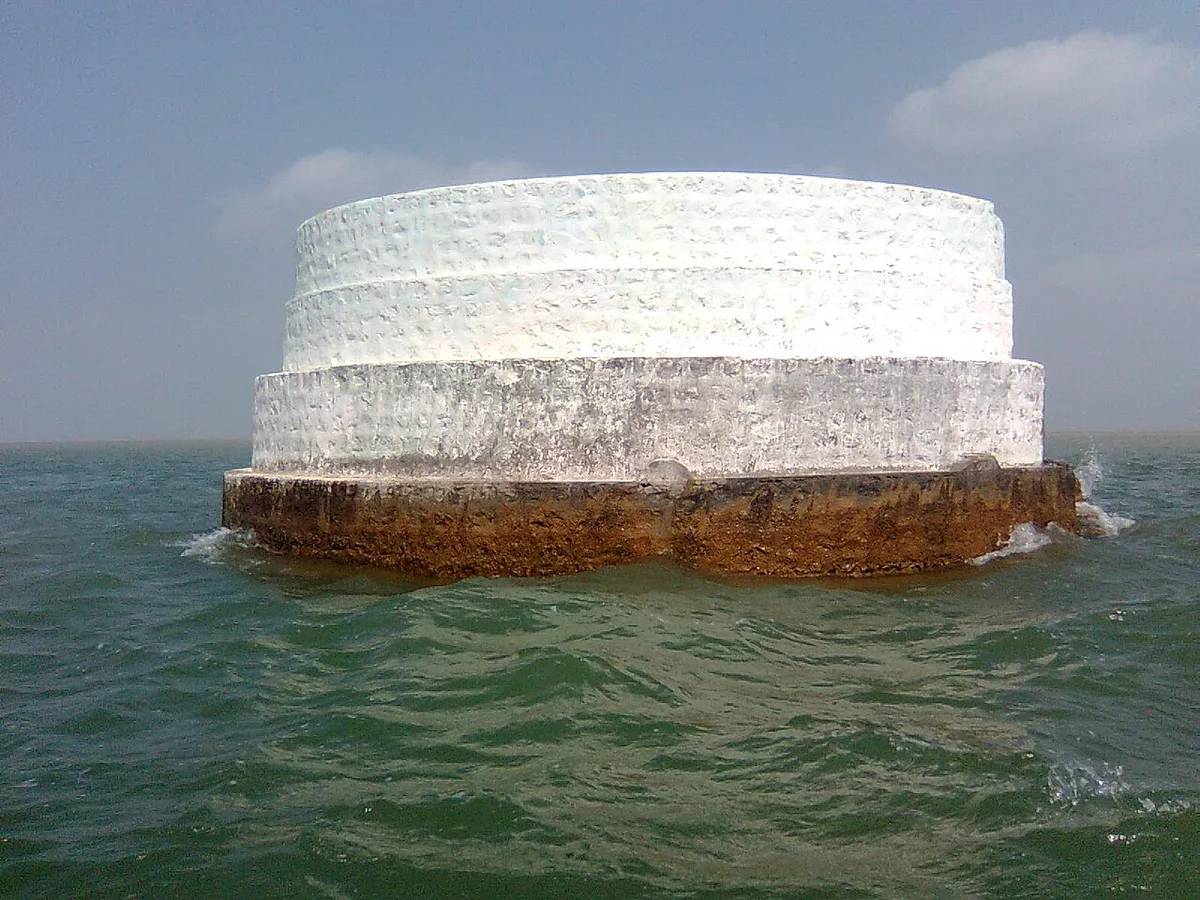
A raised white tomb stands on a small platform in the middle of the lake. Boatmen take visitors out to it, and STDC’s own page describes it as marking Noori’s grave. A 2003 Dawn report called this tomb the lake’s main attraction for picnickers.
Its identity is disputed. In March 2024, Dawn reported that a group of historians and researchers, including former senator Dr Karim Khuwaja, argued that Noori is buried at Makli. They point to a grave under a canopy beside the tomb of Jam Nizamuddin II. In their view, the island in the lake holds the graves of a spiritual figure named Hoondrro Shah and his son.
The researchers also told Dawn that the little island only came above water when the lake was enlarged. Neither claim has been settled by excavation. For now, it is fair to say that local tradition links the tomb to Noori and that some historians reject that link.
Shah Abdul Latif Bhittai and Sur Kamod
Shah Abdul Latif Bhittai gave the Noori story its lasting form in his collection, the Shah Jo Risalo. Dawn’s 2024 report names two chapters where the tale mainly appears: Sur Kamod and Sur Karayal.
Sur Kamod paints the lake itself. One verse, in an English version by Muhammad Yakoob Agha on the BhittaiPedia site, describes clear water below and branches above, with Noori rowing in midstream. The north wind then makes Keenjhar rock “like a cradle”. In verse 13, Noori rows and Jam Tamachi holds the net, and the two spend a whole day fishing on Keenjhar.
Scholars often read the poem as Sufi teaching. Noori stands for a humble soul, and the ruler’s love stands for divine grace. A 2017 study of women in Latif’s poetry notes that Sur Kamod shows Noori as thankful to the king who accepted her despite her low caste.
Ramsar Site Status and the Birds of Keenjhar
Keenjhar was named a Ramsar site on 23 July 1976. Ramsar sites are wetlands of international importance under a global treaty. The Ramsar Sites Information Service lists it as site no. 99, with an area of 13,468 hectares.
The Ramsar entry calls Keenjhar the largest freshwater lake in Pakistan. Other sources call it the second largest, after Manchar Lake. Manchar swells and shrinks a great deal with the floods, so the ranking changes with the year and the method.
On top of the Ramsar listing, Keenjhar is a wildlife sanctuary under Sindh law. A 2020 report in The News says the Sindh government declared it a sanctuary in 1977 under the Sindh Wildlife Protection Ordinance of 1972.
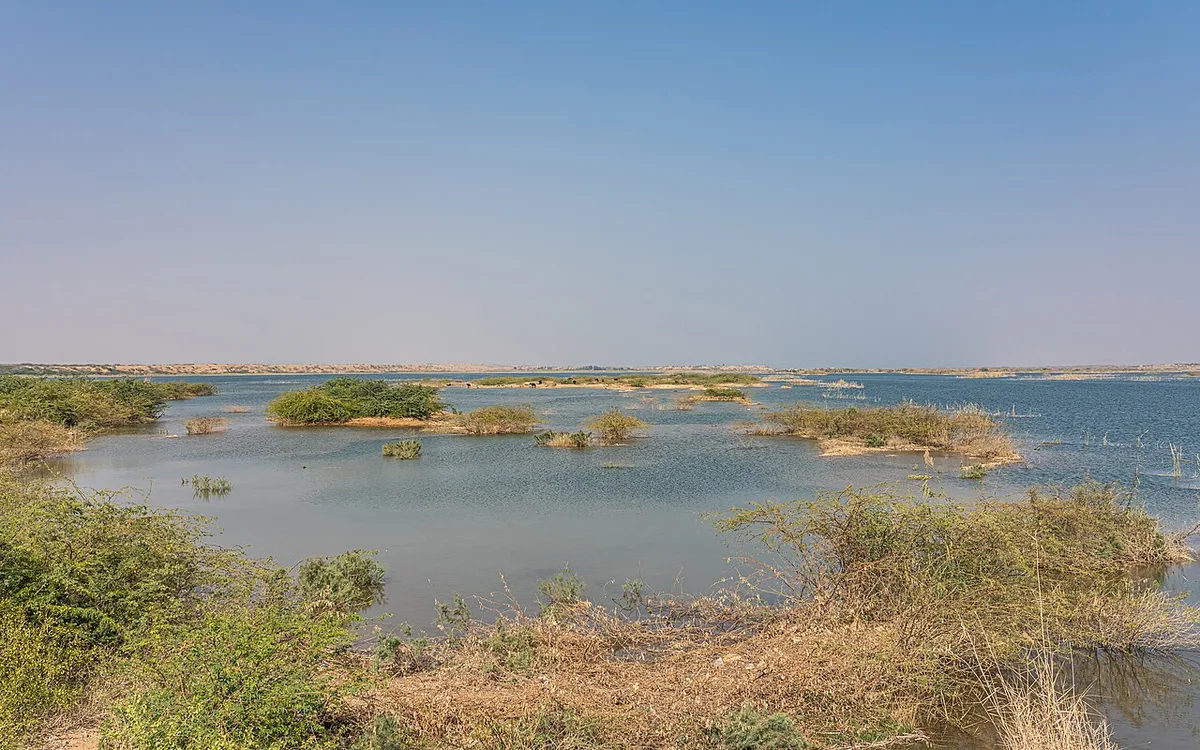
According to the Ramsar entry, Keenjhar supports extensive reed beds and rich submerged and floating plants. It is an important area for breeding, staging and wintering waterbirds, with up to 140,000 birds. The species it names include European Wigeon, Black Coot and Common Pochard.
WWF Pakistan has recorded some 65 species of waterfowl at the lake. Resident and breeding birds include the night heron, the cotton teal and the purple moorhen. Winter visitors include common teal, mallard, pintail, shoveller and great cormorant.
Bird numbers have dropped sharply. Midwinter counts recorded about 205,000 waterfowl in 1987 to 1988, but only 13,760 in 2006. A 2016 Dawn report blamed hunting, trapping and the discharge of industrial and domestic waste. The same report describes five villages near Jhimpir that set up a no hunting zone with WWF Pakistan’s help in 2010. Former hunters were hired as eco guards.
Mallah Fishing Communities Around the Lake
People have fished Keenjhar for as long as there are records. The fishing people of lower Sindh are known by several names, including Mohana, Mallah, Mirbahar and Gandra. Noori herself is remembered as the daughter of such a family.
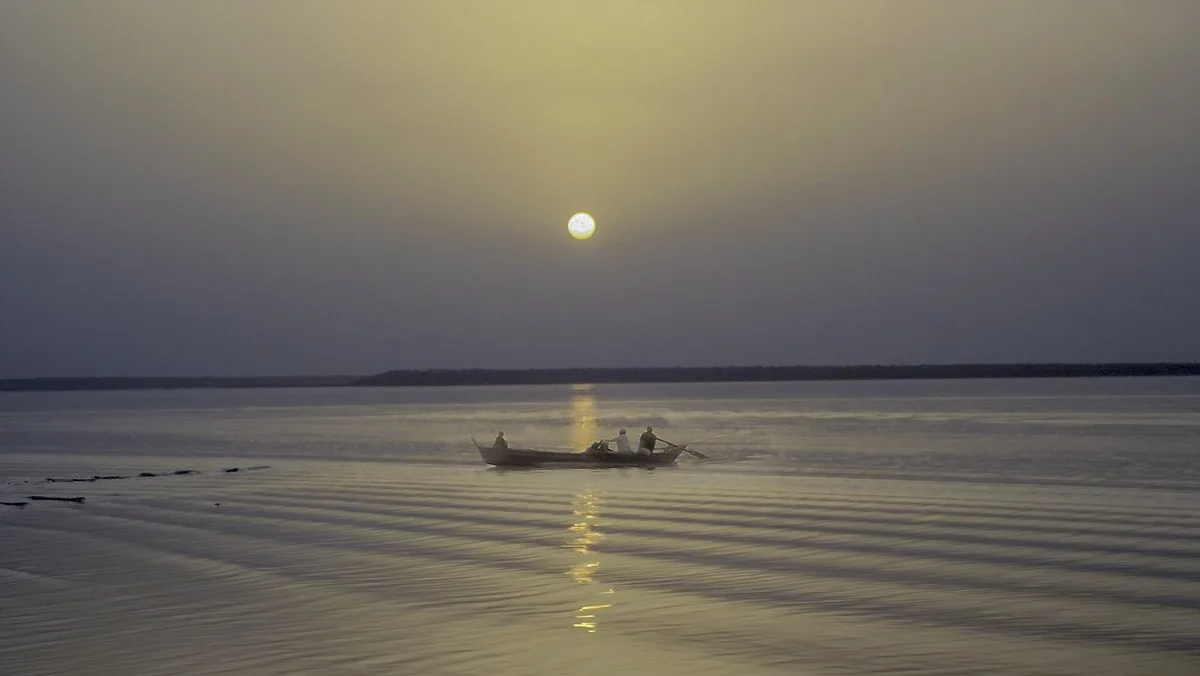
WWF Pakistan’s brochure says fishing is the main livelihood around the lake. Mat making is another important source of income, and some people work in tourism or small farming. Literacy is very low.
The fishing economy has shrunk. Figures from the Keenjhar Fishermen Welfare Society, quoted by WWF, show 24,355 fishermen and 2,200 boats in 1988 to 1989. By 2005 to 2006 there were 10,320 fishermen and 820 boats. As catches fell, many families turned to stone quarrying around the lake.
WWF lists several reasons for the decline. They include pollution, fishing of young fish, overharvesting and the diversion of river water through a bypass canal in the monsoon. Tilapia, introduced in the late 1950s, is also named as an alien species that may have pushed out native fish. WWF’s survey for the brochure counted 48 fish species in Keenjhar.
Pollution and Other Environmental Pressures
The biggest threat to Keenjhar is dirty water entering the lake. In 2011, Dawn reported that experts had warned of growing effluent from the Nooriabad industrial zone. The same report named the Sonahri, Jhampir, Manchri and Shoro drains as other sources, along with litter left by tourists.
WWF Pakistan adds that urban and domestic waste also reaches the lake through the Kalri Baghar Feeder itself. This matters because the same water is later pumped to Karachi. Researchers from Sindh Agriculture University and the University of Sindh tested the water for a 2020 paper. Their samples near the Kotri effluent outfall and the WAPDA colony had the highest dissolved solids and chlorides.
Other pressures are on land. WWF lists cutting of trees on the eastern bank for fuel and fodder, illegal shooting of birds and stone mining that has scarred the shoreline. In August 2024, a fishing association called the Keenjhar Maruara Welfare Association invited a fact finding team to look at a planned floating solar project, Dawn reported. They said no environmental impact assessment had been done.
How to Reach Keenjhar Lake from Karachi and Thatta
From Karachi, most drivers take the National Highway (N5) east through Gharo to Thatta. From Thatta you continue north on the same highway toward Hyderabad. The Wikivoyage travel guide places the lake roughly halfway between Thatta and Hyderabad on the N5, and notes that a public minibus runs between the two cities on this road until dusk.
Ask three offices and you get three distances. The Sindh Irrigation Department gives about 122 km from Karachi, 22 km from Thatta and 80 km from Hyderabad. STDC also gives 122 km from Karachi but 18 km from Thatta. The Herald puts the lake about 120 km northeast of the city. Expect a drive of roughly two to two and a half hours from central Karachi, depending on traffic.
Note that the N55, also called the Indus Highway, is a different road. The National Highway Authority lists it as starting at Kotri and running north on the west bank of the Indus. It does not pass the lake, so the N5 is the road you want.
Best Season and Time of Day to Visit
For most visitors the cooler winter months are the most comfortable, and winter is also the bird season. The WWF Pakistan Keenjhar Lake brochure describes the lake as a breeding, staging and wintering ground for waterfowl, and the main bird count here is a mid winter census. Arrival dates shift from year to year, so this guide does not give fixed months. Mornings are the best time for birds.
Dawn’s report on the 2003 disaster blamed strong winds for the capsizing. Two of the worst boat accidents on record, in June 2003 and August 2020, happened in the warmer months. Weekends and public holidays are very crowded in any season.
Boating, the STDC Resort and the Huts
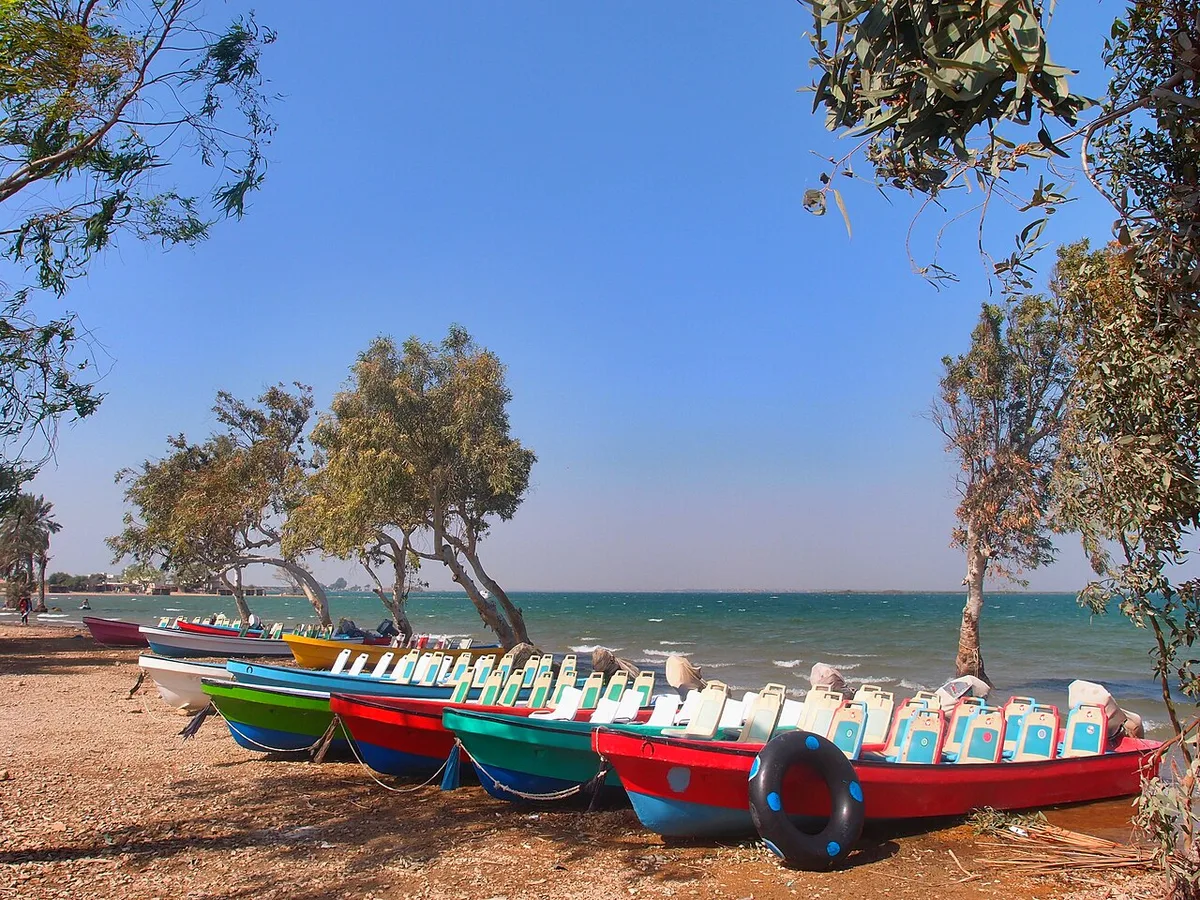
Boating is the main activity. Boatmen at the lake run trips out to Noori’s tomb, and colourful pedal boats wait on the sand for hire. Agree on the price and the number of passengers before you board.
The Keenjhar Lake Resort is run by the Sindh Tourism Development Corporation (STDC), the provincial body. It is not a PTDC property. Its cottages, which most people call huts, face the water. Each hut takes up to six adults and a few children.
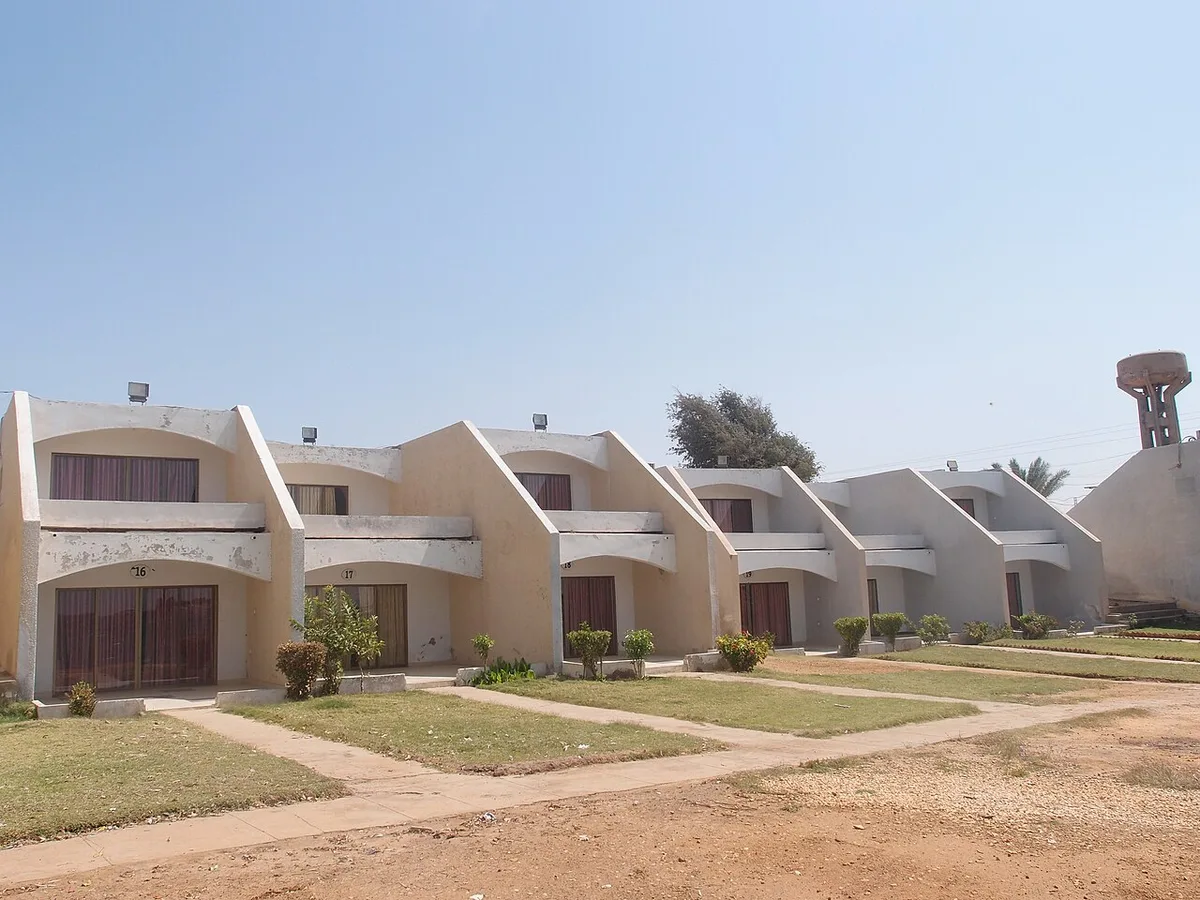
STDC’s booking page sets out the house rules. Cooking inside the rooms is not allowed, and wood fires are banned. Barbecue is allowed behind the rooms, and loud music is not allowed. Check in is at 4:00 pm and check out is at 3:00 pm. The rates shown on two STDC pages did not match each other when this guide was written, so get the price for your dates in writing from STDC.
Safety Tips: Boats, Drownings and Swimming Risk
Keenjhar looks calm, but it has a long record of drownings. On 1 June 2003, at least 25 picnickers from Karachi drowned when an overloaded motorboat capsized. Dawn reported that 22 women and children had boarded a boat meant for 12 people, and that strong winds turned it over in deep water.
In August 2020, ten picnickers drowned when their boat capsized near the graves of Noori and Jam Tamachi. Makhdoom Gulzar, the STDC official in charge at Keenjhar, told Dawn that operators often carry picnickers in wooden boats built for fishing. In 2019, Dawn reported that two sisters and their aunt drowned after slipping on algae covered stones on the steps of the tomb.
The same 2019 report found a lack of life jackets, trained divers, first aid and ambulances at the lake. Based on what went wrong in those cases, here is what to do on the water:
- Wear a life jacket on every boat ride, and bring your own for children if the boatman has none.
- Count the passengers before you board. Do not join a boat that is already full.
- Do not go out on the water when the wind is strong or the waves are high.
- Step slowly at the tomb. The stones near the water are slippery with algae.
- Avoid swimming away from the shallow edge. The lake is deep in places and help may be far away.
- Keep children within arm’s reach near the water at all times.
Nearby Places: Makli, Shah Jahan Mosque and Haleji
Keenjhar fits easily into a day trip with the historic sites around Thatta. Most people combine it with at least one of the following.
Makli Necropolis sits on a ridge just outside Thatta and is a UNESCO World Heritage Site. It holds thousands of tombs, including those of Samma and Tarkhan rulers. Read our full Makli Necropolis guide before you go.
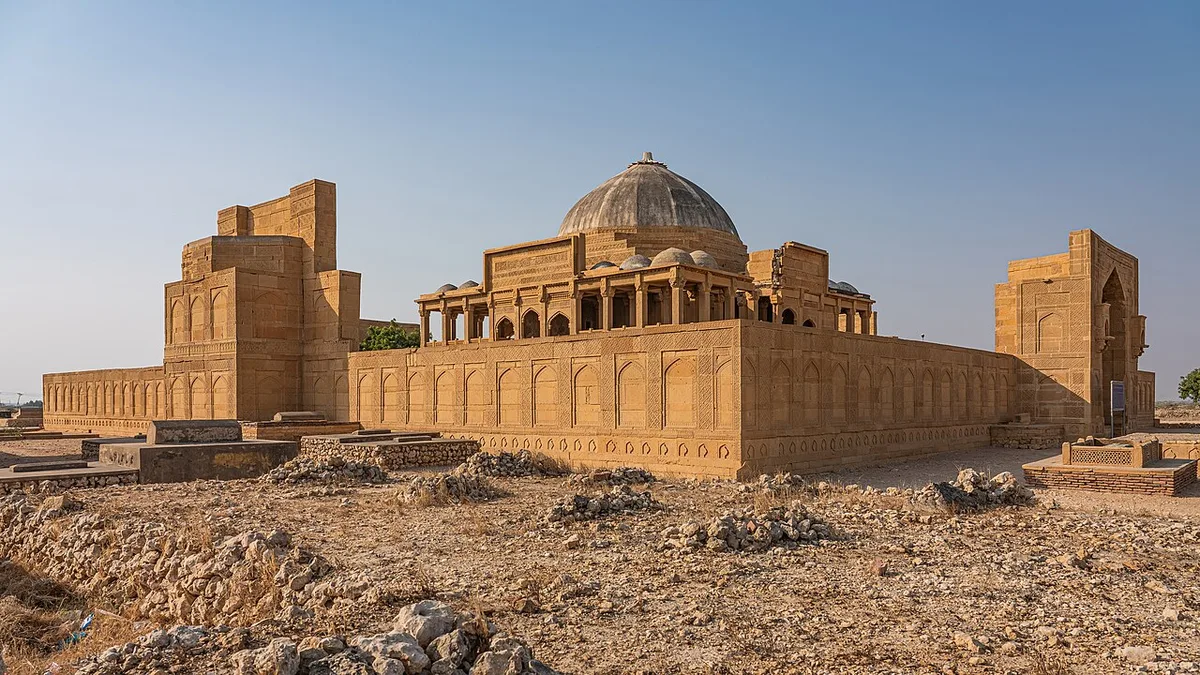
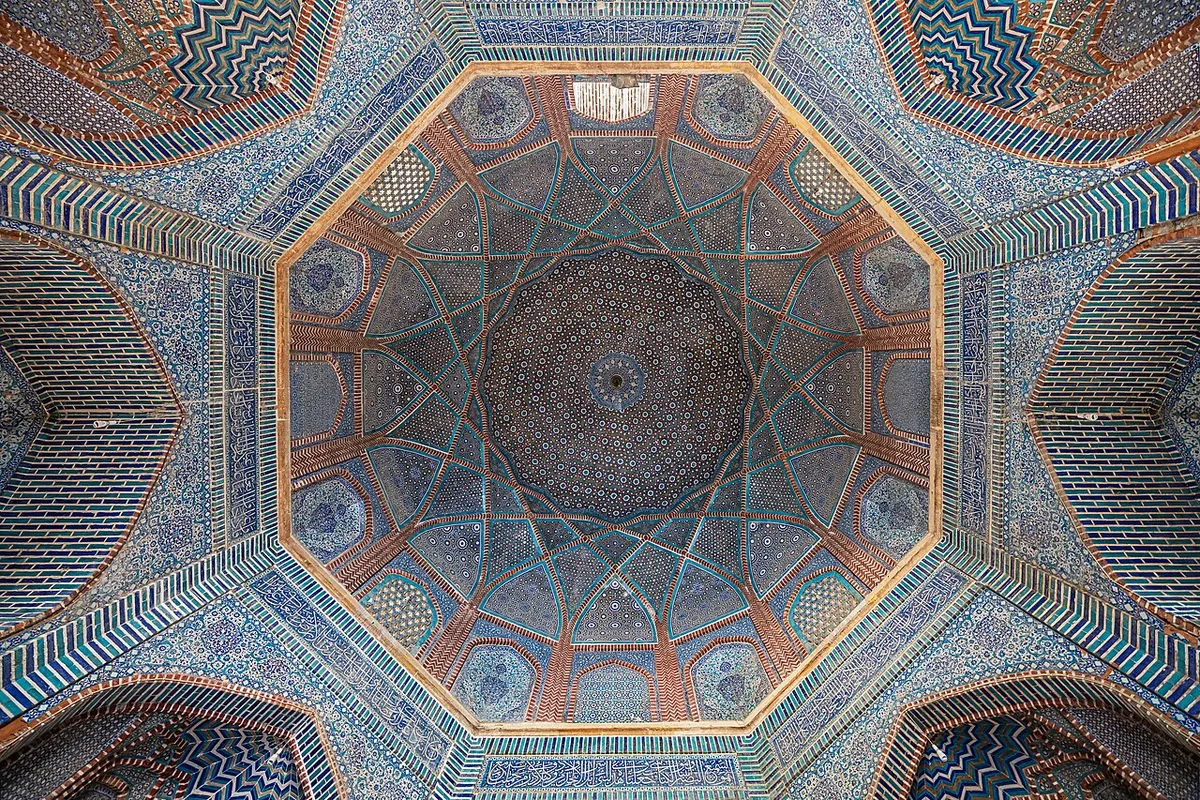
The Shah Jahan Mosque in Thatta town is known for its many brick domes and blue tilework, and Thatta town lies just beyond Makli. For its history and design, read our article on the Shah Jahan Mosque in Thatta .
The Chaukhandi tombs stand on the eastern outskirts of Karachi, close to the same highway. Their carved sandstone graves make a good first stop on the way out of the city.
Haleji Lake is another reservoir in Thatta district and a separate Ramsar site, no. 101. The Ramsar entry describes it as an artificial freshwater lake that supports between 50,000 and 100,000 waterbirds a year. Bird watchers often visit both lakes on the same trip.
Frequently Asked Questions About Keenjhar Lake
Is Keenjhar Lake the Same as Kalri Lake?
Yes. Kalri Lake is the common local name. The Ramsar Convention lists the site as Kinjhar (Kalri) Lake, and the Sindh Irrigation Department also uses both names.
How Far Is Keenjhar Lake from Karachi?
Official and press sources give about 120 to 122 km. The drive along the N5 through Thatta usually takes two to two and a half hours.
Is Noori Really Buried in Keenjhar Lake?
Boatmen and STDC point to the white tomb in the lake. Dr Karim Khuwaja and other researchers told Dawn in 2024 that she lies at Makli, under a canopy beside the tomb of Jam Nizamuddin II. Nobody has excavated either grave to settle it.
Is It Safe to Swim in Keenjhar Lake?
Dawn has reported drownings at Keenjhar again and again, along with a shortage of lifeguards, divers and life jackets. Stay in shallow water close to the shore, or do not swim at all.
Which Months Are Best for a Keenjhar Trip?
The cooler winter months are the most comfortable, and WWF Pakistan describes Keenjhar as a wintering ground for waterfowl, so that is when you are most likely to see migratory birds. Exact dates vary each year.
Sources and Further Reading on Keenjhar Lake
- Ramsar Sites Information Service, Annotated List of Wetlands of International Importance: Pakistan (PDF)
- Sindh Irrigation Department, Keenjhar Lake salient features
- WWF Pakistan, Indus for All Programme, Keenjhar Lake Wildlife Sanctuary brochure
- Herald (Dawn), Tapping into trouble, 2014
- Dawn, Is K IV a pipe dream?, June 2026
- Dawn, Historians, researchers claim Noori’s grave is in Makli, March 2024
- BhittaiPedia, Sur Kamod, verse 4 with English translations
- BhittaiPedia, Sur Kamod, verse 13
- Women in the Folk Literature of Sindh, Pakistan Journal of Gender Studies, 2017
- Wikipedia, Noori Jam Tamachi
- Wikipedia, Mohana community
- Limnological Studies of Keenjhar Lake, Pakistan Journal of Analytical and Environmental Chemistry
- The News, Effluent flow in Keenjhar leaves many questions for Sindh govt, 2020
- Dawn, How bird hunters turned to wildlife conservation, 2016
- Dawn, Pollution poisoning Keenjhar Lake, warn experts, 2011
- Environmental impact of pollutants on water quality of Keenjhar Lake, Desalination and Water Treatment, 2020
- Dawn, Activists assess adverse effects of Floating Solar Project, 2024
- Wikivoyage, Keenjhar Lake travel guide
- Sindh Tourism Development Corporation, Keenjhar Lake
- STDC, Keenjhar Lake Resort booking page
- National Highway Authority, road network list (PDF)
- Dawn, 25 Karachi picnickers drown in Keenjhar, 2003
- Dawn, 10 picnickers from Karachi drown in Keenjhar Lake, 2020
- Dawn, Lack of facilities endangers tourists’ lives at Keenjhar Lake, 2019

Leave a Comment