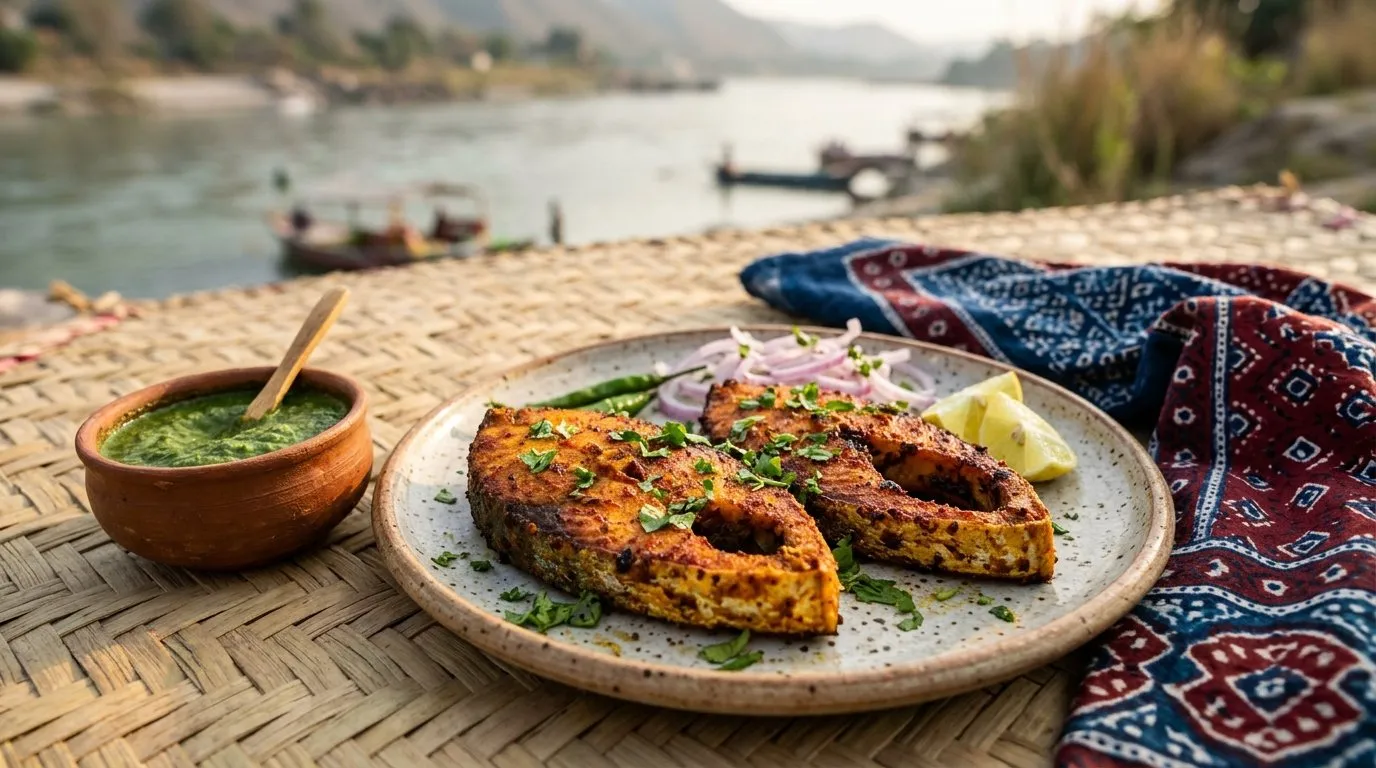
For Sindhis, Palla (پلو) is more than a fish. Caught in the Indus during the monsoon season, it has been the most celebrated fish of Sindh for centuries, praised in folk songs and still treated as a delicacy that families wait for every year. Palla is the Sindhi name for hilsa (Tenualosa ilisha), the same fish loved in Bengal, but people in Sindh will tell you that Indus Palla tastes different, and better.
In this article (8)
The story of the Indus Palla
Palla lives in the sea but swims up rivers to spawn. Each year during the monsoon floods, it entered the Indus from the Arabian Sea and swam upstream past Thatta, Hyderabad and Jamshoro. Historical accounts mention Palla reaching as far as Sukkur. Its taste is said to change as it moves into fresh water, becoming richer and oilier.
Palla is also linked with the shrine of Khwaja Khizr (Zinda Pir) on an island in the Indus near Rohri and Sukkur. A popular folk belief in Sindh says the fish swims upriver to pay its respects there.
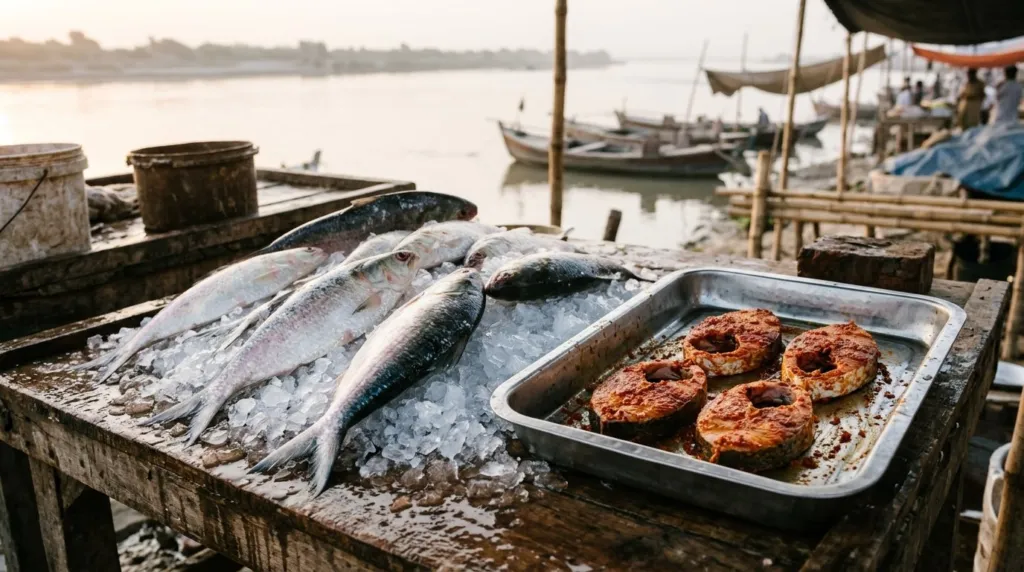
Today the fish is much rarer. Barrages on the Indus, reduced river flow into the delta and overfishing have cut down its migration, and most Palla now comes from the lower river around Kotri and Jamshoro or from the coast. The best season is roughly July to September, though the timing depends on the river. Because it is scarce, Palla is expensive, and buying it fresh at the river is a seasonal outing for many Hyderabad families.
Buying and handling Palla
- Look for bright silver skin, clear eyes, red gills and firm flesh that springs back when pressed.
- Choose thick centre steaks. The tail end has the most fine bones; the belly is the fattiest and many people’s favourite piece.
- About the bones: Palla is famous for its many fine bones. Eat slowly with your fingers, separating the flesh along the main bone. For guests who are not used to it, serve the belly pieces, which have fewer bones.
- Do not remove the fat. Palla’s natural oil is where the flavour is.
Other ways Palla is cooked in Sindh
Fried Palla is the most common, but there are other traditional styles. Palla in a clay pot, cooked slowly with onions, tomatoes and spices. Kunni Palla, where the whole fish is cooked buried in hot sand or wrapped in clay. And Palla pulao, layered with rice for special occasions. Smoked and dried Palla were also once used to preserve the catch.
Tips for perfect fried Palla
- Dry the fish well after washing; wet fish splatters and will not crisp.
- Use a flat, heavy pan and turn each piece only once.
- Mustard oil is the traditional choice and adds a sharp aroma, but any neutral oil works.
- Keep the masala simple. Palla has a strong natural taste; heavy masala hides it.
Frequently asked questions
Is Palla the same as hilsa?
Yes, it is the same species. “Palla” is the Sindhi name, and Indus Palla has a slightly different taste because of the river it swims in.
Can I use another fish with this recipe?
Yes. The same masala works well with rohu, surmai (kingfish) or any firm white fish. Fry thinner pieces for less time.
When is Palla season in Sindh?
Mostly during and after the monsoon, roughly July to September, depending on the river flow that year.