

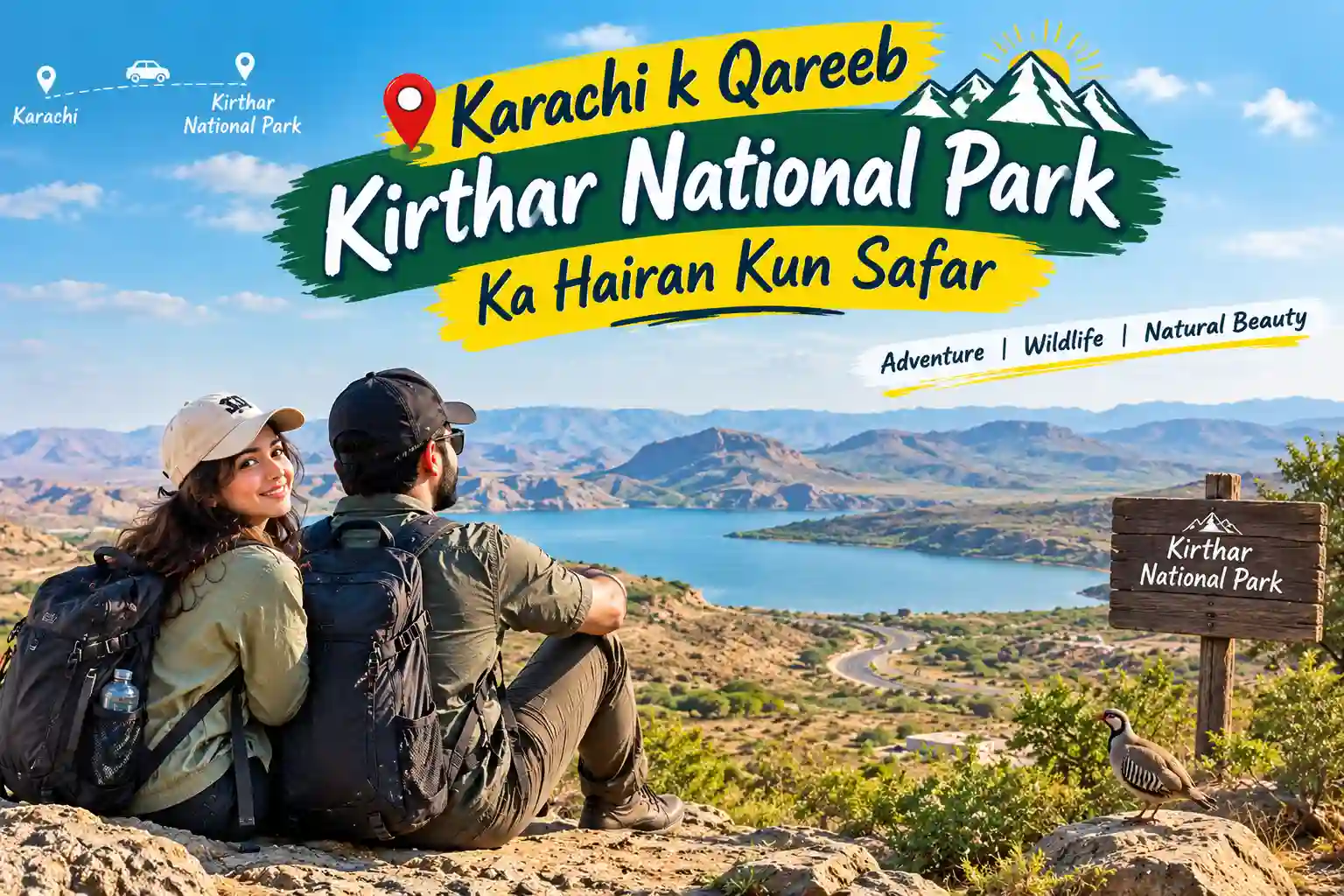
Leave Karachi early. Within the first hour you will start to notice less traffic, shorter buildings and soon no buildings at all. You will be surrounded by open skies, rocky hills and a long quiet road. This is when your Kirthar National Park adventure really begins! Many people come back saying they got adventure, wildlife and amazing scenery all in one day.
In this article (12)
- Kirthar National Park Route – Karachi To Khar Centre
- Kirthar National Park & Khar Centre Wildlife
- Khar Centre & Wildlife
- Khar Centre To Hub Dam Shoreline
- Tips For Visiting Kirthar National Park
- Kirthar National Park FAQs
- How far is Kirthar National Park from Karachi?
- What is the best time to visit Kirthar National Park?
- Can I visit Kirthar in a normal car?
- Can you stay overnight at Kirthar National Park?
- Which animals can you see in Kirthar?
- Why This Trip Will Stay With You
Kirthar is huge. The protected area covers approximately 3,087 square kilometres and was declared a National Park in 1974. Older official documentation states it is approximately the same size. The World Database on Protected Areas also states it covers approximately the same amount of land.
The best thing about this trip from Karachi is how short the distance is to see a completely different side of Sindh. No waves, no city lights, just rocky valleys, long ridges, open land and lots of wildlife. If you are feeling bored of your usual Karachi adventure then this drive will take you to a peaceful part of Sindh.
Kirthar National Park Route – Karachi To Khar Centre
The drive is an interesting one. We drove from central Karachi along the Lyari Expressway. This leads you onto the Super Highway (M9). Approximately 10km along the highway, turn left onto the Memar Avenue Road. You will begin to see less of the city.
Continue on the Memar Avenue for approximately 3km. Turn right onto the Northern Bypass Link Road. After approximately 6km you will join onto the Northern Bypass. Continue for approximately 7km and turn right onto the Hub Dam Road. You will notice the road is much wider and more open. You will start to see some of the first hills.
Continue straight on the Hub Dam Road for approximately 18km. Turn onto the Lashkari Goth Road. At this point you will start to see some of the Hub Dam. The road on the left leads down to the Dam. However, we continued on towards the Khar Centre Wildlife Facility.
After approximately 10km along the Lashkari Goth Road you can feel the wildlife area beginning. Often there are partridges (teetar) walking along the side of the road. Keep your speed low to increase your chances of seeing them.
Along this stretch of road you will also notice some incredible views of the Hub Dam. The open land, hills and water creates a completely different scene to the Karachi we are used to.
From the Lashkari Goth Road it is approximately 16km to the Khar Centre. As you drive along you will notice the Kirthar mountains are becoming much more defined. Once the range is right in front of you, the adventure begins!
Route Summary:
- Central Karachi
- Lyari Expressway
- Super Highway (M9)
- Approximately 10km – Turn left onto Memar Avenue Road
- Approximately 3km – Turn right onto Northern Bypass Link Road
- Approximately 6km – Join onto Northern Bypass
- Approximately 7km – Turn right onto Hub Dam Road
- Approximately 18km – Turn onto Lashkari Goth Road (Left road leads to Hub Dam)
- Approximately 10km – Wildlife begins. Approximately 16km to Khar Centre.
Kirthar National Park & Khar Centre Wildlife
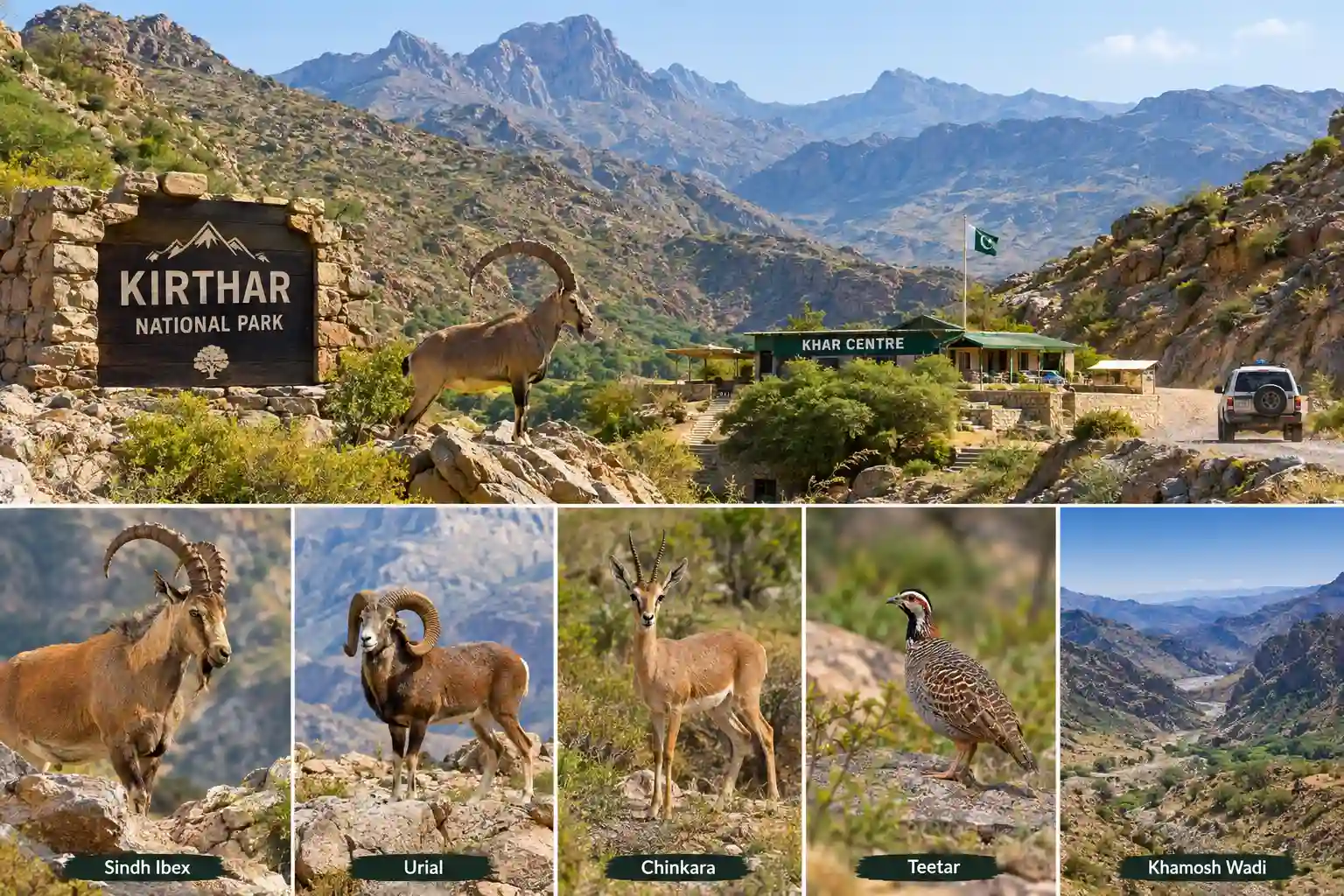
This is not just a range of mountains. Kirthar is a large protected area, home to many animals, birds and reptiles that thrive in a dry and harsh environment. Official and conservation documents mention some of the animals that live here include the Sindh ibex, urial, chinkara and many bird species. There are also two tourist centres within the park. These are Khar and Karchat. Both centres offer accommodation and guides.
As you begin to ascend to Khar Centre, don’t just wait to arrive. Pay attention to the road. Sometimes there are partridges walking along the slope and sometimes something moving in the distance on the rocky land. Sometimes it’s just the peaceful valley.
Khar Centre & Wildlife
Khar Centre is one of the main tourist centres within the Kirthar National Park. This is a great place to get a taste of the natural surroundings within the park. Once you arrive you will have left the noise of the city behind. The open land, rocky mountains and valleys create a beautiful scene. Government related environmental documents mention both Khar and Karchat offer accommodation in cottages and dormitories. Guides are also available.
The most exciting part of the drive to Khar Centre is seeing the wildlife appear out of nowhere! There are lots of partridges in this area. If you’re bringing a camera then a zoom lens or good phone camera will help. You need to keep your distance from the animals!
The Sindh ibex is very important in this area. This wild goat thrives in the steep rocky slopes and hilly land. Some of the best known animals within Kirthar are the urial and chinkara. The park has lots of variety of mammals and birds.
Sometimes you may spot a golden jackal (sunehri lomri). This animal is very opportunistic. They hunt small animals and birds when they can and will also eat dead animals. Animals like this do well in dry and rocky environments and that’s why they are perfect for somewhere like Kirthar.
If you enjoy travelling and love the journey more than the destination then this drive to Khar Centre will not disappoint. The winding road between the mountains, sudden wildlife and huge open skies will create a completely different experience to a regular picnic.
Once you arrive at Khar Centre you will notice lots of pictures of the wildlife on the walls. This helps to give you an idea of what animals live in certain areas of the park. It is a good place to stop and take in the views and wildlife.
Looking down from the high point of Khar Centre you will notice the landscape is very clear. There are lots of small and large bodies of water between the rocky land. This reminds you that Sindh is not just flat plains and hot cities.
Kirthar can easily be combined with other nature adventures around Karachi. If you’ve read about Mehar Jabal and the hill trail near Karachi then you will know there are many different types of hilly landscapes nearby. Kirthar will give you more wildlife and a real sense of wilderness.
The most important thing to remember is to be patient! You may not always see animals when visiting this area. Wildlife will move around on their own time. Often stopping the car and being quiet will help a lot more than speeding around.
Don’t get out of the car and walk around everywhere. The ground will be uneven in hilly areas and sometimes you could be putting yourself in danger to get close to wild animals. Follow your guide and keep a sensible distance.
Kirthar also has a cultural and historical aspect. There are old ruins and historic landmarks within this large area. The most famous historical landmark within the general Kirthar area is Ranikot Fort. This means this area is not just for wildlife lovers. If you love history and photography there is plenty to see.
Khar Centre To Hub Dam Shoreline
Looking out from above Khar Centre (either by drone or from a high point) you will notice part of the Hub Dam looks like a lake from a distance. The combination of the water, mountains and open skies creates a very peaceful scene. Choosing to visit this area will add another nice touch to your trip.
From Khar Centre it is approximately 15 minutes drive to this beautiful shoreline of the Hub Dam. The time may vary depending on your route and road conditions. Once you arrive you will notice how quiet it is. The wind, small waves and quiet hills will make you feel like time has slowed down.
Hub Dam is an important water reservoir built on the Hub River. According to WAPDA, construction was completed in June 1981. The aim was to store the water from the Hub River to provide a source of water for municipal and industrial use in Karachi. It also provides irrigation and industrial water for Balochistan. This is an inter-provincial project relating to both Sindh and Balochistan.
The WAPDA records show this has been an important source of water for Karachi. Its Karachi Water Supply Canal provides municipal and industrial water. So the water you see here is not just a pretty tourist view. It is an important part of the region’s water system.
Standing at the edge of the dam looking out over the water and Kirthar mountains behind you will understand why this is seen as an adventure. On one side you have wildlife, on the other mountains and suddenly there’s a huge reservoir in front of you.
When taking photos around the Hub Dam try not to get too close to the water. Although it looks like a picnic spot the water can be deep, the rocks can be slippery and you should consider the local conditions. If you have children with you keep a close eye on them.
An interesting thing to note is the importance of this area for birdlife. In conservation records, Kirthar Park and the Hub Dam area have been identified as an Important Bird and Biodiversity Area.
If you love photography then the morning or evening light will create some beautiful mountain and water views. However don’t get too caught up in taking photos. Consider the road conditions, weather and where you’ve parked. The network and facilities will not be like in the city so do the basics.
Tips For Visiting Kirthar National Park
Choose the correct vehicle. A 4×4 can make a big difference. Many of the roads within Kirthar are dirt roads and unmetalled. Environmental documentation shows there are hundreds of kilometres of unmetalled roads within the park. Many of these roads are better for a 4×4.
Do not assume all the roads shown on the map are suitable for your usual city car. Check the road conditions, weather and local advice. After rain the dirt road could be completely different.
Choose the correct time of year. The time of year will make a big difference. Kirthar can be a dry and hot climate so winter and cooler months will make it much more comfortable to explore outside. The Pakistan Tourism Development Corporation tourism information mentions autumn and winter is the best time to visit.
Pack some essentials. When you leave Karachi it’s a good idea to bring some bottles of water, some snacks, sunglasses, a cap, sunscreen and comfortable shoes. Check your fuel tank before leaving the city. In a remote area it’s easy to have a problem if you haven’t planned properly.
Talk to the children. If you are going with family it’s a good idea to talk to the children. Let them know how to act around the wildlife. Feeding, chasing, loud noises from the car and getting too close can cause problems.
Book your accommodation. If you plan on staying overnight in Kirthar make sure you have booked your accommodation. Records show both Khar and Karchat tourist centres offer tourist accommodation. However don’t expect the same standard as hotels in Karachi.
If you would also like to explore the coastal side of Karachi then check out our blog on Manora Island, sea views and history. Manora and Kirthar are both close to Karachi however they feel completely different. Manora offers you the sea whilst Kirthar offers you mountains, wildlife and dam landscape.
Kirthar National Park FAQs
How far is Kirthar National Park from Karachi?
If you follow the route above, it’s about 70 km from the point where you join the Super Highway to Khar Centre, plus whatever time it takes you to get out of the city via Lyari Expressway. Leave early and you’ll have most of the day there.
What is the best time to visit Kirthar National Park?
Autumn and winter. Summers here get dry and very hot, and PTDC also suggests the cooler months. Mornings and late afternoons give you the nicest light for photos too.
Can I visit Kirthar in a normal car?
You can drive a lot of the way, but many tracks inside the park are dirt roads and some really need a 4×4. Ask locally about the road before you go, especially if it has rained.
Can you stay overnight at Kirthar National Park?
Yes. Khar and Karchat have cottages and dormitories, and guides are available. Book ahead and keep your expectations simple, it’s not a Karachi hotel.
Which animals can you see in Kirthar?
Sindh ibex, urial, chinkara, golden jackal and lots of partridges, along with many birds around Hub Dam. Nothing is guaranteed though, so go slow and be patient.
Why This Trip Will Stay With You
This adventure offers so much variety. You leave the busy mornings of Karachi behind and enjoy a drive. Soon you are staring at the mountains, seeing partridges and possibly other wildlife. You enjoy the peacefulness of Khar Centre and end your day by relaxing by the water. The landscape changes so much throughout the day it will never get boring.
As the evening begins it is best to begin your journey back. Driving on hilly and remote roads can be difficult after dark, so keep your return time in mind from the start. While returning the landscape will look completely different in the evening light.
Many people are surprised by places like this near Karachi. Most of us think an adventure will involve going to a mall, restaurant, beach or popular spot within the city. However Kirthar National Park shows that Sindh has its own natural area where mountains, wildlife, water and peacefulness come together.
If you love adventure, wildlife photography, drives and getting close to nature then this route to Khar Centre and Hub Dam can become an adventure you will remember. Just make sure you have planned properly, filled your fuel tank, brought water, have the correct vehicle, local guidance and are careful around the wildlife.
Standing on the high ground of Khar Centre looking down you will notice the stunning landscape. The rocky valleys, shimmering water of the Hub Dam and open skies may make you realise why Kirthar National Park is so special. It’s close to Karachi however feels like a peaceful world far away from the city.




Leave a Comment