

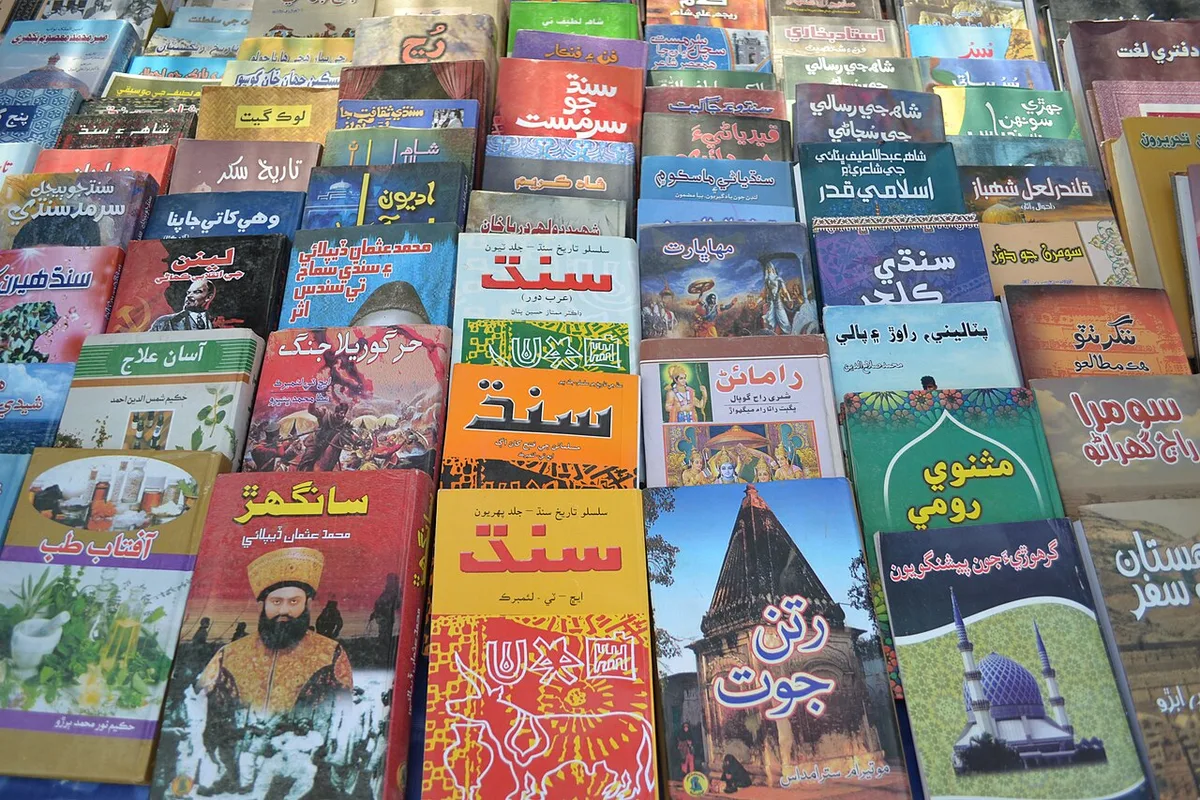
The Sindhi language is the main language of Sindh, the province in southern Pakistan that takes its name from the Indus River. It belongs to the Indo Aryan branch of languages, and today it is written in two scripts: an Arabic based alphabet of 52 letters in Pakistan, and both that alphabet and Devanagari in India. Below you will find where Sindhi sits among the Indo Aryan languages, the 1853 decision on its script and the merchant scripts it pushed aside, the six main dialects, the latest census counts from Pakistan and India, and the laws that recognise it in each country.
In this article (28)
- What Kind of Language Is Sindhi
- Sindhi Beside Urdu and Persian Today
- Early Writing and the Trading Scripts of Sindh
- The Khudabadi Script and Its Supporters
- The British Debate Over a Sindhi Alphabet
- How the 1853 Standard Took Shape
- Inside the 52 Letter Sindhi Alphabet
- Devanagari and Sindhi Writing in India
- Arabic Script Sindhi and Devanagari Side by Side
- The Main Dialects of the Sindhi Language
- Vicholi, the Standard Dialect
- Siroli, Lari, Thari, Lasi and Kachhi
- How Many People Speak Sindhi Today
- Sindhi Speakers in India and Beyond
- Legal Status of the Sindhi Language in Pakistan
- The 1972 Act and the 1990 Amendment
- Sindhi in the Eighth Schedule of India
- What the Eighth Schedule Listing Changed for Sindhi
- The Sindhi Language Authority in Hyderabad
- Dictionaries, Journals and Digital Work
- Sindhi Language in Daily Life and Culture
- Key Dates in the History of Sindhi
- Frequently Asked Questions About the Sindhi Language
- Is Sindhi Written From Right to Left?
- How Many Letters Does the Sindhi Alphabet Have?
- Is Sindhi an Official Language of Pakistan?
- When Was Sindhi Recognised in India?
- Sources Used for This Article
Every section cites the book, census table or newspaper report it relies on. Census figures are given exactly as the two national census offices published them, and points where scholars disagree are marked as such.
What Kind of Language Is Sindhi
The Encyclopaedia Britannica entry on the Sindhi language, written by Christopher Shackle of SOAS, University of London, places Sindhi in the Indo Aryan family. Its closest relative, according to that entry, is Siraiki, the language of southern Punjab.
Britannica explains that Sindh sat at the far southwestern edge of the Indo Aryan world, in the lower Indus valley. Partly because of that position, Sindhi kept or developed several features that its neighbours do not share.
The best known of these features is a set of four implosive consonants. These are versions of b, d, g and j that a speaker pronounces while drawing air inward. Sindhi treats them as separate sounds, and a word said with the ordinary b or d in place of the implosive one can turn into a different word.
Many Sindhi nouns also end in a short vowel, and that last vowel can tell you if a word is singular or plural. Britannica gives a simple pair: gharu means “house” and ghara means “houses”. Urdu and Siraiki use one form, ghar, for both.
Sindhi grammar also has many irregular past forms. Britannica lists ditho, “saw”, from disanu, “to see”, and muo, “died”, from maranu, “to die”. Pronouns can attach to the end of a word as well, as in atha mi, “is mine”.
Sindhi Beside Urdu and Persian Today
In his entry on Sindhi for the Encyclopaedia Iranica, Shackle explains that Persian remained the main language of administration and culture in Sindh until the British conquest of 1843. That long contact left Sindhi with a large stock of Persian loanwords. Even so, Sindhi and Urdu look quite different on the page, which the script sections below explain.
Britannica also notes that Sindhi written in Pakistan and Sindhi written in India have drifted apart since 1947. Writers in Pakistan borrow more words from Urdu, while writers in India draw more on Hindi.
Early Writing and the Trading Scripts of Sindh
Before the British arrived, Sindhi had no single agreed way of being written. Britannica records that Hindu business communities used several local scripts of their own, all of which are now obsolete. Muslim writers, who were the majority, mostly used Arabic letters and put extra marks on them for the Sindhi sounds that Arabic lacks.
Many of the merchant scripts came from the Landa family, a group of simple commercial alphabets used across Punjab and Sindh for account books. They were quick to write but left out most vowel signs, so a ledger could be hard for anyone but its writer to read.
The Khudabadi Script and Its Supporters
The most developed of these local alphabets was Khudabadi, also spelled Khudawadi. In a 2017 lecture reported by Dawn, the American historian Dr Matthew A. Cook said that the British officer Captain George Stack backed Khudabadi in the late 1840s. Cook said the Bhaiband merchant community, which financed much of the province’s trade, was at ease with it.
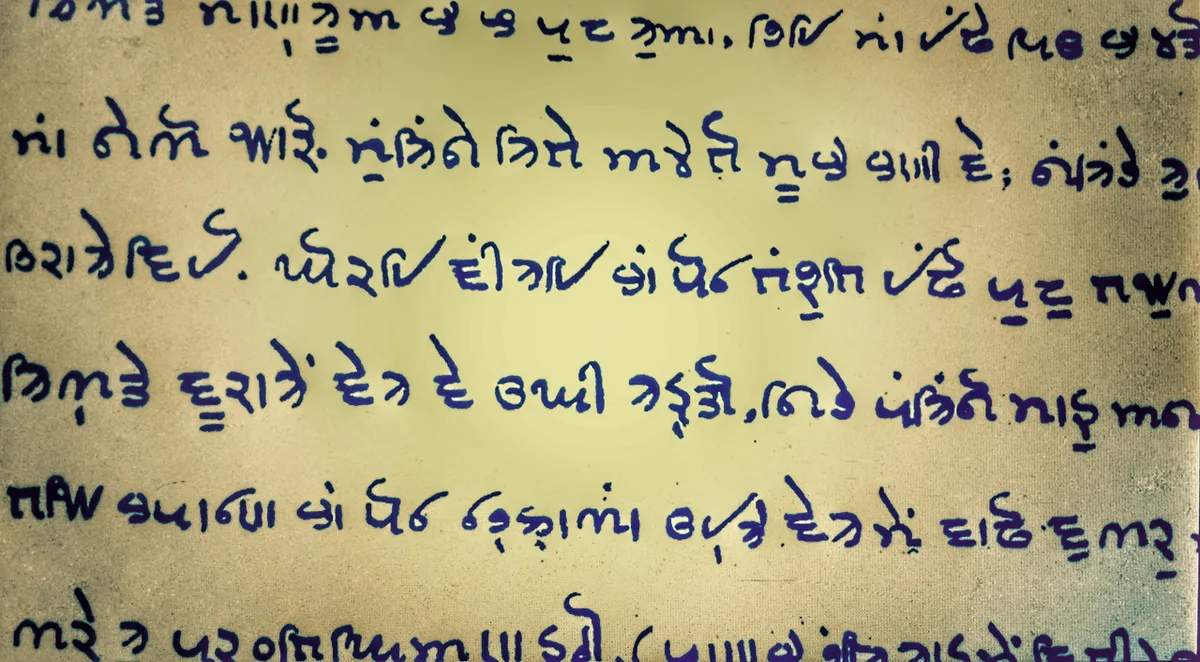
The script did reach print. The cover below, kept on Wikimedia Commons from a photograph shared by the French historian Michel Boivin, belongs to a book of the Sindhi folk epic of Dodo and Chanesar written in Khudabadi letters.
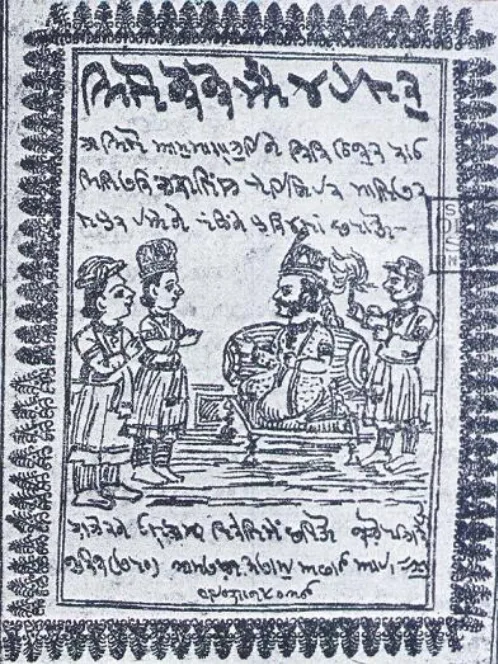
Even so, Khudabadi never became the general way of writing Sindhi. Britannica describes all of the old merchant scripts as obsolete today.
The British Debate Over a Sindhi Alphabet
The East India Company took Sindh in 1843, ending the rule of the Talpur Mirs of Sindh. Company officers soon had to settle a basic matter for their offices and schools. If officials and schools were to use Sindhi rather than Persian, which script should they teach?
According to Dr Cook, the officers who were consulted were split. Richard Francis Burton, who spent long periods among Sindhi Muslims, argued for the Arabic naskh style. George Stack argued for Khudabadi.
Cook described an early survey of officers on the script question. Two votes went to naskh, three went to Khudabadi, and three went to other options. He added that Lord Falkland, then Governor of Bombay, at first decided in favour of Khudabadi before that choice was reversed for naskh.
Cook’s own reading is that the reversal was political. In his view the British had chosen to run Sindh through Hindu Amil administrators, much as they ran the rest of India, and that choice shaped the decision. This is one historian’s interpretation, and other writers stress the preference of the Muslim majority instead.
How the 1853 Standard Took Shape
Britannica states plainly that the Arabic based Sindhi alphabet was “finally standardized in 1853 by the British colonial authorities” and has been in general use since then. How the choice was actually made is less clear.
Older Sindhi histories speak of an eight member committee formed by the Commissioner, Henry Bartle Frere. The historian Dr Abdul Ghaffar Soomro questioned this at a Karachi seminar in May 2024. According to The News report of 26 May 2024, he told the audience that recent research points to no such committee at all. In his account the assistant commissioner B. H. Ellis recommended the Arabic based script already in use among Sindhi writers, Frere approved it, and it was notified in July 1853.
On Stack, Soomro and Cook part ways. Soomro said Stack wanted Devanagari, whereas Cook named Khudabadi. Both men agree that the British officers were divided and that the Arabic based form won.
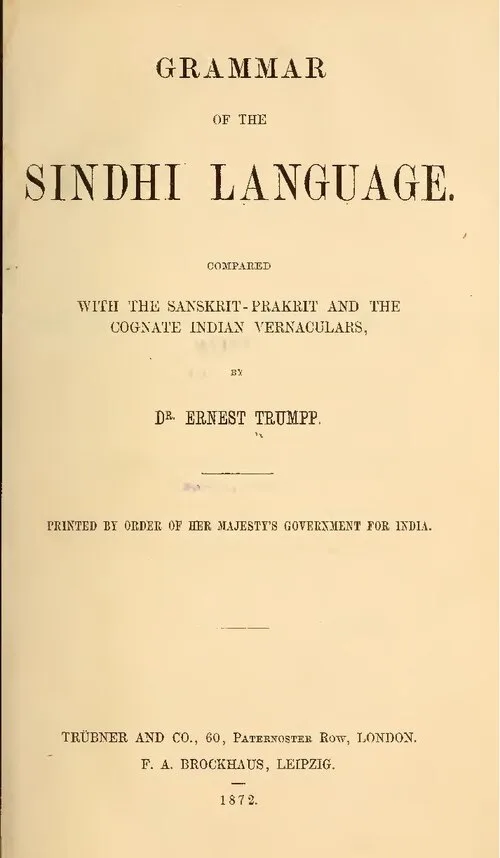
The first grammars and dictionaries for English readers followed. Ernst Trumpp’s Grammar of the Sindhi Language, printed in London and Leipzig in 1872 “by order of Her Majesty’s Government for India”, was one of the most detailed.
Inside the 52 Letter Sindhi Alphabet
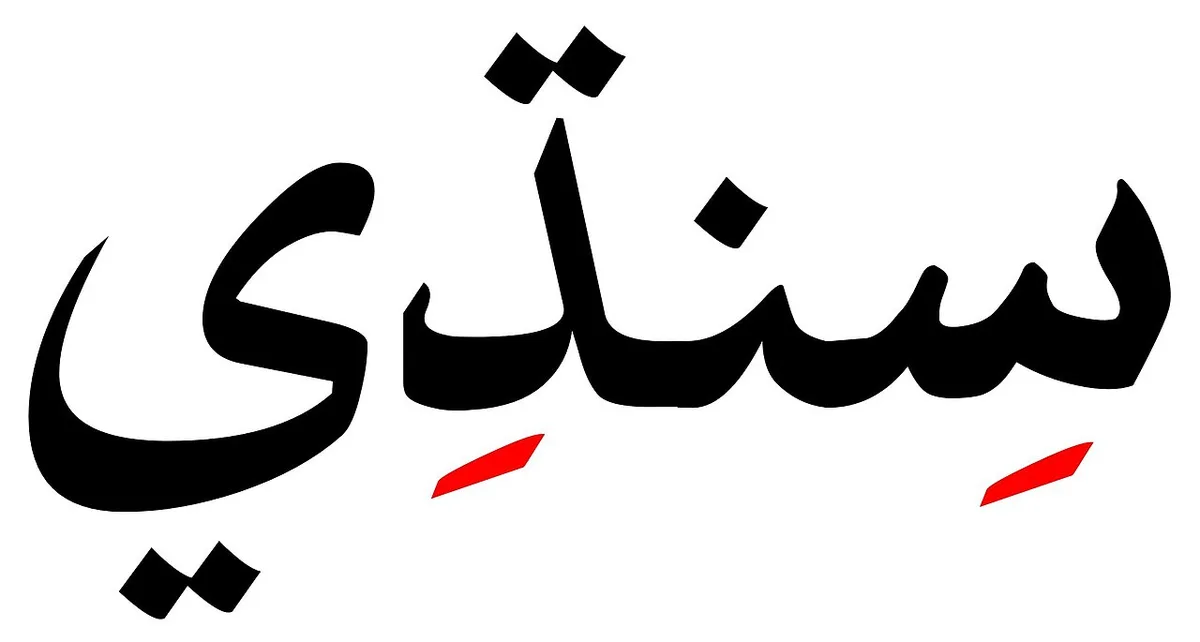
The alphabet chosen in 1853 is easy to tell apart from Urdu writing. Britannica gives three reasons.
First, it has 52 letters, against 35 in the Urdu script. Second, Sindhi is printed in naskh, with letters standing upright on the line. Urdu is normally written in nastaliq, whose words flow and slant across the line. Third, most extra letters are ordinary Arabic shapes with a new set of dots above or below them.
These dotted letters cover the four implosive sounds, the nasal sounds, and most of the breathy sounds that Urdu writes with two letters joined to an h. A Sindhi reader sees one letter where an Urdu reader sees two.
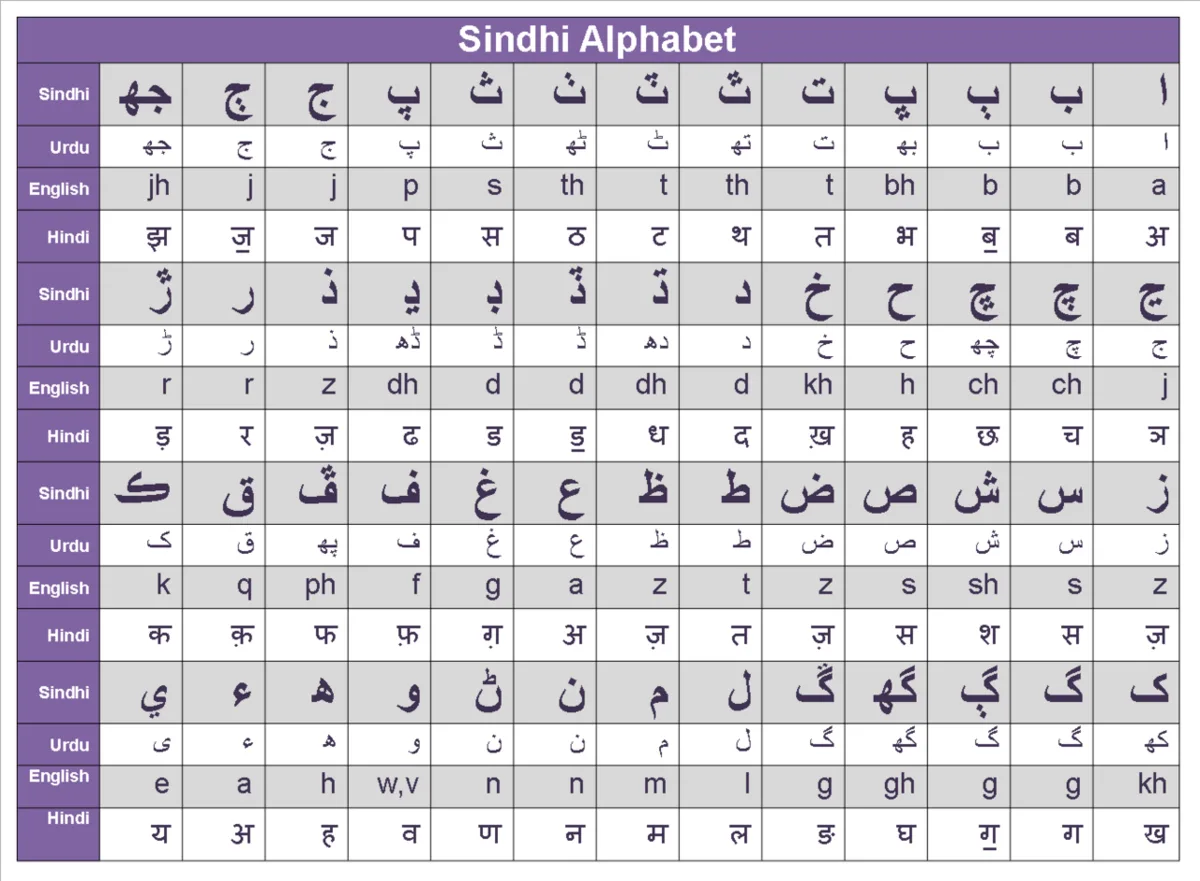
Every Arabic and Persian letter stayed in the alphabet too, which let writers spell an old loanword the way it was spelled in Persian or Arabic. Keeping those letters is a big reason the count reaches 52.
Britannica adds that the look of this script is a matter of great cultural pride for most Sindhi speakers. It links that pride to the wide appeal of the Sufi poet Shah Abdul Latif Bhittai (1690 to 1752), the central figure of classical Sindhi literature.
Devanagari and Sindhi Writing in India
The Devanagari script is the alphabet used for Hindi and Marathi. After the partition of 1947, most Hindu Sindhi speakers moved to India, and the question of script came up again there.
Britannica records that attempts were made in India to encourage Sindhi in Devanagari, but that the Arabic based script has stayed in general use in both India and Pakistan. In India today, Sindhi books and school materials exist in both scripts.
In a 2022 paper for the journal Asian Affairs, the historian Uttara Shahani links the script quarrel in India to bigger arguments over Sindhi identity. Some supporters of Devanagari saw it as a way to fit into Indian national life. Many writers opposed the change, because it would cut them off from the large body of Sindhi literature already printed in the 1853 alphabet and from writers across the border.
Arabic Script Sindhi and Devanagari Side by Side
A 2021 study by Arvind Iyengar and Sundri Parchani in the Journal of Sindhi Studies reviewed seventy five years of Sindhi in India. It cites earlier surveys showing Indian Sindhi opinion split three ways: supporters of the Arabic based script, supporters of Devanagari, and people with no view.
The same study reports that the youngest generation mostly reads and writes Sindhi in Devanagari, if at all, because that is the script they learned at school rather than out of any strong preference. The authors also note that in Pakistan, Devanagari Sindhi is limited mainly to academic work, such as teaching books issued by the Sindhi Language Authority.
The Main Dialects of the Sindhi Language
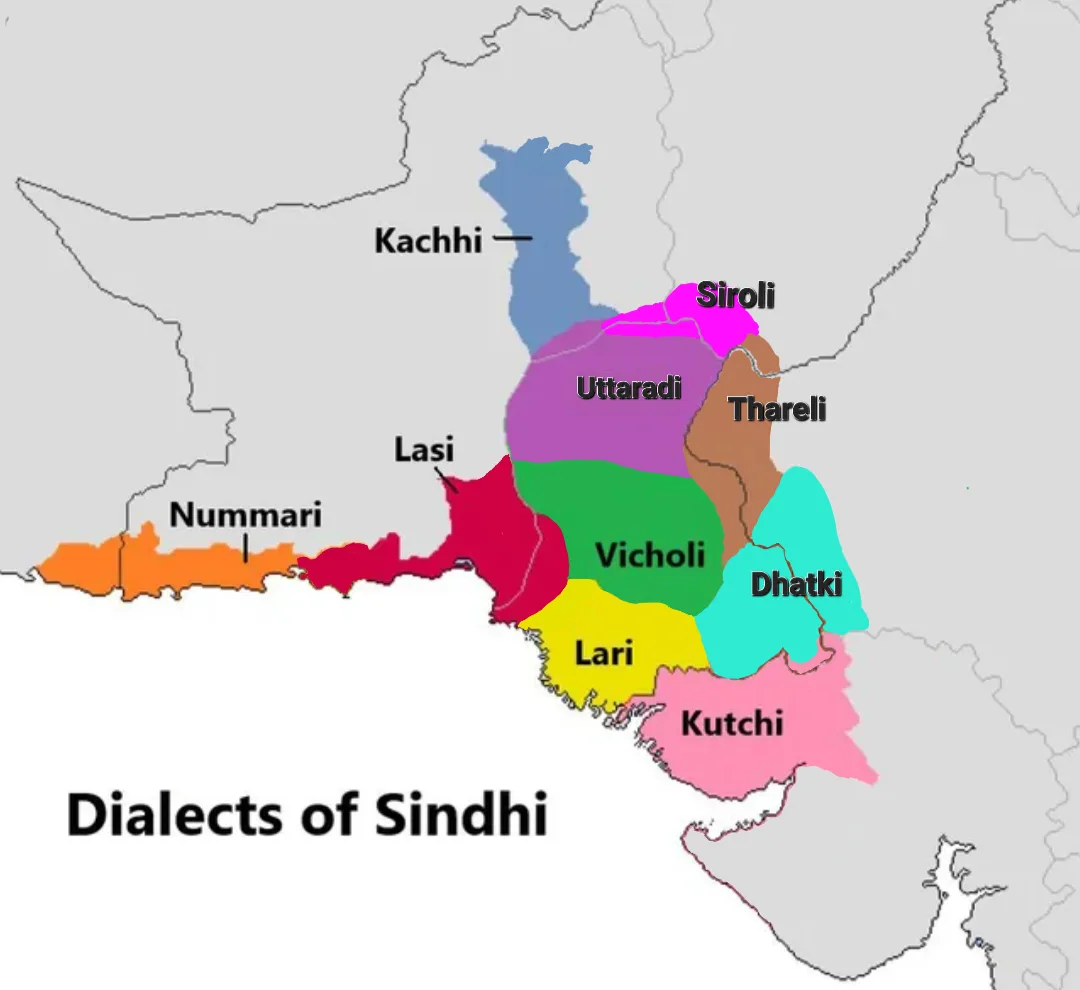
Writing in Dawn in 2008, the scholar Rauf Parekh summed up the standard view: Sindhi has many regional dialects, of which the main six are Siroli, Vicholi, Lari, Thari, Lasi and Kachhi. The article was a review of a sociolinguistic study by Dr M. Qasim Bughio, who once headed the Sindhi Language Authority.
Most of the dialect names come from Sindhi words for parts of the province. Siro means the upper or northern part, Vicholo means the middle, and Lar means the lower, southern part near the sea.
Vicholi, the Standard Dialect
Vicholi is spoken in central Sindh, around Hyderabad. Parekh notes that it was adopted as the standard and used for official and educational purposes under British rule. The written language taught in schools today is built on Vicholi.
Bughio’s own study compared Vicholi in the city of Hyderabad with Vicholi in the small town of Old Hala. He found that contact with Urdu speakers after 1947 had changed some vowel sounds in the urban speech.
Siroli, Lari, Thari, Lasi and Kachhi
Siroli is the speech of upper Sindh. George Grierson’s Linguistic Survey of India, published in 1919, doubted that it was a real dialect at all, describing the northern speech as close to Vicholi with clearer pronunciation and some different words.
Lari is the dialect of Lar, the lower part of Sindh that runs down to the coast and the Indus delta. According to Grierson, Lari features turn up in the Sindhi heard around Karachi.
Thari, which Grierson called Thareli, is spoken in the Thar desert on Sindh’s eastern side. Grierson described it as a mixture of Sindhi and Marwari, the language of neighbouring Rajasthan. More on the region appears in the PakSindh article on Tharparkar history and culture.
Lasi is spoken in Lasbela in Balochistan, west of Karachi. Britannica, too, counts Las Bela district among the places where Sindhi is spoken.
Kachhi is spoken in Kachchh, in Gujarat state in India, just across the border from Sindh. Britannica counts the Kachhi speakers of Kachchh among India’s Sindhi speakers. The Indian census does the same in its language tables, while still listing Kachchhi as a separate mother tongue inside the Sindhi group.
How Many People Speak Sindhi Today
Estimates of Sindhi speakers range widely, so the figures here start with the two national census tables.
Pakistan’s 2023 census counted 34,401,564 people whose mother tongue is Sindhi. That is about 14.3 percent of the national total of 240,458,089, according to Table 11 of the Pakistan Bureau of Statistics census results.
The same table shows 33,462,299 Sindhi speakers in Sindh province, out of a provincial population of 55,638,409. That works out to roughly 60 percent of the province. Balochistan had another 555,198 Sindhi speakers.
In the 2023 count, 24.2 million Sindhi speakers lived in rural areas and 10.2 million in cities. The language therefore remains strongest in the villages and small towns of the province.
Sindhi Speakers in India and Beyond
India’s 2011 census grouped 2,772,264 people under the Sindhi language, as shown in the Census of India language report C16. That group total includes 1,679,246 people who returned “Sindhi” and 1,030,602 who returned “Kachchhi” as their mother tongue.
Britannica’s figures are older and lower: about 23 million speakers in Pakistan and about 2.5 million in India. Those estimates were made years before the 2023 and 2011 counts, and both countries have grown a lot since.
Britannica also mentions smaller Sindhi communities in North America, the United Kingdom, the Middle East and Southeast Asia. No single census counts these overseas speakers together.
Legal Status of the Sindhi Language in Pakistan
Under British rule, Parekh notes, Vicholi Sindhi was already used for official and educational purposes in Sindh. After 1947 the arrival of large numbers of Urdu speaking migrants in Karachi and Hyderabad changed the balance. Britannica describes a lasting tension between Sindhi speakers, who often felt pushed aside, and the Urdu speaking Muhajir community in the cities.
That tension came to a head in 1972. On 7 July 1972 the Sindh Provincial Assembly passed a Language Bill that made Sindhi an official language of the province. A report from the time, reprinted in Dawn’s archive pages, says 50 members voted for it while 11 opposition members walked out, demanding that Urdu be given official status too.
The same Dawn report records clashes in Karachi that day. Nearly 100 people were injured, and a curfew was imposed in Liaquatabad, Nazimabad and Golimar.
The 1972 Act and the 1990 Amendment
The law that came out of that bill is the Sindh (Teaching, Promotion and Use of Sindhi Language) Act, 1972. On the Sindhi Language Authority’s website the Act carries the date 17 July 1972. A second, amending act listed next to it is dated 23 December 1990.
Pakistan’s national language remains Urdu. The 1972 Act concerns Sindh alone, and it is the legal basis on which Sindhi is taught in the province’s schools and used in its offices.
Sindhi in the Eighth Schedule of India
In India, the languages the Constitution recognises are named in a list called the Eighth Schedule. In 1950 that list held fourteen languages. Sindhi was not among them, because after partition it no longer had a home state inside India.
Sindhi refugees and writers campaigned for inclusion through the 1950s and 1960s. The official text of the Constitution (Twenty First Amendment) Act, 1967 explains the government’s reasoning.
The statement of objects and reasons, signed by the Home Minister Y. B. Chavan on 15 November 1966, notes “persistent demands from the Sindhi speaking people”. It says Sindhi was not then a regional language of any defined area, but had been the language of a province of undivided India and would have remained so but for partition. It also records that the Commissioner for Linguistic Minorities had recommended inclusion.
The Act is dated 10 April 1967. It inserted “Sindhi” as entry 12 of the Schedule. As Shahani points out, Sindhi was the first language added to the original list. Konkani, Meitei and Nepali joined in 1992. Bodo, Dogri, Maithili and Santali followed in 2003, and the list now stands at 22.
What the Eighth Schedule Listing Changed for Sindhi
Inclusion in the Eighth Schedule does not make Sindhi the official language of any Indian state. Shahani notes that a scheduled language has a better chance of being used as a medium of instruction and in public service examinations, though the direct financial support is small. For Sindhi refugees, she argues, the listing was above all a recognition that they belonged in India without a state of their own.
The Sindhi Language Authority in Hyderabad
The Sindhi Language Authority is the main state body for the language in Pakistan. Its official website describes it as an autonomous institution governed by a Board of Governors, under the Department of Culture, Tourism and Antiquities of the Government of Sindh.
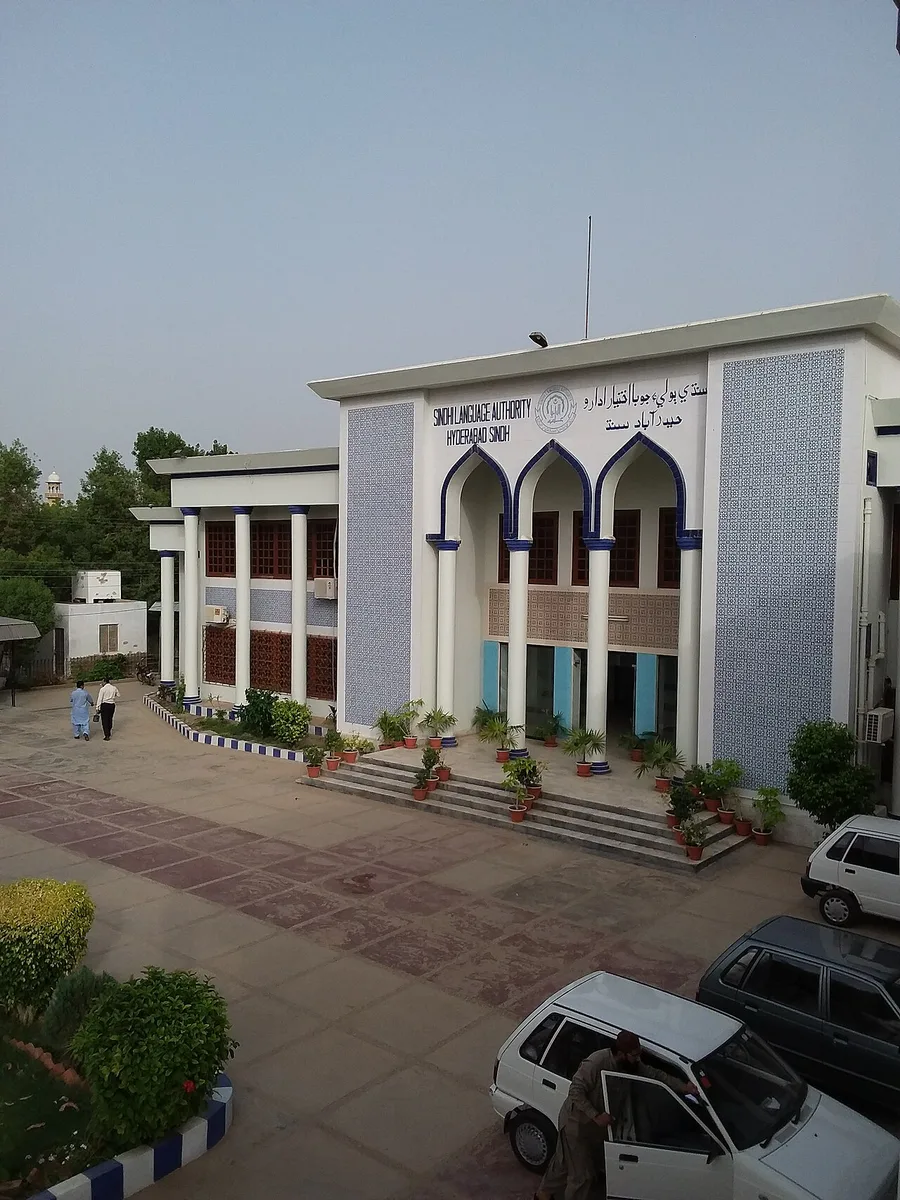
The Authority says its first Board of Governors was formed in 1991 under the chairmanship of the scholar Dr Nabi Bakhsh Khan Baloch. Its office is in Hyderabad.
Its website sets out several aims. One is to push for correct Sindhi in newspapers, on radio and in other media. Another is to have Sindhi accepted in competitive examinations, and a third is to check how Sindhi is used in provincial and local government records.
Dictionaries, Journals and Digital Work
The Authority publishes dictionaries and a research journal. Its online dictionary portal includes the three volume Jamai Sindhi Lughat compiled by Dr Baloch, which the portal says holds more than 80,000 entries.
The portal lets a reader search words in both directions, so a learner can begin with a Sindhi word or with its meaning. Dictionaries of technical terms and of dialect words, which used to exist only on paper, can be searched there too.
Sindhi Language in Daily Life and Culture
Britannica connects the strength of Sindhi identity to its literature, above all the poetry of Shah Abdul Latif. Sindhi books are also sold well outside the province, as the photograph of the Sindhi literature stall at Lok Virsa in Islamabad at the top of this article shows.
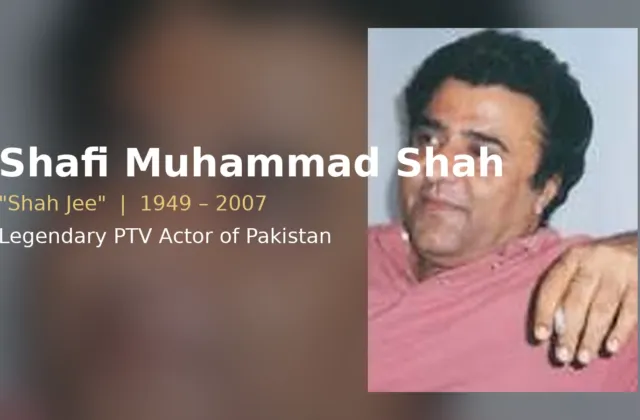
Television and radio have kept spoken Sindhi in many homes. The actor Shafi Muhammad Shah, for example, built his career in both Urdu and Sindhi drama after starting on Radio Pakistan.
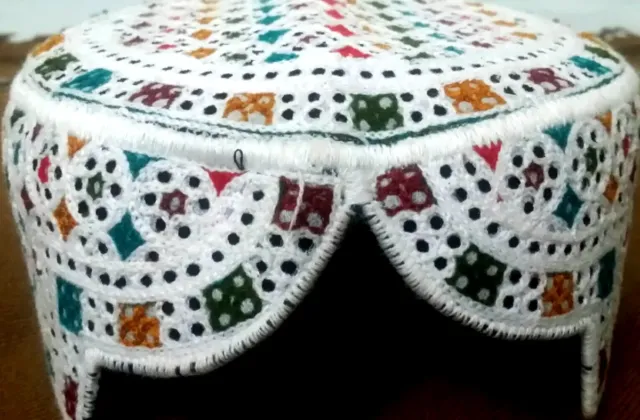
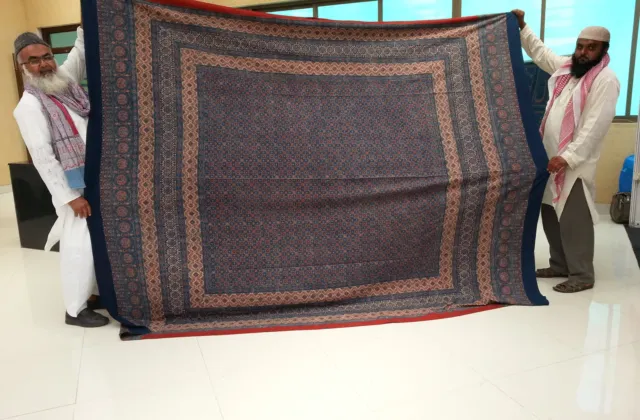
Language also sits beside dress and music as a marker of identity. On Sindhi Culture Day each December, people wear the Sindhi topi and ajrak, and the wider customs of the province are covered in the PakSindh Sindhi culture guide.
Key Dates in the History of Sindhi
- 1843: The East India Company conquers Sindh.
- Late 1840s: British officers Burton and Stack disagree over the script (Dawn, 2017).
- 1853: The Arabic based Sindhi alphabet is standardised (Britannica).
- 1872: Ernst Trumpp publishes his Grammar of the Sindhi Language in London and Leipzig.
- 1947: Partition; most Hindu Sindhi speakers move to India (Britannica).
- 10 April 1967: Sindhi enters the Eighth Schedule of India’s Constitution.
- 7 July 1972: The Sindh Assembly passes the Sindhi Language Bill.
- 1991: The first Board of Governors of the Sindhi Language Authority is formed.
- 2023: Pakistan’s census counts 34.4 million Sindhi mother tongue speakers.
Frequently Asked Questions About the Sindhi Language
Is Sindhi Written From Right to Left?
Yes, when it is written in the 1853 Arabic based alphabet, as it is in Pakistan. Devanagari Sindhi, used by some readers in India, runs from left to right.
How Many Letters Does the Sindhi Alphabet Have?
The standard Arabic based alphabet has 52 letters, according to Britannica. Urdu, for comparison, uses 35.
Is Sindhi an Official Language of Pakistan?
Sindhi is an official language of Sindh province under the 1972 Act. Urdu is the national language of Pakistan.
When Was Sindhi Recognised in India?
Sindhi was added to the Eighth Schedule by the Constitution (Twenty First Amendment) Act, dated 10 April 1967.
Sources Used for This Article
- Christopher Shackle, “Sindhi language”, Encyclopaedia Britannica.
- Hasan Mansoor, “US scholar traces origins of Sindhi script at SMIU festival”, Dawn, 10 December 2017.
- Rauf Parekh, “The Sindhi language and its variations”, Dawn, 30 September 2008.
- Pakistan Bureau of Statistics, Census 2023, Table 11, Population by Mother Tongue (archived copy linked above).
- Office of the Registrar General and Census Commissioner, India, Census 2011 language report C16 (linked above).
- Government of India, The Constitution (Twenty First Amendment) Act, 1967 (linked above).
- Sindhi Language Authority, official website and its language act page (linked above).
- Christopher Shackle, “Sindhi”, Encyclopaedia Iranica (2005).
- Yousuf Katpar, “Sindhi script existed long before British conquest of Sindh”, The News, 26 May 2024.
- Uttara Shahani, “Language Without a Land: Partition, Sindhi Refugees, and the Eighth Schedule of the Indian Constitution”, Asian Affairs 53, 2022.
- Arvind Iyengar and Sundri Parchani, “Like Community, Like Language: Seventy Five Years of Sindhi in Post Partition India”, Journal of Sindhi Studies 1, 2021.
- George A. Grierson, Linguistic Survey of India, Vol. VIII Part I, Sindhi and Lahnda (1919).

Leave a Comment