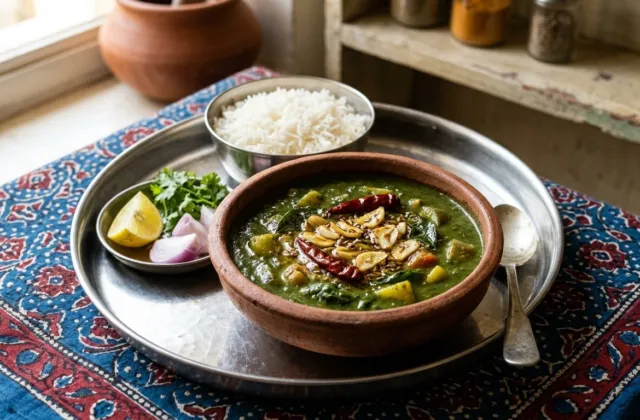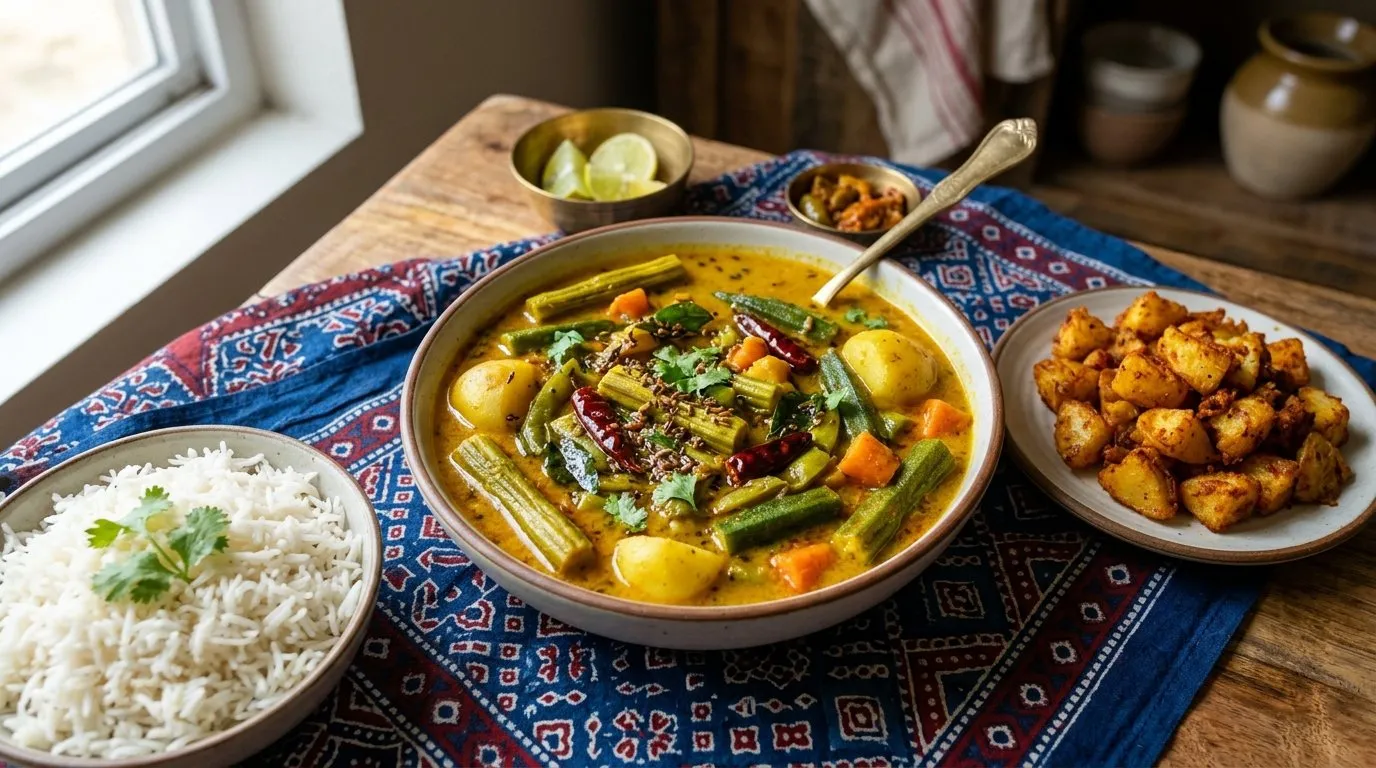
Despite its plain name, Sindhi Curry (سنڌي ڪڙهي) is one of the most distinctive dishes of Sindhi cuisine. It is a bright, tangy curry made with roasted gram flour, tomatoes and tamarind, full of vegetables like drumsticks, okra, potatoes and cluster beans. It looks a bit like kadhi, but it contains no yogurt; its sourness comes from tamarind and tomatoes, and its depth from besan roasted slowly in oil.
In this article (8)
A dish for Sundays and family gatherings
In many Sindhi families Sindhi Curry with rice is a Sunday lunch tradition, served with crispy aloo tuk and sometimes boondi raita or papad. Because it is meat-free, it is also a popular choice on fasting days and religious occasions, and it is a favourite among Sindhi Hindu families in Sindh and across the Indian diaspora.
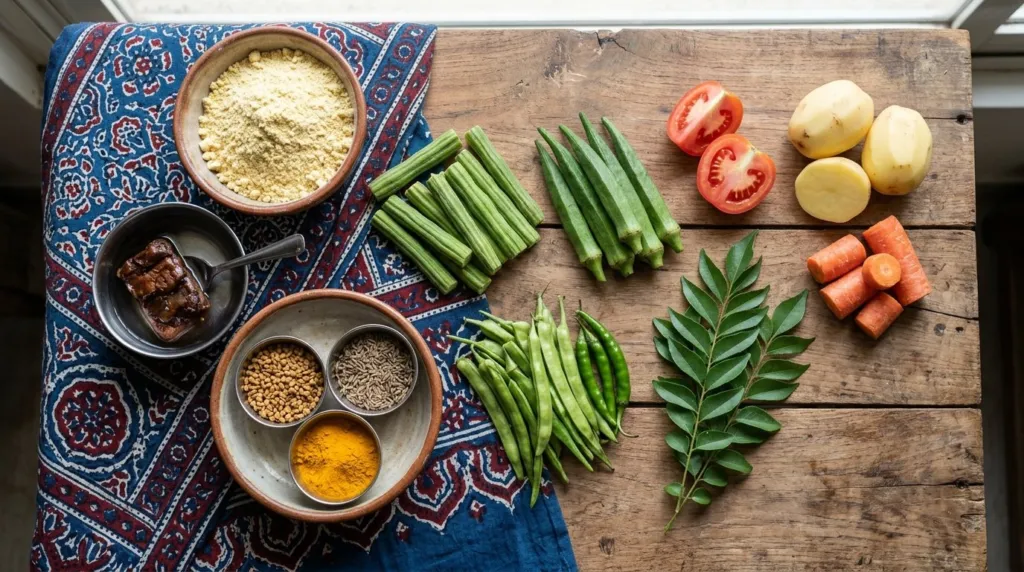
The secret is the besan
Everything depends on roasting the gram flour. It must be cooked on low heat with constant stirring until it changes from pale yellow to a golden brown and smells like roasted nuts. Under-roasted besan tastes raw and floury; burnt besan makes the curry bitter. Take your time; this step usually takes 8 to 10 minutes.
Which vegetables to use
Drumsticks (moringa pods, called sohanjna in Sindh) are almost essential; diners scrape the soft inside with their teeth. Okra is the second classic, fried first so it stays firm. After that, use what you have: potatoes, cluster beans, carrots, eggplant, yam (arbi) or a few pieces of raw banana all work well. A mix of five or six vegetables gives the best taste.
Tips
- Whisk while adding water to avoid lumps. If lumps form, pass the curry through a strainer before adding vegetables.
- Balance the tang. Taste after adding tamarind. Some families add a teaspoon of sugar or jaggery to round off the sourness.
- Keep it thin. Sindhi Curry thickens as it cools. Add hot water when reheating.
- It tastes better the next day once the vegetables have absorbed the tamarind.
Frequently asked questions
Is Sindhi Curry the same as kadhi?
No. Kadhi is made with yogurt and besan and is usually served with pakoras. Sindhi Curry uses tamarind and tomatoes instead of yogurt and is full of vegetables.
Can I make it without drumsticks?
Yes. Add more okra, potatoes or cluster beans. Frozen drumsticks from Asian grocery stores also work.
Is Sindhi Curry vegan?
Yes, as long as you cook it in oil rather than ghee.