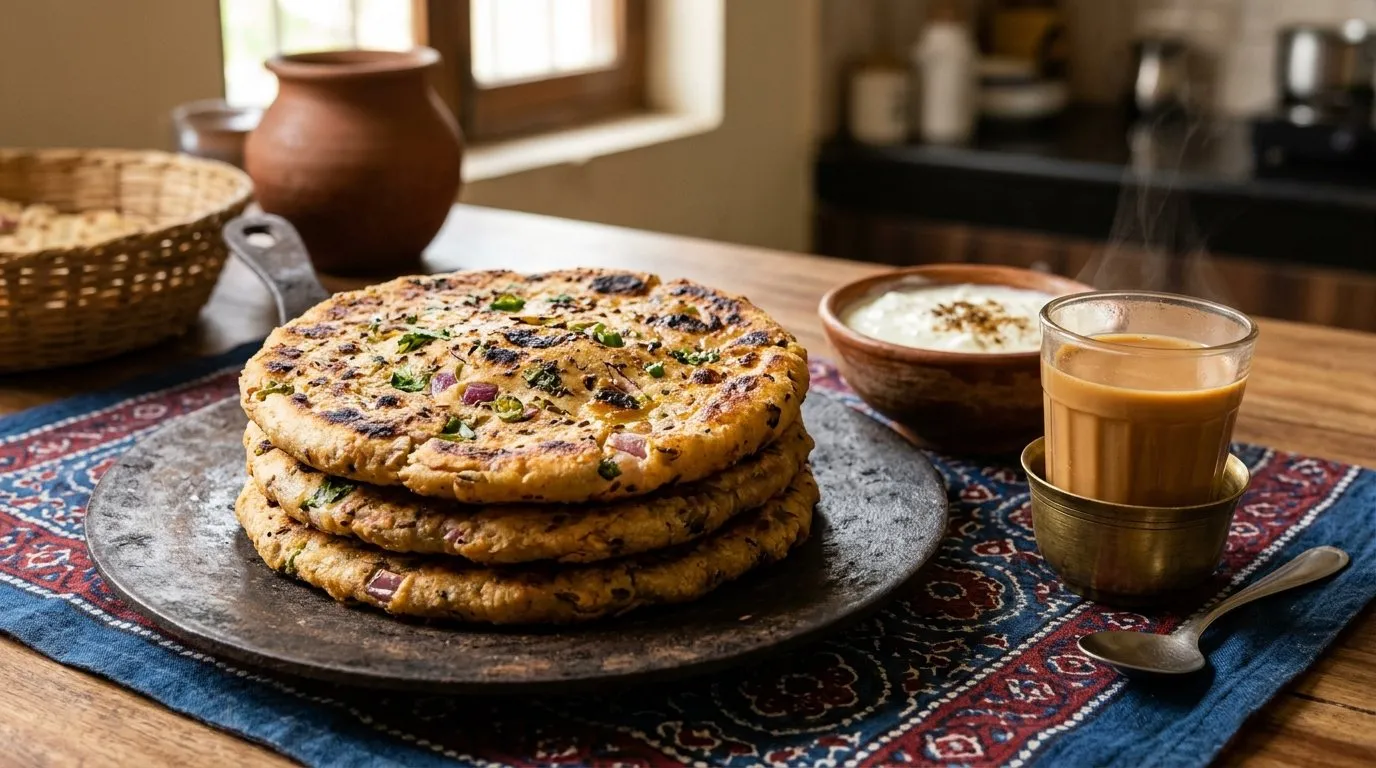
Weekend breakfast in a Sindhi home very often means koki (ڪوڪي). Thick, crisp on the outside, soft and layered inside, full of onion and green chilli, and cooked slowly in ghee on an iron tawa. It is the kind of food that fills the whole house with its smell and is usually eaten straight off the tawa, one after another.
In this article (7)
What is koki?
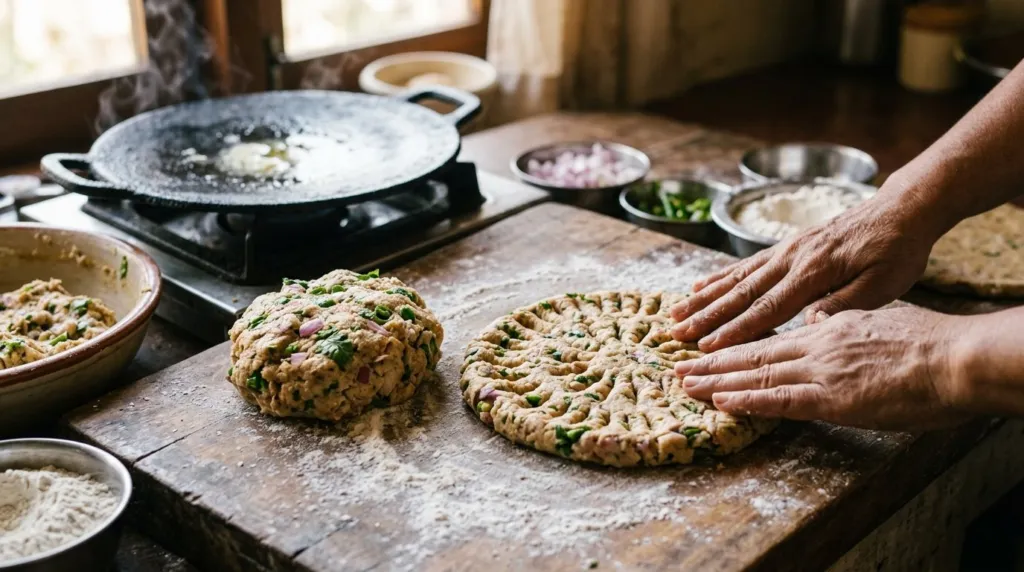
Koki is a thick flatbread made from whole wheat flour with chopped onions, green chillies, coriander and spices mixed right into the dough. Unlike a paratha it is not folded, and unlike a roti it is not rolled thin. The secret is moyan, the ghee rubbed into the flour before water is added, and slow cooking on low heat so the inside cooks through while the outside turns golden and crunchy.
Koki is closely linked with Sindhi family breakfasts. Older Sindhis often remember mothers and grandmothers making koki early in the morning for children before school, and it travels well, so it was also packed for long journeys.
Popular ways to eat koki
- With dahi and chai: the most common breakfast, with plain yogurt, a mango or lemon pickle and strong milky tea.
- Dal pakwan’s cousin: some families serve koki with chana daal instead of pakwan for a filling brunch.
- Sweet koki (mithi koki): made with sugar or jaggery and cardamom instead of onion and chilli, loved by children.
- With leftover curry: a koki with last night’s Sindhi Curry or Sai Bhaji is a favourite quick lunch.
Tips for crisp koki
- Chop the onion very finely. Large pieces fall out and make the dough tear.
- Stiff dough is a must. A soft dough turns into a chewy roti. If the onions make it sticky, add a spoon of flour.
- Cook twice. The first quick cooking sets the shape; the second slow cooking with ghee makes it crisp. Do not rush the second step on high heat, or it will burn outside and stay raw inside.
- Use an iron tawa if you can. It holds steady heat, which is ideal for slow cooking.
Frequently asked questions
Can I make koki with oil instead of ghee?
Yes, but ghee gives the traditional flavour and a crisper crust. A mix of half oil and half ghee works well.
Can I store koki?
Koki stays good for a day at room temperature wrapped in a cloth, which is why it was popular for travel. Reheat it on a tawa to bring back the crunch.
What does anardana do?
Dried pomegranate seed powder adds a light sour taste that many Sindhi families like. It is optional; amchur (dry mango powder) can replace it.