

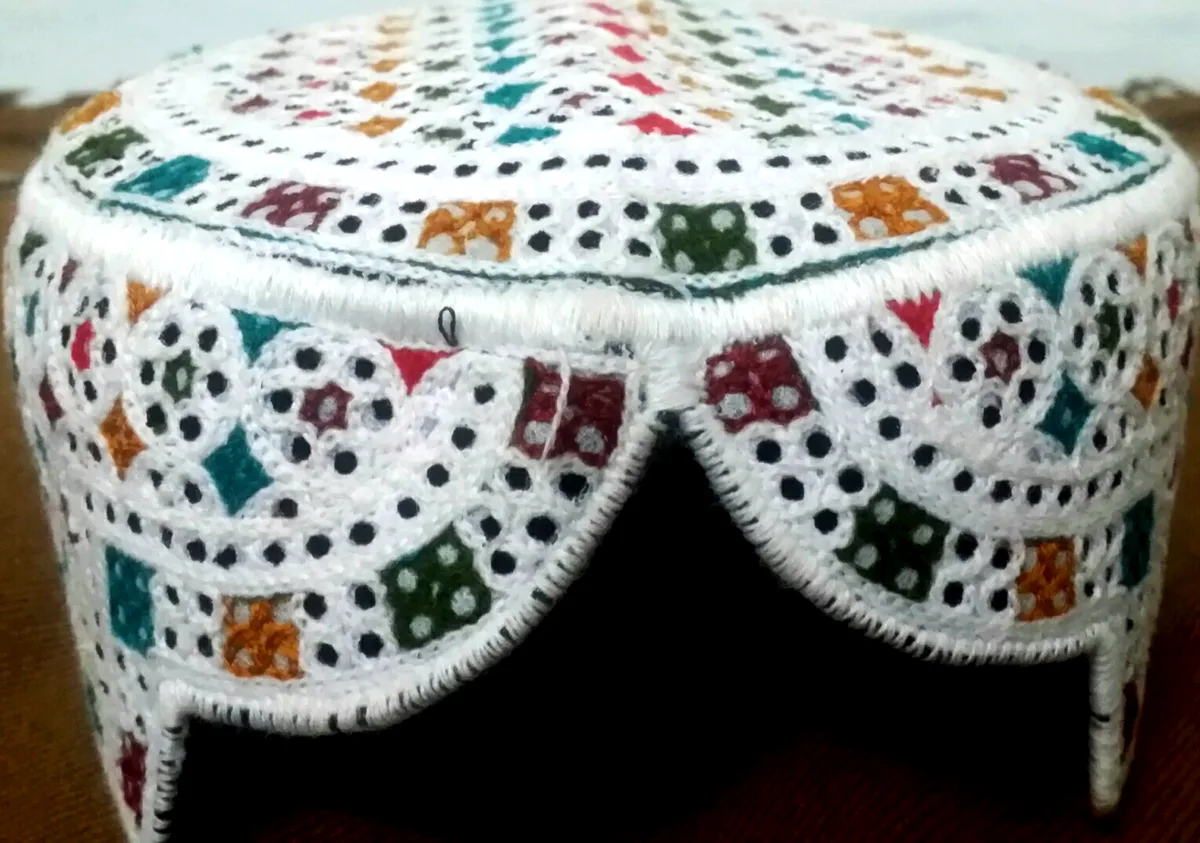
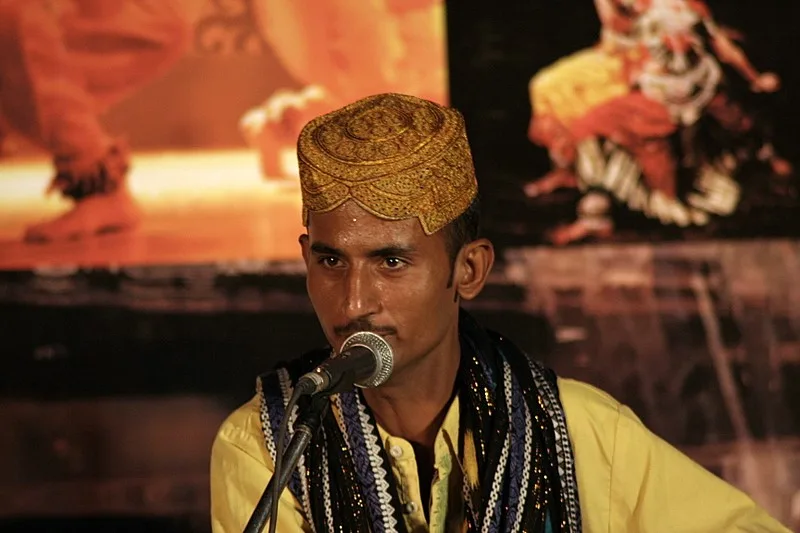
Walk through any town in Sindh on the first Sunday of December and you will see the same thing on thousands of heads: a small round cap, bright with thread and tiny mirrors, with a curved gap cut out at the front. This is the Sindhi topi, and for many people in the province it says more about who they are than any flag.
In this article (25)
- Key Facts About the Sindhi Topi at a Glance
- What Makes the Sindhi Topi Different From Other Caps
- Where the Sindhi Topi Came From
- The Kalhora Period and the Baloch Link
- From Turban Base to a Cap of Its Own
- How a Handmade Sindhi Topi Is Made
- Mirrors, Mica and the Katcho and Pakko Stitches
- Three Phases in the Story of the Cap
- Popular Sindhi Topi Designs and Regional Styles
- Tharparkar, Umerkot and Sanghar Work
- Ajrak Print, Velvet and Machine Made Caps
- The Topi as a Gift of Honour in Sindh
- How the Sindhi Topi Day Began in December 2009
- Sindhi Culture Day Celebrations Year by Year
- Wearing a Sindhi Topi With Respect
- The Sindhi Topi Beyond the Borders of Sindh
- What the Sindhi Topi Says About Sindh Today
- Frequently Asked Questions About the Sindhi Topi
- What is a Sindhi topi made of?
- Why does the Sindhi cap have a gap in front?
- When is Sindhi Culture Day celebrated?
- Who started the Sindhi Topi Day?
- Where are the best Sindhi caps made?
- Is the Sindhi topi only for Sindhis?
- Sources and Further Reading on the Sindhi Topi
The cap is simple to describe and hard to make well. A good handmade one can take days of close needlework. It is given to guests as a mark of respect, worn by farmers and ministers alike, and since 2009 it has had a public day of its own, now known as Sindhi Culture Day.
This guide covers where the Sindhi topi seems to come from, how artisans make it, the main designs you will see in the bazaars, and how a row over one cap turned into one of Sindh’s biggest yearly festivals. Where the history is uncertain, that is stated plainly.
Key Facts About the Sindhi Topi at a Glance
Here are the basics in one place. We come back to each of them further down.
| Name | Sindhi topi, also called Sarai topi; Sindhi cap in English |
| Shape | Cylindrical skullcap with an arch cut out at the front |
| Decoration | Hand or machine embroidery, small mirrors, sometimes zari thread |
| Likely origin | Linked by tradition to the Kalhora period (18th century) |
| Best known centres | Tharparkar, Umerkot, Sanghar and the Mirpurkhas division |
| Main stitches | Katcho and pakko layers around each mirror |
| Social role | Given with an ajrak to guests as a mark of respect |
| Special day | Sindhi Culture Day, first Sunday of December (first held 6 December 2009) |
What Makes the Sindhi Topi Different From Other Caps
Plenty of caps are worn across Pakistan. The Sindhi one is easy to pick out, though, because of its shape.
It is a cylindrical skullcap with a flat or gently domed top. At the front, part of the band is cut away in an arch, so the forehead stays uncovered. Wikipedia’s entry on the Sindhi cap describes it in just these terms: a cylindrical cap with an arch shaped opening, often embroidered with geometric patterns and set with small mirrors or stones.
People sometimes ask why the gap is there. The most common explanation you will hear in Sindh is practical. The opening lets a man touch his forehead to the ground in prayer without taking the cap off. I have not found any old text that says so, though, and the cap may simply have been cut that way for comfort in the heat.
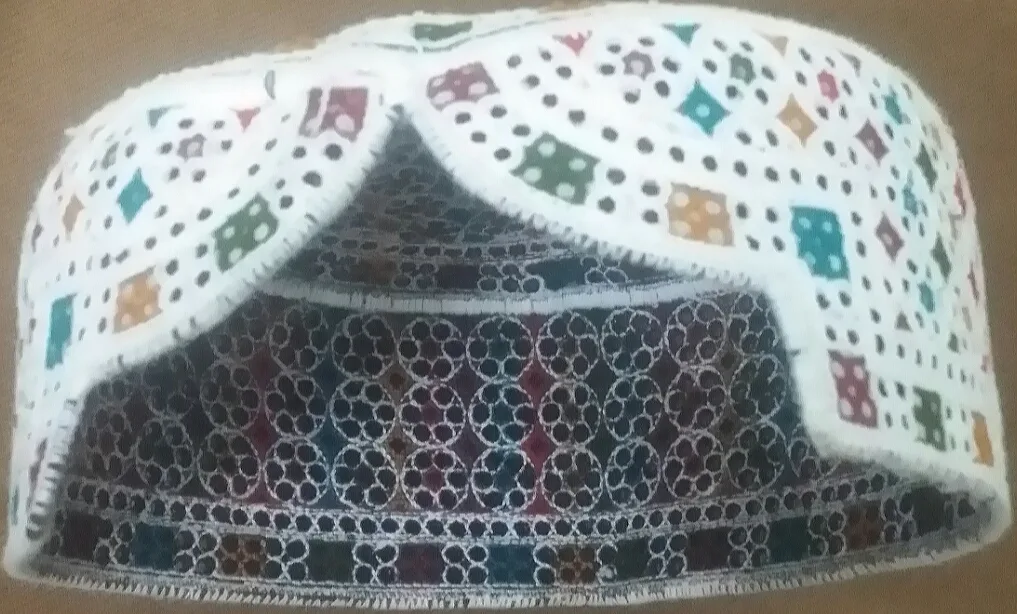
In Sindhi the cap is simply Sindhi ṭopī. It is also called the Sarai topi, and in the Saraiki speaking belt of southern Punjab the same style is often sold as the Saraiki topi. A conference abstract by Beenish Tahir, presented at the University of Toronto in 2024, lists further local names such as talpur, serai and mogho topu.
Where the Sindhi Topi Came From
Nobody has found a first Sindhi topi in a museum, with a date stitched inside it. Its early history is pieced together from tradition and a few modern studies, and the picture is still rough.
The Kalhora Period and the Baloch Link
The view repeated most often is that the cap took its present form under the Kalhora rulers of the eighteenth century. Wikipedia cites the Toronto abstract for this. That abstract goes a step further. It says the cap came into Sindh from the neighbouring Baloch areas, through trade and close contact between the two peoples.
According to the same paper, the Baloch wore the cap under a turban. Sindhis did the same at first. Over time the turban was dropped in everyday life, and the cap began to stand on its own as part of Sindhi dress.
This is a reasonable story. It fits what we know about the Kalhoras, who had close ties with Baloch tribes, and about the later Talpur Mirs, who were Baloch by origin. But it rests on a one page abstract. There is no full paper behind it yet, so I would not lean on it too hard.
From Turban Base to a Cap of Its Own
What does seem clear is that covering the head was a sign of respect in Sindh for a very long time. Turbans such as the pagg were the formal choice for elders and men of standing. Under it, hidden from view, sat the cap.
As the turban faded from daily use in the twentieth century, the cap came out from under it. Once it was on show, people began to decorate it more and more. That shift helps explain why so much of the topi’s beauty is in its embroidery, and why the needlework of Sindh and the cap are now hard to separate.
How a Handmade Sindhi Topi Is Made
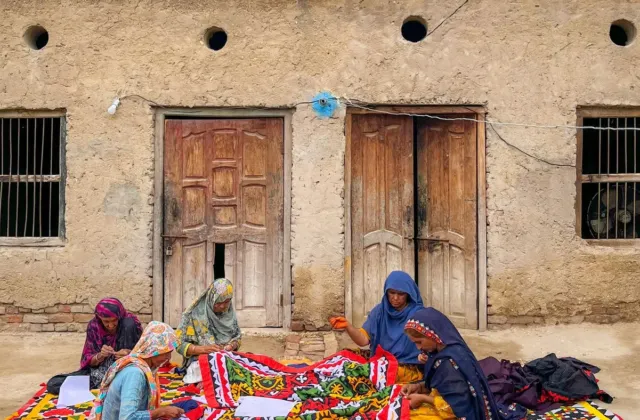
A machine made cap can be turned out in minutes. A fine handmade topi is a different thing. The work is slow, and most of it is done at home, often by women, in villages across lower Sindh.
The basic steps are simple to list:
- Base: cotton or another firm cloth is cut and stiffened so it holds a round shape.
- Embroidery: the top and the band are covered with geometric or floral patterns in coloured thread.
- Mirror work: small pieces of mirror are fixed in place with rings of stitching.
- Assembly: the crown and band are joined, the front arch is cut and the edges are bound.
How long does it take? Sellers and craft writers commonly mention anything from a week to two weeks for a complex piece. A plain white cap with light stitching can be done much faster than a red one crusted with mirrors.
Mirrors, Mica and the Katcho and Pakko Stitches
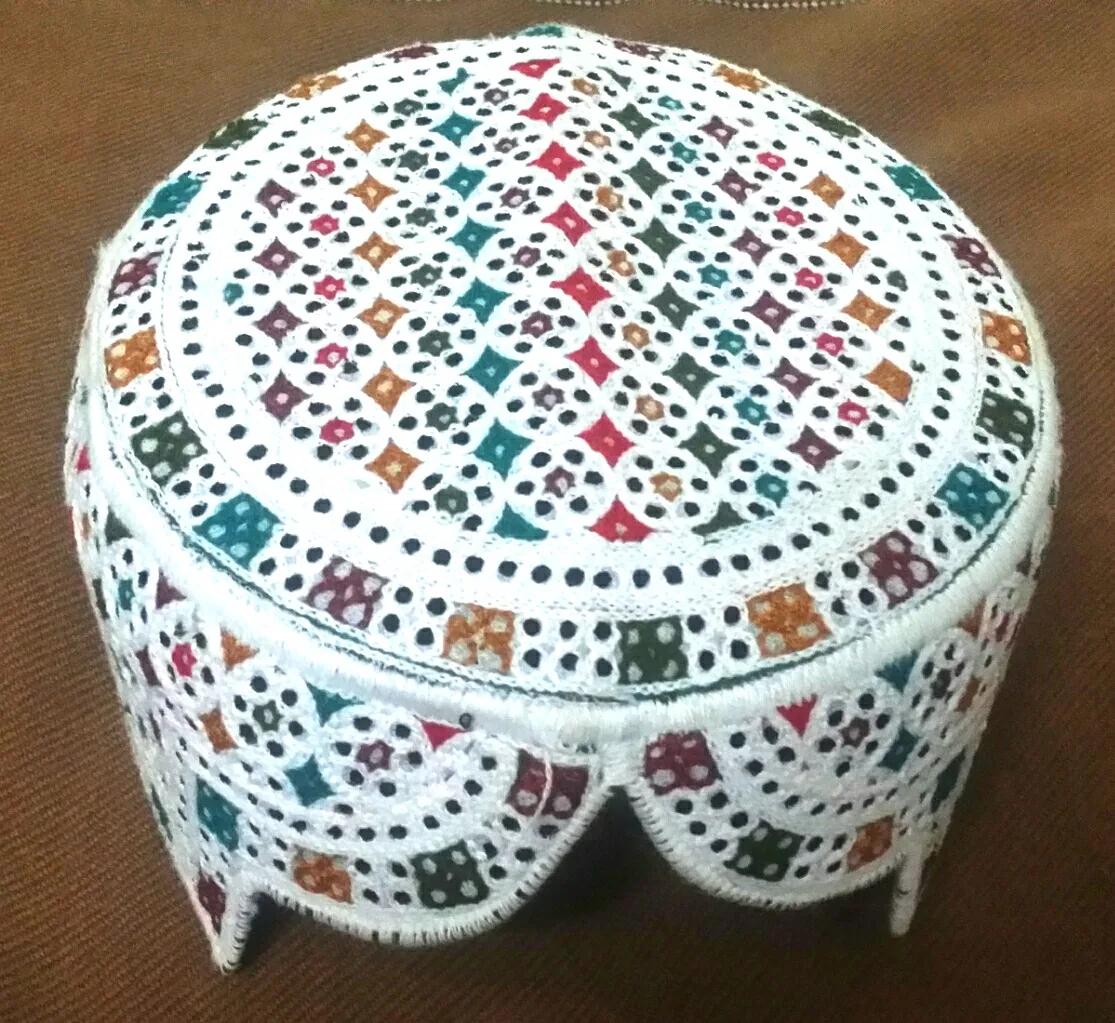
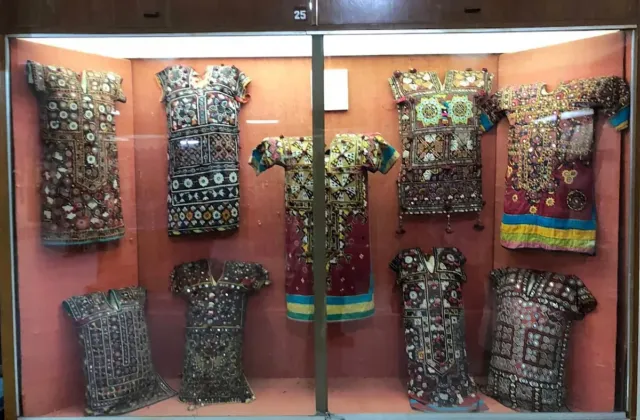
The sparkle on a Sindhi topi comes from mirror embroidery, called shisha or abhla work. A 2019 study by Saba Qayoom Leghari and Bhai Khan Shar of MUET Jamshoro looked at how this craft has changed in two villages of Sanghar district. Their paper, Evolution of Mirror Embroidery in Two Villages of Sanghar Sindh, is one of the few close studies of the subject.
They note that before glass mirrors were common, embroiderers used shiny things such as coins, tin, silver and mica, a mineral that flakes into thin, glossy sheets. Later came small pieces of blown mirror glass, slightly curved. People once said these little mirrors frightened away evil spirits, who would see their own faces in them and flee.
Each mirror is held down in two layers. The Sindhi word katcho means weak or loose, and the embroiderers use it for the first layer, a few crossing stitches that pin the mirror down. The second, pakko (firm), rings the mirror and locks it tight. The embroiderers in the study said the katcho frame used to be made in an eight pointed star pattern. Today it is more often six pointed.
Thread has changed too. An older fine thread called Kashmiro has largely given way to acrylic and artificial silk, which come in a far wider range of colours, including pastel and neon shades.
Three Phases in the Story of the Cap
The Sanghar paper also quotes an older writer named Memon. He split the cap’s recent past into three stages. In the first, caps carried mirrors and sequins. Memon’s second stage had black cloth caps with small bits of stibnite (antimony ore) sewn on where the mirrors used to go. In sunlight it gives a soft glitter. In the third and present phase, zari, or metallic thread, became common.
Memon gives no exact dates for these stages, so I have left them out here too.
Popular Sindhi Topi Designs and Regional Styles
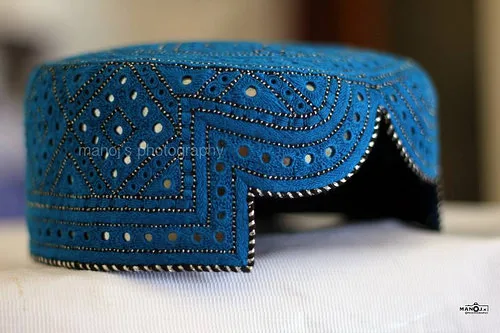
Walk into the cap stalls of Hyderabad or Hala and the variety can be a surprise. Some caps are white with a scatter of colour. Others are deep red, blue or black, packed so tightly with mirrors that hardly any cloth shows.
Wikipedia notes that each district has its own style, embroidery and favourite colours. In broad terms, you are likely to meet these kinds:
- Dense mirror work caps, with rows of small round mirrors on a dark base.
- White caps with open, lacy patterns and small blocks of colour.
- Ajrak print caps, which borrow the deep red, indigo and black of the Sindhi shawl.
- Velvet caps with zari thread, popular for weddings.
- Machine made caps, cheap and light, sold in large numbers before big events.
Tharparkar, Umerkot and Sanghar Work
Hand woven caps are made in almost every district of Sindh. Yet, as Dawn reported in its coverage of the first Topi Day, caps from Tharparkar, Umerkot, Sanghar and the rest of the Mirpurkhas division are rated higher and fetch better prices.
That is no accident. The desert districts have a long history of fine needlework. Women in Tharparkar are known for dense styles of stitching, and the same hands that make rallis and embroidered dresses also make caps. If you want to learn the stitches yourself, our guide to Sindhi bharat embroidery designs is a good place to start.
Ajrak Print, Velvet and Machine Made Caps
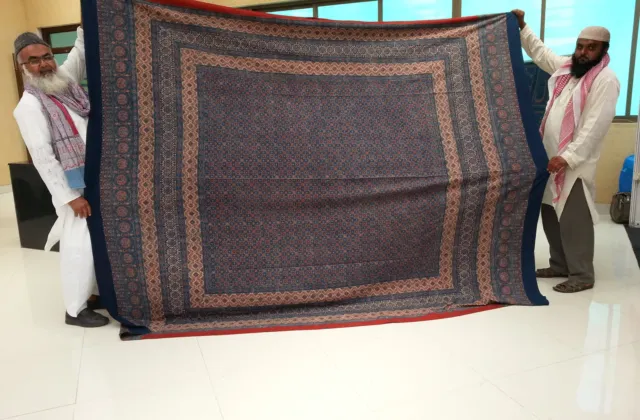
The cap and the Sindhi ajrak are almost always mentioned together, and some makers simply join them. A cap made from ajrak printed cloth, or with ajrak patterns stitched on, is now a common sight.
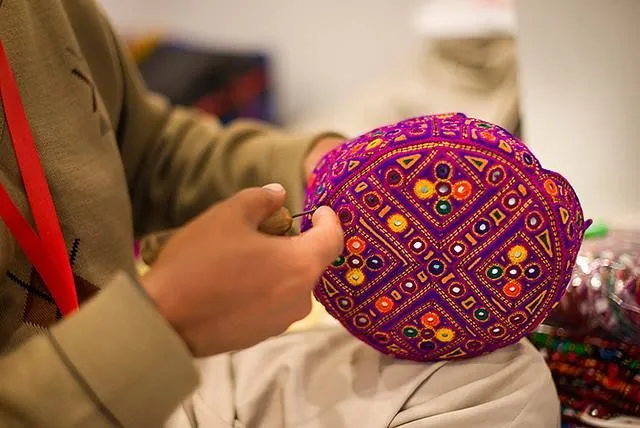
Machine made caps have their critics. They are lighter and less durable, and they take work away from village embroiderers. On the other hand, they are cheap enough for students and day labourers to buy, which is part of why the cap is so widely worn today. Both kinds now share the same stalls.
The Topi as a Gift of Honour in Sindh
In Sindh, a topi is more than something to wear. It is something to give.
When an important guest arrives at a home, a wedding or a public event, it is common to place an ajrak over their shoulders and a topi on their head. Dawn described the cap in 2009 as “usually offered to guests, along with a traditional Sindhi Ajrak, as a token of respect.” Politicians and visiting officials in Sindh are routinely welcomed this way.
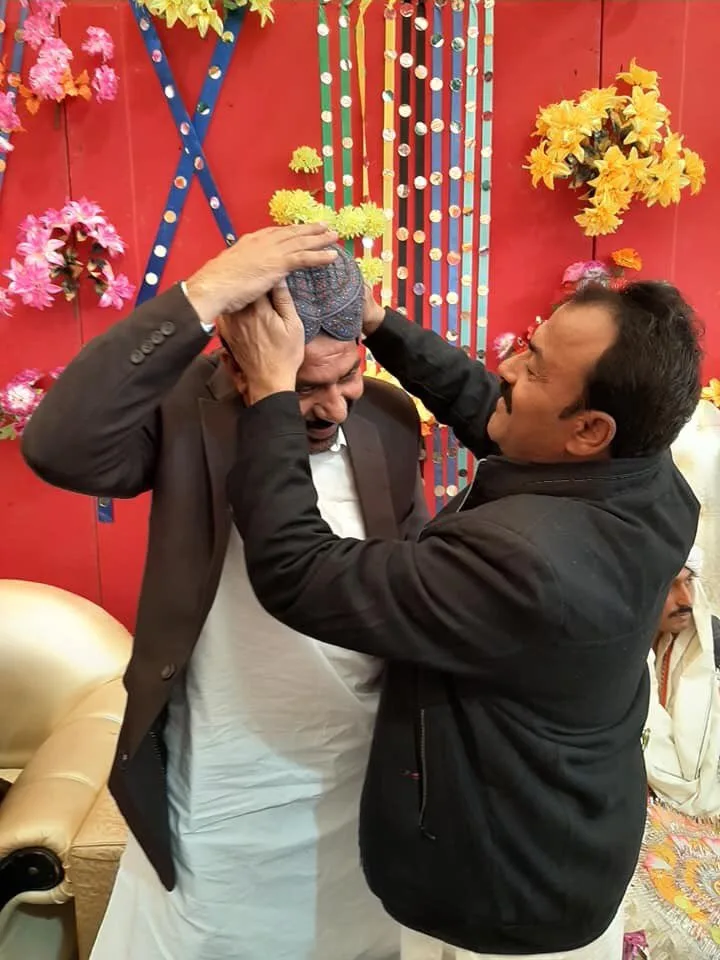
Saying no to the cap would be rude, and putting the cap on in front of your hosts is a way of saying you accept their welcome. At home, too, the cap comes out for weddings and Eid. Lots of men own a good one for those days and an old one for every day.
The same pairing of cap and shawl shows up across Sindhi culture more widely, from music stages to university convocations.
How the Sindhi Topi Day Began in December 2009
For most of its history the cap was simply part of daily life. It became a national talking point almost overnight, late in 2009.
That year, President Asif Ali Zardari wore a Sindhi cap on visits abroad. A television anchor criticised him for it on air. Many Sindhis took the comments as an insult to their culture. Text messages spread across the province, and a Sindhi television channel and the Pakistan Peoples Party called on people to wear the cap on a set day.
On Sunday, 6 December 2009, Sindh marked its first Sindhi Topi Day. Dawn’s report, “Sindh celebrates first ever Sindhi Topi Day”, says tens of thousands of people of all languages took to the streets in caps and ajraks. Rallies were held in Karachi, Hyderabad, Sukkur, Nawabshah and Larkana.
The demand was so sudden that shops ran out. People paid premium prices, and caps sold out in many markets. Crowds danced to Ahmed Mughal’s song “Sindhi Topi ain Ajrak Wara jian.” Parties that rarely agreed on much, including the PPP, the ANP and the MQM, all took part in their own way.
Looking back, the reaction to one remark on television seems out of all proportion. But the anger was about more than a cap. People wanted to say, loudly and in public, that their dress and their language were nothing to sneer at.
Sindhi Culture Day Celebrations Year by Year
The next year the event grew and changed its name. According to the Wikipedia page on Sindhi Cultural Day, it was renamed Sindhi Culture Day in 2010, and the Sindh government declared it a public holiday that December.
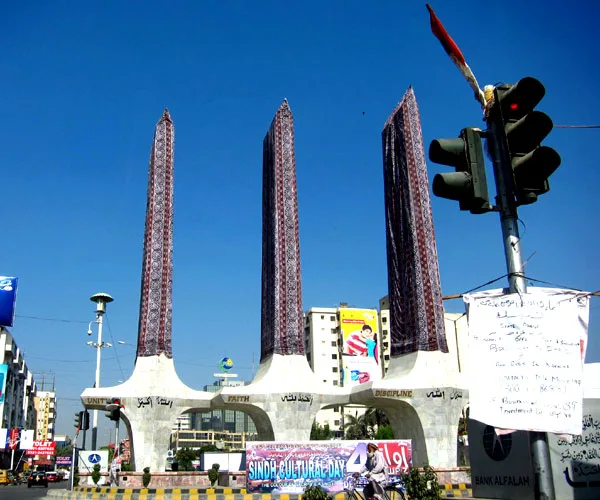
Since then it has been held every year on the first Sunday of December. A few years stand out:
- 2010: the provincial government made the day a holiday.
- 2013 and 2015: the US Consulate in Karachi held its own events to mark the day.
- 2016: Sindhi channels including KTN and Sindh TV held a joint celebration on 4 December.
- 2018: the theme was Aekta, or unity, and the main Hyderabad event took place at the Sindh Museum.
- 2019: a 130 metre ajrak was put on display in Hyderabad on 1 December.
In 2026 the day falls on Sunday, 6 December, exactly seventeen years after the first Topi Day.
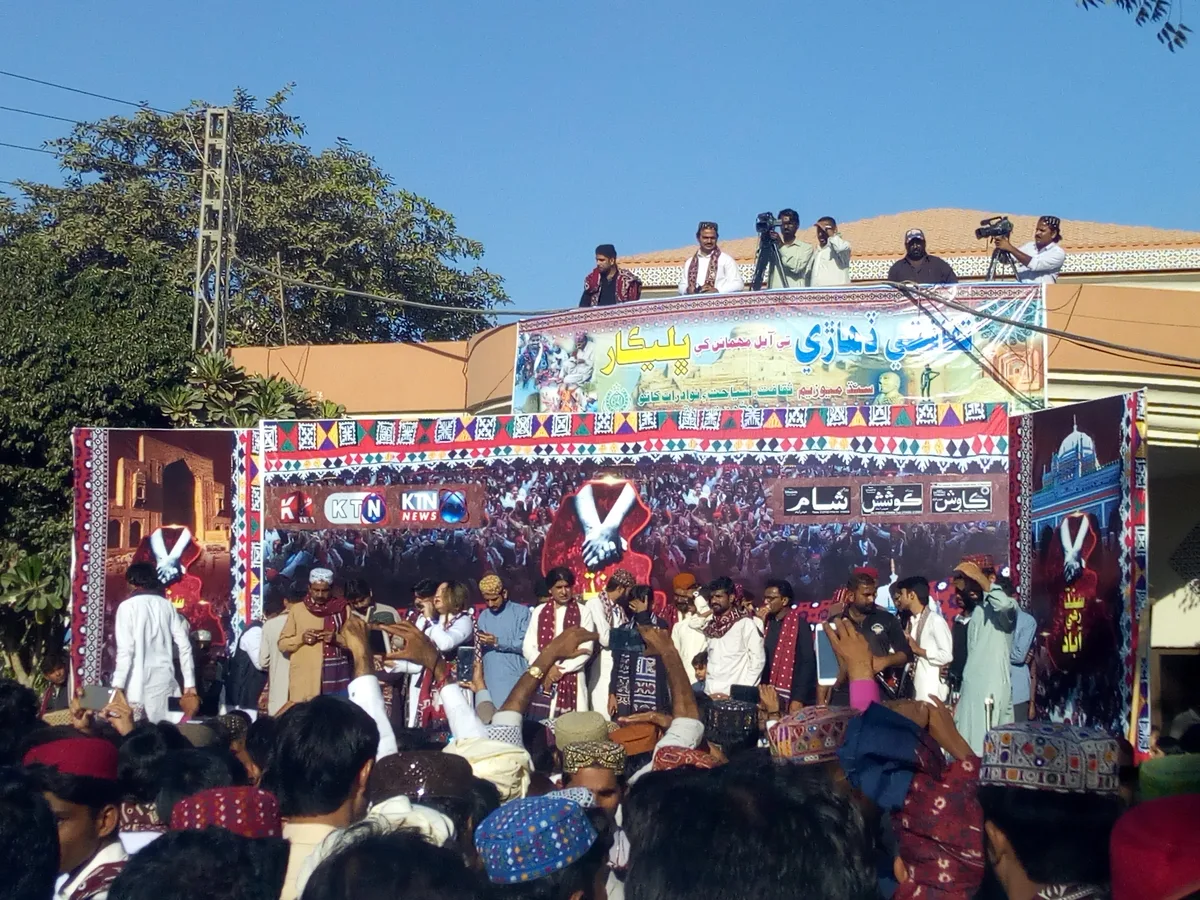
On the day itself, press clubs, schools and universities hold programmes. Landmarks such as Karachi’s Teen Talwar are wrapped in ajrak. There is folk music on every stage. Kids get dressed up, and whole families wander between stalls of caps and shawls. Literary gatherings recite the verses of poets such as Shah Abdul Latif Bhittai.
Not every year has been calm. Some rallies have turned political, and on a few occasions there have been scuffles in Karachi. Most of the day, though, is spent on music, food and family visits.
Wearing a Sindhi Topi With Respect
If you are new to the cap, a few simple points help.
Wear the arch at the front. The cut away part sits over the forehead, not at the back or side.
Match the occasion. Cotton caps in white or dull colours are what most men wear to the market or the office. Weddings and formal events call for something brighter, often velvet or heavy mirror work.
Buy handmade if you can. A handmade cap costs more, but the money goes to the women and families who stitch them. Look for slightly uneven stitches and real mirror pieces, which are signs of hand work.
Care for it gently. Hand embroidered caps should not go in a washing machine. Wash it by hand in cold water and dry it out of the sun. The colours and mirrors will last much longer.
Accept it gracefully. If someone places a cap on your head as a gift, wear it for a while. Taking it off at once can seem dismissive.
The Sindhi Topi Beyond the Borders of Sindh
The cap is not only worn in Sindh. In southern Punjab, Saraiki speakers wear a very similar style, and many Baloch also use it. In 2016 Bilawal Bhutto Zardari even marked Sindhi Culture Day in Lahore.
Across the border, Sindhi Hindu families who moved to India after 1947 kept many of their customs, and the cap still appears at their music evenings and festivals. Sindhi communities abroad mark Sindhi Culture Day as well, often with caps and ajraks sent from home.
This spread is part of the cap’s strength. It is clearly Sindhi, but it is also easy to share. A guest from Lahore or London can wear it for a day and feel welcome.
What the Sindhi Topi Says About Sindh Today
It is worth stepping back for a moment. Nobody can trace this cap back to the Soomras or the Sammas, and most of them are still sewn in village courtyards, yet in December 2009 it turned into the badge of a whole province within days. Culture often works like that.
The topi did not need ancient roots to matter. It mattered because ordinary people wore it, gave it, and defended it when they felt it was being mocked. Every year since, the first Sunday of December has turned that feeling into song, colour and shared pride.
There is a practical side as well. Each handmade cap supports a needle worker, often a woman in a small village, whose skill would otherwise have little market. That may be the cap’s quietest and most useful legacy.
Frequently Asked Questions About the Sindhi Topi
What is a Sindhi topi made of?
Most caps have a firm cotton base. The surface is covered with embroidery in cotton, acrylic or silk thread, and often with small mirrors. Wedding caps may use velvet and zari, a metallic thread.
Why does the Sindhi cap have a gap in front?
So the forehead stays bare. Many people say this is for prayer, so you can bow your head to the ground with the cap on. No old record proves it, but that is the usual answer.
When is Sindhi Culture Day celebrated?
It falls on the first Sunday of December each year. The first event, then called Sindhi Topi Day, was held on 6 December 2009. In 2026 it falls on Sunday, 6 December.
Who started the Sindhi Topi Day?
It began after a television anchor criticised President Asif Ali Zardari for wearing a Sindhi cap abroad. A Sindhi channel and the PPP called for a day of wearing the cap, and people across Sindh joined in.
Where are the best Sindhi caps made?
Caps are made across Sindh, but those from Tharparkar, Umerkot, Sanghar and the wider Mirpurkhas division are generally rated the best and fetch higher prices.
Is the Sindhi topi only for Sindhis?
No. Saraiki and Baloch communities wear similar caps, and guests from anywhere are often given one as a mark of respect. Put it on with a smile and your hosts will be pleased.
Sources and Further Reading on the Sindhi Topi
- Wikipedia, Sindhi cap, for the description, local names and producing districts.
- Wikipedia, Sindhi Cultural Day, for the origin of the day and its yearly timeline.
- Dawn, Sindh celebrates first ever Sindhi Topi Day, 6 December 2009.
- Saba Qayoom Leghari and Bhai Khan Shar, Evolution of Mirror Embroidery in Two Villages of Sanghar Sindh, International Journal of Arts, Culture, Design and Language, 2019.
- Beenish Tahir, “Nationalism in a Topi: An Indian Ocean Material Culture,” abstract in the programme of the Arts of the Indian Ocean conference, University of Toronto, 2024.

Leave a Comment