

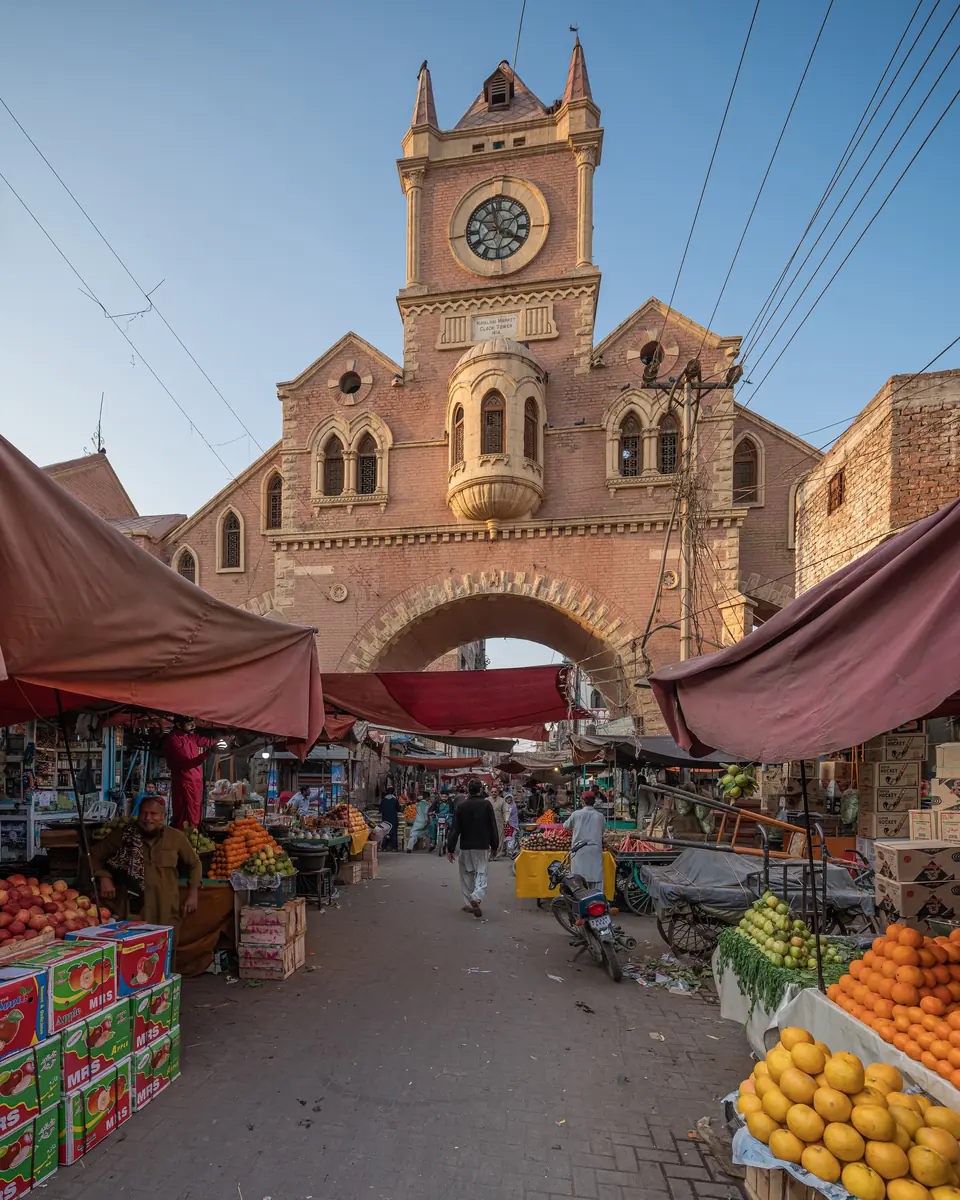
Hyderabad at a Glance
Hyderabad is the second largest city of Sindh and the eighth largest city in Pakistan, with a population of 1.7 million in the 2017 census. It was founded in 1768 by Mian Ghulam Shah Kalhoro on the site of the ancient town of Neroon Kot, and it was the capital of Sindh until 1843, when after the Battle of Miani it surrendered to the British and the capital moved to Karachi. This guide covers the places to visit in Hyderabad Sindh for a first time visitor: the old fort area, the Talpur tombs, the Sindh Museum, Rani Bagh, Shahi Bazaar and Mukhi House, with day trips to Bhit Shah, Ranikot Fort and Makli, and the practical facts for reaching the city from Karachi.
In this article (16)
- Hyderabad at a Glance
- Pakka Qila and the Old Fort Area
- Tombs of the Talpur Mirs and Talpur History
- Sindh Museum
- Rani Bagh
- Shahi Bazaar
- Mukhi House and Hyderabad Heritage Homes
- Day Trips from Hyderabad
- How to Reach Hyderabad from Karachi
- Best Time to Visit Hyderabad
- Where to Stay in Hyderabad
- Food in Hyderabad
- Sindhi Culture and Daily Life
- More Places to Visit in Sindh
- Frequently Asked Questions about Places to Visit in Hyderabad Sindh
- Sources and Further Reading
Hyderabad rewards a visitor who comes with the right expectations. It is not a city of manicured tourist sites. Its historic places sit inside a living old city, and some of them are best seen from outside. This guide lists the places to visit in Hyderabad Sindh in the order a first time visitor would see them, with the history that explains each place and the practical facts for the visit. The reward is a city that still feels like old Sindh: a fort that is now a neighbourhood, a bazaar that has traded for more than two centuries, tombs covered in blue tilework, and a museum that holds the story of the Indus Valley and every dynasty that ruled Sindh after it. A day is enough for the city itself; two days let a visitor add a day trip as well.
| Place | Where | What to expect |
|---|---|---|
| Pakka Qila | Old city centre | Old fort area, now a neighbourhood; see it from outside |
| Tombs of the Talpur Mirs | Hirabad | Domed tombs with blue tilework, 1783 to 1843 rulers |
| Sindh Museum | Rani Bagh, Qasimabad | Indus Valley and dynasty galleries; closed Wednesdays |
| Rani Bagh | Qasimabad | Park and small zoo, about 54 acres |
| Shahi Bazaar | Old city | Glass bangles, Ajrak and Sindhi topi, to the Navalrai Clock Tower |
| Mukhi House | Pakka Qila Road | 1920 heritage house, now a museum |
Pakka Qila and the Old Fort Area

Pakka Qila is the old brick fort at the centre of Hyderabad. It was founded with the city in 1768 by Mian Ghulam Shah Kalhoro, and it was the seat of the Kalhora rulers and then of the Talpur Mirs, until the British took it after the Battle of Miani in 1843. The fort gives the old city its shape: the bazaar runs from its gate, the old neighbourhoods gather around its walls, and the city grew outward from it.
A visitor should come with one honest fact in mind. Pakka Qila is a neighbourhood now, not a walkable fort. Since 1947 it has been a crowded neighbourhood, with homes built against its walls and shops cut into its base. There are no ramparts to tour, no ticket and no opening hours. A visitor can see the fort from outside, walk the surrounding old city lanes in daylight, ideally with someone local, and visit the Makki Shah shrine on the hill. That is the real experience of the place, and it is worth having: the eroded brick walls rising over market stalls at dusk show what two and a half centuries of a living city look like.
The full history of the fort, its rulers, its gates and its present state is told in our detailed guide to Pakka Qila. The fort belongs to the Kalhora period of Sindh, and the story of that dynasty is told in our guide to the Kalhora Dynasty.
Tombs of the Talpur Mirs and Talpur History

The Tombs of the Talpur Mirs stand in Hirabad, Hyderabad, and they are the burial ground of the Talpur rulers who governed Sindh from 1783/1784 to 1843. They are among the most atmospheric places to visit in Hyderabad Sindh. The two start years appear in different sources, so this guide gives both rather than choosing one without evidence. The tombs are also known as Cubbas, the Sindhi word for domes, and the domes are what a visitor sees first: a group of sandstone and whitewashed mausoleums, some large and some small, set inside a walled enclosure that now holds back the houses around it.
The complex is arranged in a northern group and a southern group. The southern group has two principal mausoleums nearest the entrance. The largest domed structure in the complex contains two graves: Mir Karam Ali Khan, who died in 1828, and Mir Murad Ali Khan, who died in 1833. To the north stands a structure containing the graves of Mir Nur Muhammad Khan, Mir Nasir Khan, Mir Shahdad Khan and Mir Hussain Ali Khan. It is said the rulers designed their own burial places while they were alive. The oldest tomb is dated differently by different authorities, so no single build year is given here.
The tombs are renowned for their tile decoration. Blue floral patterns over a white background, with green, yellow and brown accents, cover the outside facades. Most tombs are square or rectangular in plan, following almost the same specifications as the mausoleum of Mir Fateh Ali Khan at New Khudabad. Inside, the marble graves are etched with Quranic verses in Arabic, and some interior walls are decorated with poetry in Persian. In typical Talpur fashion, the marble graves have the rulers’ actual royal turbans placed on a projection at the end of each grave. Apart from the Arabic inscriptions, the graves are largely unmarked and have no names.
The smaller mausoleums hold the wives, consorts and infant children of the rulers. The ladies’ mausoleums are vaulted structures that look like covered wagons. One rectangular mausoleum is surmounted by two domes, flanked by kiosks on its four corners. The mausoleums of female Talpurs are closed structures with jaalis, lattice screens, on the door archways, to show the dead still observing purdah as in life. To this day, it is forbidden for men to step inside these mausoleums. A visitor should dress modestly, speak quietly, and remember that this is a burial ground before it is a sight to see.
The complex has been in the care of the Culture Department of the Government of Sindh since 30 March 2011, after devolution to the provinces. The tombs are enclosed in a walled area to halt encroachment by the surrounding residential buildings. No ticket price and no opening hours could be confirmed from any reliable source, so none is printed here. Public access is listed as open, and a visitor should check at the gate before planning a long visit around it. The story of the dynasty buried here is told in our guide to the Talpur Dynasty.
Sindh Museum

The Sindh Museum, also called the Sindh Provincial Museum, stands at Rani Bagh in Qasimabad, Hyderabad, on the National Highway (N-5), near Rani Bagh. It was established in 1971 to collect, preserve, study and exhibit the records of the cultural history of Sindh, and it is managed by the Culture Department of the Sindh provincial government. For a visitor who wants the story of Sindh in one building, this is the place to start before going out to the tombs, the fort and the bazaar.
The museum features the history and heritage of Sindh and the Indus Valley Civilisation. Galleries cover Sindh’s history from the Indus Valley to the Samma, Soomra, Kalhora and Talpur periods, with items from each ruling period on display, as well as the lifestyle of Sindhi people. Displays include pottery, jewellery, ladies’ attire, antiques, weapons such as swords, stamps and seals, Quranic scripts, and a wooden cart known as a peengho. The Indus Civilisation is well portrayed. Life size models and dioramas show village life and people of different occupations, which makes the museum work well for children as well as for adults.
The museum building has two sections: display galleries and an open area. There is a Mumtaz Mirza Auditorium and a cultural village at the back, a library, an art gallery and a handicraft shop. The open air section and the village display give the museum a different feel from a museum that is only a row of glass cases.
One practical fact is settled and the rest is not. The sources agree on only one point: the museum is closed on Wednesdays. Opening hours and the entry fee are given differently by every source that lists them, with hours from 9 am to 5 pm in one place and 10 am to 1 pm in another, and fees from free to Rs 10, Rs 20 and Rs 30, with Rs 200 quoted for foreign visitors. This guide prints no time and no price, because no single figure could be verified. A visitor should check the hours and the fee before visiting, and should allow about two hours for the galleries.
Rani Bagh

Rani Bagh, Sindhi for Queen’s Garden, is the zoological garden and park of Hyderabad, in Qasimabad, near the Sindh Museum on Wadhu Wah Road. It was established as a botanical garden in 1861 by the Agro Horticultural Society, under the name Das Garden, and it was later renamed in honour of Queen Victoria. It is the largest recreational facility in Hyderabad, at about 54 acres (22 hectares). The size is given as 53, 54 and 58 acres in different copies of the same sources, so this guide gives the middle figure and calls it approximate.
The garden is divided into four parts: Eidgah, Abbas Bhai Park, the zoo and lawns, children’s parks, jogging tracks, an artificial lake of 4,600 sq m (50,000 sq ft) for boating, and a parking area. The zoo holds about 21 species of mammals, 41 species of birds and 10 species of reptiles, about 70 animal species in total, and the garden holds 3,177 trees of 227 species, about 230 plant species. There is a children’s fun land with rides such as a ferris wheel, train rides and a pirate ship, and food kiosks. For a family visiting Hyderabad, Rani Bagh is the easy half day: lawns and shade in the morning, the boating lake, and the children’s rides.
The garden has had a difficult recent history. In November 2008 it was partially closed under the directions of District Nazim Kunwar Naveed Jamil so development work could be completed there, and a renovation of about Rs 150 million followed. The zoo is modest, and the condition of its animals has been publicly questioned, with the Sindh High Court issuing notices about it. This guide does not praise the zoo uncritically. A visitor should go for the park and the gardens, check at the gate whether the zoo section is open, and not plan a visit around the animals alone. Opening hours and the ticket price could not be confirmed from any official source, so none is printed here. Rani Bagh is best in the cool months, from November to February, when the lawns are green and the heat does not drive everyone indoors by midday.
Shahi Bazaar

Shahi Bazaar, the Royal Marketplace, is the old bazaar of Hyderabad, and it is one of the longest bazaars in Asia and one of the liveliest places to visit in Hyderabad Sindh. It runs from the Pakka Qila gate to the Navalrai Clock Tower, also called the Market Tower, at the other end. It was founded by the Kalhora rulers: when the capital moved from Khudabad to Hyderabad, traders were persuaded to come and trade there, and the bazaar grew around them. It has been trading ever since.
Its length is disputed, and this guide does not pretend otherwise. The District and Sessions Court Hyderabad, on the Government of Sindh site, gives its length as 4.5 km, from Market Chowk to the front of Hyderabad Fort. Other guides give about 2 km for the main stretch from the Pakka Qila gate to the Navalrai Clock Tower. The 4.5 km figure may include the branching bazaars; the 2 km figure is the main spine. Either way, it is a long walk through a crowded, narrow market, and a visitor should allow a morning for it, not an hour.
What to buy is easier to settle than the length. Plenty of souvenir, handicraft, embroidery and jewellery shops line the bazaar, and many shops sell Ajrak and Sindhi caps. The signature product is glass bangles. Hyderabad produces the bulk of the glass bangles sold in Pakistan, and whole sections of the market sell nothing else. The industry is centred on the Churi Para neighbourhood, and its workforce is estimated at 300,000 to 350,000 people, a figure that should be read as an estimate and not as a census. Arab News reported in 2022 that most artisans’ families migrated in the 1930s from Firozabad in Uttar Pradesh, India, and that the industry, which once had 70 factories in the 1990s, had only 40 surviving by 2022, hit by energy cuts, high power bills and shortages of raw material and labour. Buying bangles here is buying from a craft that is shrinking, and the shopkeepers know it.
Other goods named by the guides are Ajrak, the block printed cloth in deep crimson and indigo, the Sindhi topi, the embroidered and mirror worked cap, embroidered shawls, clay pottery, lacquered wood, ornamented silk, and gold and diamond jewellery down to a stitching needle. Resham Gali, also called Resham Bazaar, branches off Shahi Bazaar and focuses on women’s clothing and jewellery. The bazaar extends to two other large bazaars, Chotki Ghitti and Resham Ghitti. Ghitti is the Sindhi word for a narrow street, and hundreds of narrow streets connect the bazaar to different parts of the old city.
The landmark at the northern end is the Navalrai Clock Tower, also called Ghanta Ghar and the Market Clock Tower. It was built in 1914 in what used to be a fish and meat market at Hirabad, by the Hyderabad Municipal Corporation when Dewan Chand Dayaram was president, and it was designed by P. C. Thadani. Most sources give 1914, and the plaque photographed in 2026 reads 1914. The News reports an engraving giving 1915, so a visitor who looks closely at the tower may find both years claimed. This guide uses 1914.
The bazaar is crowded, narrow and slow going, and haggling is expected. Go in the morning before the heat builds, wear comfortable shoes, and keep the visit unhurried. There are no opening hours for an open bazaar and no single price list, so no hours and no prices are printed here.
Mukhi House and Hyderabad Heritage Homes
Mukhi House, also called Mukhi Mahal and Mukhi Palace, stands on Pakka Qila Road, near Homestead Hall, in the old city of Hyderabad, near Pakka Qila. It was built in 1920 by Mukhi Jethanand, head of a wealthy Sindhi Hindu family. Some family sources give 1921. It was the family residence until the last member left in 1957, it was restored by the Sindh Antiquities Department from 2009, it was declared protected heritage in 2018, and it was formally inaugurated as a museum in July 2021. Today it is a museum, and it is the best preserved of the old merchant houses of Hyderabad.
About an hour is enough for the house itself, and it combines naturally with Pakka Qila and Shahi Bazaar for a half day walk through old Hyderabad. Timings and the entry fee change, and the sources disagree about them, so this guide prints no price and no hours. Check before visiting. The full story of the house, its family, its architecture and its restoration is told in our detailed guide to Mukhi House.
Day Trips from Hyderabad

Hyderabad sits in the middle of Sindh, and three of the province’s great sites are within a short drive. Each has its own detailed guide on this site, so this section gives the distance, the reason to go, and the link, and leaves the full story to the guide.
Bhit Shah is the shrine town of Shah Abdul Latif Bhittai (1689 to 1752), the Sufi poet who wrote Shah Jo Risalo. The shrine’s blue and white tilework and the evening Shah Jo Raag music are the reasons to go. It is about 50 to 58 km from Hyderabad, under an hour by road. The distance is given as 58 km by the Dawn supplement and by road measurements, and as about 50 km by Dawn and The Express Tribune, so this guide gives the range rather than a single figure. Our Bhit Shah visitor guide covers the shrine, the music and the travel tips in full, and the life of the poet is told in our guide to Shah Abdul Latif Bhittai.
Ranikot Fort, the Great Wall of Sindh, is a fortified valley in the Kirthar hills near Sann, in Jamshoro District. It has been on UNESCO’s Tentative List since 1993. It is about 90 km north on the Indus Highway (N-55) to Sann, then a 21 km link road, about 120 km and about 2 hours in total to the Sann Gate. Go by private car, because there is no public transport to the gate. Both the builder and the size are disputed, and the claimed wall lengths do not all measure the same thing, so this guide does not call it the world’s largest fort without qualification. Our guide to Ranikot Fort covers the evidence, the gates and the visit in full.
Makli Necropolis, near Thatta, is a UNESCO World Heritage Site since 1981. About half a million tombs and graves stand over about 10 sq km, from the 14th to the 18th centuries. It is about 100 km south of Hyderabad on the N-5, about 1 hour 45 minutes, and Makli is a further 6 km from Thatta town. Combine it with the Shah Jahan Mosque in Thatta. Our guide to the Makli Necropolis covers the dynasties, the named monuments and the architecture in full.
Sehwan Sharif, home of the shrine of Lal Shahbaz Qalandar, is a further day trip north of Hyderabad, on the Indus Highway. Our Sehwan Sharif guide covers the shrine and the town in full.
How to Reach Hyderabad from Karachi
Hyderabad is a straightforward trip from Karachi, and most visitors come by road. The M-9 motorway, the Karachi to Hyderabad motorway, is a six lane motorway in Sindh connecting Karachi to Hyderabad. It is 136 km long, maintained by the National Highway Authority, and it is an upgrade of the old Super Highway, built by the Frontier Works Organization on a build operate transfer basis for 25 years. The 136 km figure is the length of the motorway itself. Door to door, Karachi to Hyderabad is longer, about 155 to 170 km depending on the start and end points, commonly quoted as about 163 to 165 km. The motorway ends at a cloverleaf interchange in Kotri, outside Hyderabad, and then merges with the N-5.
The drive takes about 2 hours on the motorway itself for most drivers. Door to door, allow 2.5 to 3 hours, including city traffic at either end. The Motorway Police helpline is 130. Leave early in the morning to reach Hyderabad before the heat, and to have the full day in the old city.
By train, 22 trains run daily from Karachi to Hyderabad. The fastest are the Jinnah Express and the Shah Hussain Express, each 2 hours 10 minutes. The first leaves at 6:30 AM and the last at 11:00 PM. Journey times for most trains are 2 hours 30 minutes to 3 hours. The main departure stations are Karachi Cantt and Karachi City, and the arrival station is Hyderabad Junction. Train timings change, so confirm with Pakistan Railways before travel, and do not rely on a printed timetable. No train fare is printed here, because fares differ by train and class and they change.
By bus, Daewoo Express is the best known intercity operator on this route. Its Karachi terminal is at Sohrab Goth, on the Main Super Highway, and its Hyderabad terminal is on Autobahn Road in Latifabad, Hyderabad. The typical bus journey takes 2 to 3 hours, with many departures daily. Other operators also run from Sohrab Goth. No bus fare is printed here, because fares vary by class and by source, and they should be checked at booking.
Best Time to Visit Hyderabad
The best time to visit Hyderabad is November to February, with December to February the peak of the comfortable season. Mid November to mid February is the coolest part of the dry season. January days are around 25 °C, with cool nights, and the city is at its best for walking the old city and the bazaar. November is dry, with highs near 32 °C, and it works well for a visit. October and March are warm but workable.
Summer is the season to avoid. Hyderabad has a hot dry climate. Mid April to late June is the hottest period, with May highs averaging about 41 °C and records near 50 °C. April, with highs near 40 °C, and May to June are to be avoided for walking the old city and the bazaar. The monsoon months of July to September bring humid heat and heavy rain, and the rain is heaviest in August. The exact monthly highs and lows differ by 2 to 4 °C between sources, so this guide gives the season and rounded figures only, and does not print a full monthly table.
For a visitor planning around events, the cool season also holds Sindhi Cultural Day on the first Sunday of December, when Hyderabad celebrates with Ajrak and Sindhi topi in the streets. The city is at its liveliest then, and hotels should be booked ahead.
Where to Stay in Hyderabad
Hyderabad is best done as a day trip from Karachi or a one night stay. No hotel name, price, rating or phone number is verified well enough to print in this guide, so none is given. What can be said with confidence is where to stay.
Stay in Qasimabad or Latifabad for modern hotels and guesthouses, or near Saddar for older, central lodgings. Saddar and the central city are handy for the railway station and the shops. Qasimabad is newer and quieter, and it is home to the Sindh Museum. Latifabad is residential, with guesthouses and budget accommodation, and most hotels and guesthouses cluster on Autobahn Road in Latifabad. The city centre puts a visitor close to Pakka Qila and Shahi Bazaar. The Autobahn Road area suits road travel but is less suited to exploring the older centre on foot. Latifabad covers a large stretch, so confirm the exact address before booking. Book ahead in the November to February season, when the weather brings the most visitors.
Food in Hyderabad
Hyderabad is a good city to eat in, and the dish to try first is Sindhi biryani. The city shares the dish with Karachi, and the old city has food stalls and small restaurants around the bazaar and the station road. Our recipe for Sindhi biryani gives the home version, with mutton, potatoes and aloo bukhara. In the city itself, eat where the food is cooked fresh and the place is busy, and drink bottled water. No restaurant name or price is printed here, because none was verified for this guide.
Sindhi Culture and Daily Life
Hyderabad is a city where Sindhi culture is worn in the street. The Ajrak, the block printed cloth in deep crimson and indigo, and the Sindhi topi, the embroidered and mirror worked cap, are sold in Shahi Bazaar and worn across the city, most visibly on Sindhi Cultural Day. Sindhi is the language of the city, and its music, its poetry and its shrines shape daily life. The full story of the culture, its food, its dress and its traditions is told in our guide to Sindhi culture.
More Places to Visit in Sindh
Hyderabad is one stop on a longer route through Sindh. From here a traveller can go south to Thatta and Makli, north to Sehwan and Ranikot, or east to Umerkot and Tharparkar. Our hub guide to places to visit in Sindh brings the whole province together, with Mohenjo Daro, Makli, Ranikot, Kot Diji, Sehwan, Bhit Shah, Gorakh Hill, Keenjhar Lake and the Karachi beaches in one place.
Frequently Asked Questions about Places to Visit in Hyderabad Sindh
What is the best time to visit Hyderabad?
November to February is the best time to see the places to visit in Hyderabad Sindh, with December to February the most comfortable. January days are around 25 °C, with cool nights. Avoid May to June, when May highs average about 41 °C, and the July to September monsoon humidity.
How long does it take to reach Hyderabad from Karachi?
About 2 hours on the M-9 motorway itself, and 2.5 to 3 hours door to door. By train the fastest trains take 2 hours 10 minutes, and most take 2.5 to 3 hours. By bus the journey takes 2 to 3 hours.
Can you walk inside Pakka Qila?
No. Pakka Qila is a neighbourhood now, not a walkable fort. There are no ramparts to tour, no ticket and no opening hours. See it from outside, walk the old city lanes in daylight, and visit the Makki Shah shrine on the hill.
Is there an entry fee for the Sindh Museum?
No reliable figure could be confirmed, so none is printed here. The sources disagree on the fee, and the only agreed practical fact is that the museum is closed on Wednesdays. Check the hours and the fee before visiting.
How far is Bhit Shah from Hyderabad?
About 50 to 58 km, under an hour by road. The Dawn supplement and road measurements give 58 km, while Dawn and The Express Tribune give about 50 km, so this guide gives the range.
Where should I stay in Hyderabad?
In Qasimabad or Latifabad for modern hotels and guesthouses, or near Saddar for older central lodgings. No hotel name or price is printed here, because none was verified. Book ahead in the November to February season.
Sources and Further Reading
- Wikivoyage, Hyderabad, Pakistan, for the city, its founding and its size. en.wikivoyage.org
- Wikipedia, History of Hyderabad, Sindh, for the founding in 1768 and the capital until 1843. en.wikipedia.org
- Dawn, Crumbling majesty: The fascinating Pakka Qila, 19 November 2014. dawn.com
- Wikipedia, Tombs of the Talpur Mirs, for the rulers, the tombs and the tilework. en.wikipedia.org
- Turbeh, Tombs of the Talpur Mirs, for the 1783 start year and the tomb dates. turbeh.com
- Wikipedia, Sindh Museum, for the founding in 1971 and the galleries. en.wikipedia.org
- Trek.pk, Sindh Museum, Hyderabad, for the galleries and visitor tips. trek.pk
- Asiafirms, Sindh Museum, for the displays and the building. pk.asiafirms.com
- Wikipedia, Rani Bagh, Hyderabad, for the founding in 1861, the size and the zoo. en.wikipedia.org
- Zameen Blog, Rani Bagh Hyderabad, for the facilities and the area. zameen.com
- Trek.pk, Rani Bagh Hyderabad, for the garden and zoo guide. trek.pk
- Wikipedia, Shahi Bazaar, for the bazaar and its length. en.wikipedia.org
- District and Sessions Court Hyderabad, Government of Sindh, About Hyderabad, for the 4.5 km length and the Kalhora founding. districtcourtshyderabad.gos.pk
- TripGeo Tours, Hyderabad, Pakistan travel guide, for the bazaar and its goods. tours.tripgeo.com
- Arab News, Manufacturers of Hyderabadi bangles, desired Eid accessory, struggle to survive, 2022. arabnews.pk
- Trek.pk, Resham Gali, Hyderabad, for the bangles and bazaar guide. trek.pk
- Wikipedia, Navalrai Clock Tower, Hyderabad, for the tower built in 1914. en.wikipedia.org
- Endowment Fund Trust for Preservation of the Heritage of Sindh, Navalrai Clock Tower, Hyderabad. heritage.eftsindh.com
- The News, Shadows of the past, for the 1915 engraving. thenews.com.pk
- The Express Tribune, Historic Mukhi Mahal fixes ticketing, 14 April 2025. tribune.com.pk
- Trek.pk, Bhit Shah, for the shrine and the distance. trek.pk
- Dawn supplement, Vision 2022 Sindh, 22 April 2022, via IBA, for the 58 km distance. iba.edu.pk
- Wikipedia, Ranikot Fort, for the fort and the Tentative List. en.wikipedia.org
- Department of Archaeology and Museums, Government of Pakistan, Ranikot Fort. doam.gov.pk
- Rome2Rio, Ranikot Fort to Hyderabad, for the distance and time. rome2rio.com
- UNESCO World Heritage Centre, Historical Monuments at Makli, Thatta. whc.unesco.org
- Trek.pk, Thatta Guide, for the distance from Hyderabad. trek.pk
- Guide to Pakistan, Thatta Travel Guide, for the distance and time. guidetopakistan.pk
- Wikipedia, M-9 motorway, Pakistan, for the motorway length and route. en.wikipedia.org
- Public Private Partnership Authority, Government of Pakistan, Karachi Hyderabad Motorway, for the 136 km figure. p3a.gov.pk
- Trek.pk, M-9 Karachi Hyderabad Motorway, for the drive time and exits. trek.pk
- inDrive, Karachi to Hyderabad rides, for the door to door time. indrive.com
- UrduPoint, Karachi to Hyderabad Trains, for the train times. urdupoint.com
- Qaaf, Karachi to Hyderabad Train Ticket Price, for the train times. qaaf.com.pk
- Daewoo Express, Karachi to Hyderabad, for the terminals and journey time. daewooexpress.pk
- UrduPoint, Daewoo Express Bus Timings 2026, for the departures. urdupoint.com
- Trek.pk, Hyderabad Sindh Guide, for the best time and the city. trek.pk
- Climates to Travel, Hyderabad climate, for the seasons and monthly averages. climatestotravel.com
- ClimateWhen, Best Time to Visit Hyderabad, for the monthly figures. climatewhen.com
- Rest Reserve, Top Hotels in Hyderabad, Pakistan, for the areas to stay. restreserve.com
- Travel.com, Hyderabad, Pakistan: Best Things to Do, for the areas to stay. travel.com

Leave a Comment