

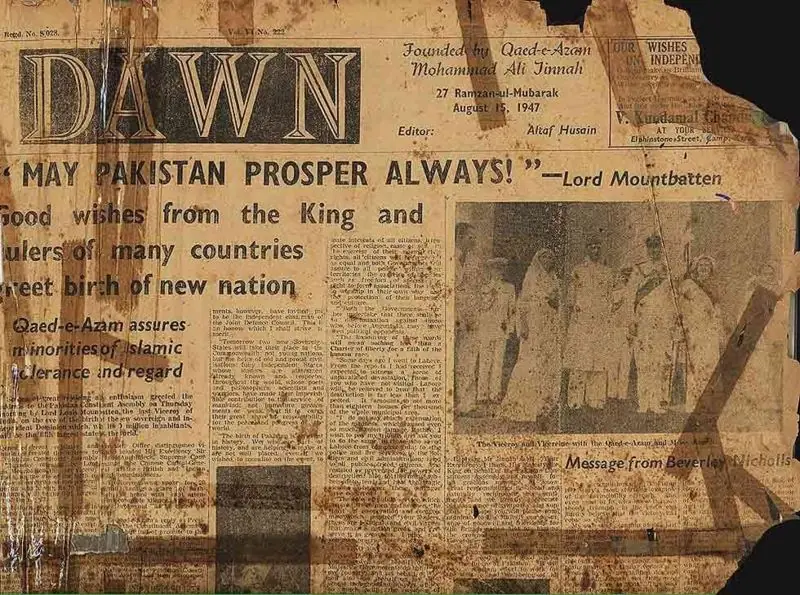
Sindh entered Pakistan whole. Unlike Punjab and Bengal, it was not divided at Partition. But the province that joined Pakistan in 1947 was transformed within a few years. Its cities changed their people, its capital was taken away, its very existence as a province was abolished for fifteen years, and its language became the cause of riots. This is the story of Sindh in Pakistan, from Partition in 1947 to the present day.
In this article (19)
- Sindh in Pakistan at a Glance, 1947 to Today
- Sindh Joins Pakistan, the Road to 1947
- Partition and Migration, 1947 to 1951
- Karachi, Pakistan’s First Capital, 1947 to 1970
- One Unit and Sindh, 1955 to 1970
- The Restoration of Sindh Province, 1970
- The Bhutto Years and the 1972 Language Riots
- The Zia Years and the MRD Movement, 1977 to 1988
- The Democratic Period in Outline, 1988 to 2008
- The 18th Amendment and Provincial Autonomy, 2010
- Modern Sindh, Population, Economy and Floods
- Why Sindh in Pakistan Still Matters
- Frequently Asked Questions about Sindh in Pakistan
- When did Sindh join Pakistan?
- What was One Unit and when did it end?
- What happened in the 1972 language riots?
- When did Karachi stop being the capital?
- How bad were the 2022 floods in Sindh?
- Sources and Further Reading on Sindh in Pakistan
This is recent, contested history. Several events in this article, Partition migration, the language riots of 1972, the MRD movement of 1983, the Karachi violence of the 1990s, are still argued about in Pakistan today. This article is strictly impartial and fact based. Claims are attributed to their sources, figures are given as the sources state them, with ranges where they disagree, and no partisan claim is repeated as if it were settled fact. Where a death toll or a migration figure is disputed, the article says so and gives the range.
The British period came just before this story. Read our guide to the Talpur Dynasty for the rulers the British defeated, and our guide to Sindhi Culture for the culture that survived these changes.
Sindh in Pakistan at a Glance, 1947 to Today
| Phase | Dates | What happened |
|---|---|---|
| Partition | 1947 to 1948 | Sindh joins Pakistan; migration transforms Karachi |
| Karachi as capital | 1947 to 1967 | National capital, then FCT, then Islamabad |
| One Unit | 1955 to 1970 | Sindh merged into West Pakistan |
| Restoration | 1 July 1970 | Sindh province restored; Karachi its capital again |
| Language riots | 1972 | Sindhi Language Bill; both languages official |
| Zia and MRD | 1977 to 1988 | Martial law; 1983 uprising in Sindh |
| Autonomy | 2010 | 18th Amendment devolves powers to provinces |
| Today | 2022 to 2024 | Floods devastate Sindh; PPP governs since 2008 |
Sindh Joins Pakistan, the Road to 1947
Sindh became a separate province on 1 April 1936, separated from the Bombay Presidency under the Government of India Act 1935, with Karachi as its provincial capital and its own Legislative Assembly.
On 3 March 1943 the Sindh Legislative Assembly passed a resolution in favour of Pakistan, on the lines of the Lahore Resolution of 1940. It was the first provincial legislature in British India to pass such a resolution. The resolution asked that Muslims, as a separate nation, should have independent states of their own in the zones where they were in the majority, and that no constitution placing Muslims under a central Hindu majority government would be acceptable. Most sources say G. M. Syed tabled it. One source says it was moved by Sheikh Abdul Majeed Sindhi, with G. M. Syed playing a key role. This article says it was presented by G. M. Syed.
On 26 June 1947, at a special session, the Sindh Assembly decided to join the new Pakistan Constituent Assembly. Sindh was the first province to opt for Pakistan. The premier, Sir Ghulam Hussain Hidayatullah, said after the vote, “Thank God, Pakistan is a reality and Sind has joined Pakistan today [June 26].” No vote count for this decision was found in the sources checked, so none is given here.
On 14 August 1947 Pakistan became independent. Sindh became a province of the Dominion of Pakistan in its entirety, unlike Punjab and Bengal, which were divided. Its first chief minister was Mohammad Ayub Khuhro, in office from 16 August 1947 to 28 April 1948. Its first governor after independence was Sir Ghulam Hussain Hidayatullah, from 14 August 1947 to 4 October 1948.
Sindh’s population in the 1941 census was 4,335,008 people, of whom 1,229,926 were Hindus, about 28 percent. Hindus were a majority in the cities. Karachi was about 51 percent Hindu in 1941, and Hindus formed the majority in Hyderabad, Shikarpur and Sukkur as well.
Partition and Migration, 1947 to 1951
Sindh’s Partition was different from Punjab’s. There was no mass violence in Sindh comparable to Punjab and Bengal in August 1947. Sindh remained largely peaceful until the closing weeks of 1947. The exodus of Hindus happened mainly in late 1947 and early 1948, driven by fear, by the arrival of Muslim refugees from India, and by a series of riots, in Nawabshah in November 1947, Hyderabad in December 1947 and Karachi on 6 January 1948.
The Karachi riots of 6 January 1948 followed communal violence in Ajmer, India, in December 1947, after which Muslims fled across the Thar Desert into Sindh. The Karachi riots are estimated to have caused about 1,100 casualties. After them, most of Sindh’s remaining Hindu population left.
How many Sindhi Hindus left is disputed. The figures in the sources range from about 800,000 to 1.4 million. The most commonly cited range is 1.2 to 1.4 million, mostly by sea to Bombay, Porbandar, Veraval and Okha, and by rail. A scholarly study by Ansari puts the figure at about 1.25 million of about 1.4 million Hindus living in Sindh in 1947. By mid 1948 about 400,000 Hindus remained in Sindh. Evacuation continued until July 1949. A substantial Hindu population still lives in Sindh today, between about 2 million and 2.3 million by the 1998 census, the two figures coming from different counts of the same census.
The Muslim migrants, the Muhajirs, who came in numbered about 1.1 million, from Uttar Pradesh, Bombay Presidency, Delhi and Rajasthan. About half settled in Karachi and the rest in Hyderabad, Sukkur and other cities. By the 1951 census, migrants made up 57 percent of Karachi’s population, 65 percent of Hyderabad’s and 55 percent of Sukkur’s. Another estimate, by Boivin, puts the Muhajir population of Sindh in 1951 at about 815,000. The difference is partly a question of date and definition, since the 1.1 million figure covers a longer period. Both figures are given here, dated.
Karachi was transformed. Its population was about 400,000 to 450,000 in August 1947 and passed 1 million by the 1951 census, 1,068,459. In 1941 Muslims were 42 percent of Karachi and Sindhi was the mother tongue of 51 percent. By 1951 Muslims were 96 percent of the city, Sindhi was the mother tongue of only 8.5 percent, and Urdu was the mother tongue of 51 percent. Some 470,000 refugees were in Karachi by May 1948, and about 100,000 Muhajir refugees arrived annually until 1952. Read our guide to Clifton Beach for the Karachi that grew out of this transformation.
Across the subcontinent, the UNHCR estimates about 14 million people were displaced in 1947. It was the largest mass migration in human history. Deaths in the Partition riots overall are estimated at between 200,000 and 2,000,000.
Sarah Ansari’s Life after Partition, Migration, Community and Strife in Sindh, 1947 to 1962, published in 2005, is the standard academic study of this period in Sindh. Kumar and Kothari’s special section Partition and Sindh, Dispersals, Memories and Diasporas, in the journal South Asia in 2016, covers the same ground. Both stress that the demographic transformation of Sindh, the outflow of Hindus and the inflow of Muslim refugees, reshaped the province’s politics for decades.
Karachi, Pakistan’s First Capital, 1947 to 1970
Karachi was Pakistan’s first capital, chosen by Muhammad Ali Jinnah. It was the seat of the federal government from independence in 1947.
In 1948 Karachi was separated from Sindh to form the Federal Capital Territory, an area of about 2,103 sq km around the city, so the federal government would operate from nationally held territory. The Sindh government objected. Chief Minister Ayub Khuhro opposed the separation, and Prime Minister Liaquat Ali Khan told him the Sindh government would have to move out and “go make your capital in Hyderabad”. Jinnah promised Sindh compensation for the financial loss. According to historian Hamida Khuhro, the promise was never fulfilled. Sindh demanded 60 crore rupees. A government commission is reported to have decided on 30 crore rupees, of which only 2 crore rupees had been paid by 1953, and some accounts say 18 crore rupees was still outstanding as late as 1962. These compensation figures come from a single article citing some accounts. They are treated here as reported claims, not audited facts.
The provincial capital moved to Hyderabad on 15 August 1947. The capital of Sindh shifted from Karachi to Hyderabad, and Karachi became the national capital. Hyderabad remained Sindh’s provincial capital until 1970.
In 1959 President Ayub Khan decided to build a new capital, Islamabad, near Rawalpindi and the army’s General Headquarters. A commission constituted in 1958 recommended the site north east of Rawalpindi in 1959. The Federal Capital Territory was dissolved in 1959 and merged into West Pakistan. Rawalpindi became the interim, de facto, capital from 1959.
On 14 August 1967 Islamabad officially became the capital of Pakistan, exactly 20 years after independence. Government ministries moved gradually from Rawalpindi through the late 1960s.
The reasons given for the move were that the capital should be accessible from all parts of the country, separated from Karachi’s business and commercial activity, and close to the army headquarters in Rawalpindi. Critics at the time and since have argued Ayub Khan wanted the capital near GHQ and was uncomfortable in Karachi, Jinnah’s city. That is presented here as the critics’ view, attributed, not as fact.
The sequence is often given wrongly, so it is stated here in full. The decision was taken in 1959. Rawalpindi was the interim capital from 1959 to 1967. Islamabad formally became the capital on 14 August 1967. Do not write that the capital moved in 1960. That date, found in one Wikipedia article, is wrong. It probably conflates the decision with the move to Rawalpindi. Read our guide to Manora for the harbour that made Karachi the port city Jinnah chose as his capital.

One Unit and Sindh, 1955 to 1970
The One Unit scheme merged the four provinces of West Pakistan, Punjab, Sindh, NWFP and Balochistan, the princely states, including Khairpur and Bahawalpur, and the tribal areas into a single province, West Pakistan, with its capital at Lahore. The stated purpose was to create parity between West Pakistan, one unit, and East Pakistan, one province, in the new constitutional order.
It was first proposed on 2 March 1949, when Malik Feroz Khan Noon raised it in the first Constituent Assembly. Begum Jahanara Shahnawaz supported it the next day. The idea was revived in 1953 to 1954 after the second report of the Basic Principles Committee, and pushed by Prime Minister Chaudhri Muhammad Ali and Governor General Ghulam Muhammad.
On 11 December 1954 the Sindh Legislative Assembly voted 100 to 4 in favour of One Unit. This came after Chief Minister Abdul Sattar Pirzada, who had opposed the scheme with the support of 74 of the 110 Assembly members, was dismissed and replaced by Muhammad Ayub Khuhro, who had opposed the separation of Karachi from Sindh in 1948 but now supported One Unit. Khuhro had been disqualified from politics for four years under the Public Representatives Disqualification Order, known as PRODA. Ghulam Muhammad is reported to have promised him a pardon and reappointment as chief minister if he got the bill passed.
The Establishment of West Pakistan Act was introduced in the Constituent Assembly on 10 August 1955 and passed on 30 September 1955. Sindh was merged into West Pakistan on 14 October 1955. On the same day the princely state of Khairpur was merged into Sindh, as a district and division. The province of Sindh ceased to exist as a separate unit.
What it meant for Sindh was the loss of its provincial assembly, its separate identity and its direct control over its affairs. Even minor administrative matters were referred to Lahore. Sindhi lost official status in the new province except as a medium of instruction in primary schools in rural Sindh. Sindhi politicians, students, teachers, writers and peasants opposed it. The main political parties of the time, the Pakistan National Party and the National Awami Party, also opposed it.
The Anti One Unit Front was established at a convention in Karachi on 29 to 30 October 1955, with leaders including Sheikh Abdul Majeed Sindhi, G. M. Syed, Hyder Bux Jatoi, Abdul Hameed Jatoi, Qazi Faiz Muhammad and Ghulam Mustafa Bhurgri. Hyder Bux Jatoi, the leftist peasant leader, was elected its secretary. Members of the Sindhi Adabi Sangat, the Sindhi literary organisation, were active in the movement.
The 4 March 1967 student movement was the turning point. The trigger was the dismissal in February 1967 of Hasan Ali Abdur Rehman, the first Sindhi vice chancellor of the University of Sindh, by the Governor of West Pakistan, Nawab Amir Mohammad Khan Kalabagh, after Rehman introduced quotas for Sindhi students from far flung districts in professional colleges. On 4 March 1967, students of Sindh University, Liaquat Medical College and the Engineering College planned a rally at the G. M. Barrage between Jamshoro and Hyderabad. 207 students were arrested en masse and beaten by police. Mass protests followed across the province. The 4 March movement is commemorated every year in Sindh and is described as a watershed in Sindh’s post Partition political awakening. The Hyderabad Student Federation and later the Sindh National Students Federation, under Jam Saqi, carried the movement forward.
Dawn’s Flashback article calls One Unit “a dark age for Sindh”. That is the paper’s editorial judgement, not a neutral fact, and it is attributed here as such.
The Restoration of Sindh Province, 1970
Ayub Khan resigned on 25 March 1969 after mass protests. General Agha Muhammad Yahya Khan took power as Chief Martial Law Administrator and President, imposed martial law, dissolved the assemblies and promised direct elections.
Yahya Khan announced the dissolution of One Unit in November 1969, on 28 November 1969 according to one detailed account. The Legal Framework Order of 30 March 1970, President’s Order Number 2 of 1970, set the rules for Pakistan’s first direct general election on the basis of population, abolished the parity principle between the two wings, and dissolved One Unit.
On 1 July 1970 West Pakistan was abolished and the four provinces, Punjab, Sindh, NWFP and Balochistan, were restored. Karachi was returned to Sindh and again became its capital, and the former princely state of Khairpur became part of the restored province. The current province of Sindh dates its establishment to 1 July 1970.
The general election of 7 December 1970 was Pakistan’s first direct election on adult franchise. The Awami League won 167 of 169 seats in East Pakistan. The Pakistan Peoples Party, the PPP, won 81 seats in West Pakistan. The National Assembly had 313 seats, 300 general and 13 reserved for women. Sindh had 27 general and 1 women’s seat, 28 in total.
The failure to transfer power to the Awami League led to civil war in East Pakistan and the Indo Pakistani war of 1971. East Pakistan became Bangladesh on 16 December 1971. Yahya Khan resigned and Zulfikar Ali Bhutto, whose PPP had won in West Pakistan, took power on 20 December 1971 as President and Chief Martial Law Administrator.
The Bhutto Years and the 1972 Language Riots
Zulfikar Ali Bhutto, founder of the PPP on 30 November 1967, was President from December 1971 and became Prime Minister on 14 August 1973 under the new constitution, serving until his overthrow on 5 July 1977. In Sindh, his cousin Mumtaz Ali Bhutto was Chief Minister from 1 May 1972 to 20 December 1973, followed by Ghulam Mustafa Jatoi from 25 December 1973 to 5 July 1977.
The Sindhi Language Bill, 1972, titled The Sindhi Teaching, Promotion and Use of Sindhi Language Bill, 1972, was moved in the Sindh Assembly on 3 July 1972 and passed on 7 July 1972 with 50 votes in a house of 62. It made Sindhi the official language of the province. Its statement of objects and reasons said the measure would be “without prejudice to the use of Urdu”, and it cited Article 267 of the Interim Constitution, which allowed a provincial legislature to prescribe measures for the teaching, promotion and use of a provincial language in addition to a national language. The bill was assented to by the Governor of Sindh on 16 July 1972.
The bill triggered protests by Urdu speaking groups, above all in Karachi and Hyderabad. The Urdu newspaper Daily Jang published a front page story framed with the slogan “Urdu ka janaza hai zara dhoom se nikle”, meaning “It is the funeral of Urdu, so it should go out with fanfare”. Demonstrations began on 7 July. Riots broke out in Karachi, Hyderabad, Mirpurkhas, Nawabshah, Larkana and Sukkur. Shops and vehicles were torched, and the army was called in to enforce a 24 hour curfew. The background included earlier steps. In August 1970 the University of Sindh syndicate, and in December 1970 the Board of Intermediate and Secondary Education in Hyderabad, had decided to make Sindhi the official language of the province, which had already caused language related disturbances in 1971.
On 16 July 1972 President Bhutto promulgated an ordinance protecting Urdu, under a settlement between Urdu speaking and Sindhi representatives. In effect, both Sindhi and Urdu became official languages of the province. Law and order was restored on 16 July.
The death toll is disputed. Sources give 47 killed in total, 22 lives lost in three days with 150 wounded, and 12 killed with 150 injured in Karachi and Hyderabad. One Dawn article says the frenzy “claimed hundreds of innocent lives” without a count. This article gives the range, at least 12 and up to 47 killed, with some accounts saying more, and names the sources. No single figure is presented as certain.
Sindhi nationalist accounts describe the bill as a necessary assertion of indigenous identity. Urdu speaking accounts describe it as an attack on Urdu. This article presents both views as views, and sticks to the documented facts, the bill’s text, the vote, the violence and the settlement. Read our guide to the Sindhi Language for the full history of the language and its scripts.
The 1973 Constitution was adopted by the National Assembly on 10 April 1973 and brought into force on 14 August 1973. It established Pakistan as a federal parliamentary republic with a two house Parliament, four provinces, Sindh, Punjab, NWFP and Balochistan, and the federal capital Islamabad, and created the Council of Common Interests to resolve disputes between the centre and the provinces. It remains Pakistan’s constitution, amended 27 times as of October 2026, and suspended twice, in 1977 and 1999.
After Bangladesh’s independence, G. M. Syed founded the Jeay Sindh Mahaz on 18 June 1972 and proposed an independent Sindhi homeland, Sindhudesh. He was the first nationalist politician in Pakistan to call openly for Sindh’s separation. His books Heenyar Pakistan khey tuttan khappey, meaning “Now Pakistan Should Disintegrate”, and Sindhu Desh, A Nation in Chains, set out the case. The same man who moved the 1943 resolution for Pakistan later proposed Sindhudesh. This is documented fact, not a contradiction to be resolved, and it is presented here plainly. The movement declined after his death in 1995. It survives in factions, Jeay Sindh Qaumi Mahaz and Jeay Sindh Muttahida Mahaz.
The Zia Years and the MRD Movement, 1977 to 1988
On 5 July 1977 General Muhammad Zia ul Haq, the army chief, overthrew Prime Minister Bhutto in a coup, Operation Fair Play, declared martial law and promised elections within 90 days. The elections never came.
On 4 April 1979 Zulfikar Ali Bhutto was hanged in Rawalpindi Central Jail after being convicted of conspiracy to murder a political opponent. The Lahore High Court sentenced him to death in March 1978 and the Supreme Court upheld the verdict 4 to 3 in February 1979. In 2024 the Supreme Court gave an advisory opinion that the trial had not met fair trial standards.
The Movement for the Restoration of Democracy, the MRD, was a multi party alliance formed in 1981, led by the PPP, then headed by Nusrat Bhutto and her daughter Benazir Bhutto, and including left wing parties, Sindhi, Baloch and Pakhtun nationalist groups, a Muslim League faction and the Jamiat Ulema i Islam. Its objective was the end of martial law and the restoration of democracy. It was rooted in rural Sindh and remained mostly non violent.
On 14 August 1983 the MRD launched a new movement against Zia. It began simultaneously in Sindh and Punjab but failed to gather support in Punjab and became concentrated in Sindh, where it disrupted daily life for weeks, particularly in central and northern Sindh, Dadu, Moro, Larkana and Sukkur. Karachi remained relatively calm. The police could not contain it and Zia called in the army, three army divisions and helicopters, according to the accounts. In the first weeks, 1,999 people were arrested, 189 killed and 126 injured, figures cited in the Wikipedia MRD article. Dawn’s accounts say “dozens of civilians were killed, hundreds arrested”. The Wikipedia figures are presented here as reported figures, with the Dawn wording as a cross check, not as a final count. The movement was crushed, but it is credited with putting political pressure on Zia to hold elections.
Dawn describes the 1983 movement as threatening “a full scale civil war in Sindh” and “bordering on a Sindhi nationalist insurgency”. That is Dawn’s characterisation. This article describes what happened, weeks of disruption and army deployment, and attributes the stronger characterisation.
After 1983 the MRD boycotted the 1984 presidential referendum and the 1985 general elections. Zia died in a plane crash on 17 August 1988. The MRD dissolved on 24 August 1988, a week later, clearing the way for general elections.
The memoirs of General Mirza Aslam Beg, cited in the Wikipedia Operation Clean up article, say the MQM had Zia’s support from its foundation in 1984 as a counterweight to the PPP and Jamaat i Islami. This is a claim from one general’s memoirs. It is attributed here, not stated as fact.

The Democratic Period in Outline, 1988 to 2008
In the November 1988 elections Benazir Bhutto became Prime Minister, the first woman to lead a Muslim majority country. The PPP formed the government in Sindh in coalition with the MQM. Qaim Ali Shah was Chief Minister of Sindh from 2 December 1988 to 25 February 1990. The PPP and MQM alliance fell apart in 1989.
The MQM, the Muttahida Qaumi Movement, originally the Muhajir Qaumi Movement, was founded on 18 March 1984 by Altaf Hussain, growing out of the All Pakistan Muhajir Students Organisation, APMSO, founded on 11 June 1978 at Karachi University. It won the November 1987 local body elections in Karachi and Hyderabad and 13 seats in the National Assembly in 1988. In 1997 it changed “Muhajir” to “Muttahida”, meaning United, in its name.
The 1990s in Karachi saw repeated ethnic and political violence in Karachi and Hyderabad. In 1990 Sindh Police opened fire on Muhajir localities in Hyderabad, an event linked in the accounts to Benazir Bhutto’s dismissal from office. The causal link is asserted, not proven, in the sources checked. The events are presented here in sequence without asserting causation. The MQM split in 1991 to 1992, when MQM Haqiqi under Afaq Ahmed broke away.
Operation Clean up ran from 19 June 1992 to 16 August 1994. It was a military led operation in Karachi, launched on the directives of Prime Minister Nawaz Sharif and continued under Benazir Bhutto in 1993 to 1994, aimed at MQM, Altaf, and at crime and gang warfare. It was carried out by the Sindh Police and Sindh Rangers with army support, and is also known as Operation Blue Fox. The stated trigger included the alleged “Jinnahpur” plan, a claim that the MQM planned to break Karachi and Hyderabad away from Sindh. Whether such a plan existed is disputed. This article calls it an alleged plan throughout and notes the dispute. The operation’s reported outcome was that MQM Altaf and MQM Haqiqi were both weakened, law and order was restored and Karachi’s crime rate fell. Reported casualties were 1,350 killed and 2,350 injured, figures from the Wikipedia infobox, not independently confirmed in the sources checked. They are presented here as reported figures.
General Pervez Musharraf seized power on 12 October 1999. The 1973 Constitution was suspended, the second suspension. In 2000 the government abolished the divisions across Pakistan and merged Karachi’s five districts into a single Karachi city district.
After Musharraf’s rule ended, the PPP returned to power in Sindh in the 2008 elections and has governed the province continuously since 6 April 2008, with Qaim Ali Shah as Chief Minister from 2008 to 2016. The PPP won the Sindh Assembly elections of 2008 and 2013, and 99 seats in 2018 and 115 seats in 2024, forming the government each time.
The 18th Amendment and Provincial Autonomy, 2010
The 18th Amendment, passed in April 2010, was the most significant change to the 1973 Constitution since its adoption. It was passed unanimously by Parliament, with the support of all major parties including the PPP and PML N.
What it did was abolish the Concurrent Legislative List, 47 subjects shared between the federation and the provinces, including education, health, social welfare, labour, agriculture and local government, transferring them exclusively to the provinces. It gave provinces greater control over natural resources through Article 172(3), joint federal provincial ownership of oil, gas and minerals. It strengthened the Council of Common Interests. It repealed Article 58(2)(b), which had allowed the President to dissolve the National Assembly unilaterally. It also expanded fundamental rights, including free and compulsory education.
The fiscal effect was a new National Finance Commission Award allocating 57.5 percent of the divisible pool to the provinces. The Friday Times gives 55.5 percent. The difference is likely between the amendment itself and the NFC Award that followed it. Both figures are given here, with the note that they refer to different instruments.
The amendment is generally presented as the culmination of the autonomy struggle that began with the opposition to One Unit. The IIUI paper on the anti One Unit movement traces a direct line from the 1950s resistance through the 1973 Constitution to the 18th Amendment.
Modern Sindh, Population, Economy and Floods
By the 2023 census Sindh has 55,696,147 people, 23.1 percent of Pakistan’s 241,499,431, making it Pakistan’s second largest province by population and third largest by area, 140,914 sq km. It is the most urbanised province, 53.73 percent urban. Karachi is the capital and largest city. The 2023 census gives its population as 20,382,881, the district total. The city proper figure from the same census is 18,843,844. The difference is the boundary used. Other major cities are Hyderabad, Sukkur and Larkana.
Sindh has the second largest provincial economy in Pakistan. Karachi is the country’s main financial hub and largest city, and Sindh contains two of Pakistan’s busiest commercial seaports, the Port of Karachi and Port Qasim. Karachi Port handled about 53.95 million tonnes of cargo and 2.651 million TEUs of containers in FY 2024 to 2025. The rest of the province is largely agricultural, producing fruit, vegetables and consumer goods for other parts of the country.
The PPP has governed Sindh continuously since 2008. Syed Murad Ali Shah has been Chief Minister since 29 July 2016, serving his third term after the 8 February 2024 election, in which the PPP won 115 of the 168 Sindh Assembly seats and MQM P won 36. He took oath on 27 February 2024.

From mid June to October 2022, monsoon rains and floods devastated Pakistan. Sindh was the worst affected province. The figures, by source, are as follows. Deaths: 1,739 people killed across Pakistan, including 647 children, with 799 killed in Sindh and 8,422 injured there, NDMA figures via the DEC review and Wikipedia. The Wikipedia infobox gives 1,760 nationally. The difference is small and probably reflects later updates. This article uses 1,739, with 799 in Sindh, and notes the variant. People affected: about 33 million across Pakistan, about 14.56 million in Sindh, about 10 million displaced in Sindh, and some 7.6 to 7.9 million displaced nationally. Houses: more than 2.28 million damaged or destroyed nationally, of which over 1.88 million in Sindh, about 82 to 88 percent of the national total. Agriculture: over 1.2 million hectares of agricultural land damaged in Sindh alone, and 6,200 sq km of farmland affected.
Damage and loss: the government’s Post Disaster Needs Assessment of October 2022 put total damage at 14.9 billion US dollars and total economic loss at 15.2 billion US dollars, over 30 billion US dollars combined, with reconstruction needs of at least 16.3 billion US dollars. Sindh accounted for close to 70 percent of total damages and losses. A separate World Bank and Climate Change Council assessment put the damage at 40 billion US dollars. Both figures are given here, labelled by source. 24 of Sindh’s districts were affected. Dadu, Khairpur and Mirpurkhas were the worst hit. Read our guide to Tharparkar for one of the districts that has lived through Sindh’s hardest years.
The 2010 floods were the most catastrophic in Pakistan’s history until 2022, officially more than 1,700 killed, more than 20 million people affected and over 20 percent of the country’s land area inundated. Sindh was badly hit then as well, but the sources checked do not give a Sindh specific toll for 2010, so none is given here.
Why Sindh in Pakistan Still Matters
Sindh in Pakistan is a story of a province that joined a new country whole and then spent seventy years arguing about what that membership should mean. The argument runs through every section of this article. It began with the migration that remade Karachi, continued with the loss of the capital and the abolition of the province under One Unit, flared in the language riots of 1972 and the MRD uprising of 1983, and was partly settled by the 18th Amendment in 2010.
It also left a lesson about how history is written. The numbers in this story, how many Hindus left, how many died in 1972, how much the floods cost, are disputed, and the honest answer is to give the range and name the source. The province’s politics today, the PPP in power since 2008, the MQM in Karachi, the nationalist factions that survive from G. M. Syed’s Jeay Sindh, all descend from the events in this article. Sindh in Pakistan is not a single certain story. It is a set of evidence, carefully weighed, and this article has tried to weigh it fairly.
Frequently Asked Questions about Sindh in Pakistan
When did Sindh join Pakistan?
Sindh joined Pakistan on 14 August 1947, when Pakistan became independent. Its Assembly had decided to join the Pakistan Constituent Assembly on 26 June 1947, the first province to opt for Pakistan. Unlike Punjab and Bengal, Sindh entered Pakistan whole and was not divided.
What was One Unit and when did it end?
One Unit merged the four provinces of West Pakistan, the princely states and the tribal areas into a single province, West Pakistan, with its capital at Lahore. Sindh was merged into it on 14 October 1955 and lost its assembly and separate identity. One Unit was dissolved by the Legal Framework Order of 30 March 1970, and Sindh province was restored on 1 July 1970.
What happened in the 1972 language riots?
The Sindhi Language Bill was moved on 3 July 1972 and passed on 7 July 1972, making Sindhi the official language of Sindh. Protests by Urdu speaking groups led to riots in Karachi, Hyderabad and other cities, and the army was called in. On 16 July 1972 an ordinance protected Urdu, so both Sindhi and Urdu became official languages. The death toll is disputed, at least 12 and up to 47 killed.
When did Karachi stop being the capital?
Karachi was Pakistan’s first capital from 1947. The decision to move the capital was taken in 1959, Rawalpindi was the interim capital from 1959 to 1967, and Islamabad formally became the capital on 14 August 1967. Karachi returned to Sindh and became its provincial capital again on 1 July 1970.
How bad were the 2022 floods in Sindh?
Sindh was the worst affected province in the 2022 floods. 799 people were killed in Sindh and 8,422 injured, about 14.56 million people were affected and about 10 million displaced, and over 1.88 million houses were damaged or destroyed. The government assessment put total damage and loss across Pakistan at over 30 billion US dollars, with Sindh accounting for close to 70 percent.
Sources and Further Reading on Sindh in Pakistan
- Wikipedia, History of Sindh. en.wikipedia.org
- Dawn, Sindh’s role in the Pakistan movement. dawn.com
- Wikipedia, History of Muhajirs. en.wikipedia.org
- Tribune, The price of shifting capital from Karachi. tribune.com.pk
- Dawn, One Unit, a dark chapter in our history. dawn.com
- Wikipedia, 1972 Language violence in Sindh. en.wikipedia.org
- Wikipedia, Movement for Restoration of Democracy. en.wikipedia.org
- Wikipedia, Operation Clean up. en.wikipedia.org
- The Friday Times, Protecting provincial autonomy, 18th Amendment. thefridaytimes.com
- Wikipedia, Pakistan floods. en.wikipedia.org
- Britannica, Sindh province, Pakistan. britannica.com

Leave a Comment