

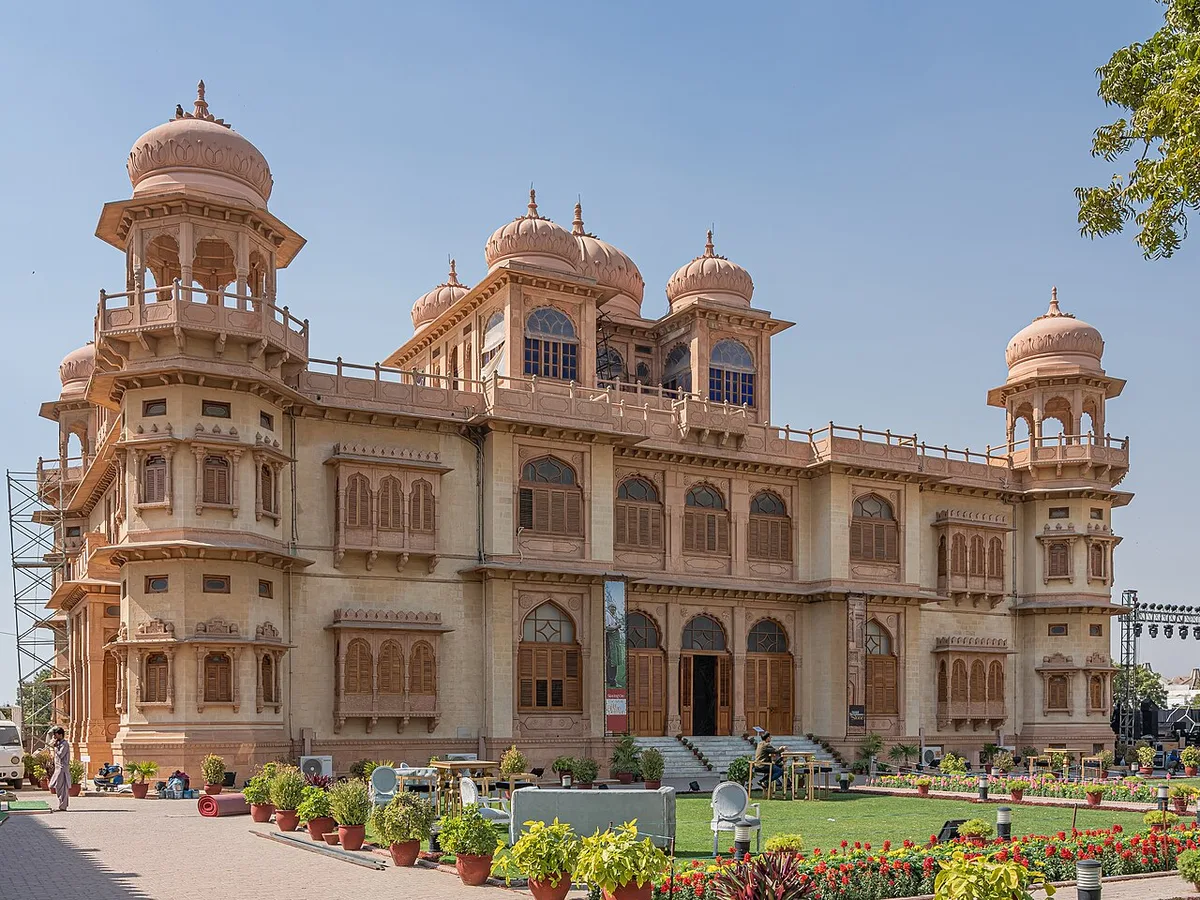
The 9th Sindh Literature Festival takes place on Saturday 21 and Sunday 22 November 2026 at Mohatta Palace Museum in Old Clifton, Karachi. Entry is free, but every visitor needs a pass booked online. One pass covers both days.
In this article (33)
- The 9th Sindh Literature Festival at a Glance
- How to Get Your Free Pass for Both Festival Days
- What Time Do Gates Open Each Day
- The Programme Plan for Saturday and Sunday
- Day One Starts With the Inauguration
- Day Two Brings Talks, Awards and Comedy
- Speakers Confirmed for 2026 So Far
- Musicians Curated by Saif Samejo
- The Safeer e Sindh Award and Who It Honours
- Mohatta Palace, the Venue With Its Own History
- A Summer Home Built in 1927
- From Government Office to Qasr e Fatima
- Mohatta Palace as a Museum Since 1999
- Getting to Mohatta Palace and Finding Your Way Inside
- The Layout of Gates, Stages and Stalls
- What to Bring on the Festival Day
- Books, Ajrak and Food at the Festival Stalls
- Sindh Literature Festival History From 2016 to 2025
- Who Started the Festival and Why
- The Early Years at Beach Luxury Hotel
- The Pandemic Gap and the Arts Council Years
- Frere Hall and the Save Indus Edition
- The 8th Edition Back at the Beach Luxury Hotel
- What Past Editions Suggest About the 2026 Programme
- Tips for a Good Day at the Sindh Literature Festival
- Plan Around the Sessions You Want Most
- Choose the Right Language Sessions
- Visiting With Family and Children
- Respect the Museum Building
- Other Ways to Take Part in the Festival
- Details Not Yet Published for the 9th Edition
- Why the Festival Matters for Sindhi Culture
- Sources and Further Reading on the Festival
This guide puts the confirmed facts in one place. It covers the dates, the pass, the names the festival has announced so far, the venue and its history, and what earlier editions looked like. Every fact below comes from the festival’s own website or from newspaper reports, and each one is linked in the text.
Some details were still unpublished on 17 November 2026. The full session list, the daily timings and the six award winners had not been released. Where that is the case, this article says so plainly and describes what earlier editions did instead.
The 9th Sindh Literature Festival at a Glance
Here are the basic facts, taken from the festival’s official 2026 guide and its FAQ page.
- Edition: the 9th. The first festival was held in Karachi in 2016.
- Dates: Saturday 21 November and Sunday 22 November 2026.
- Venue: Mohatta Palace Museum, 7 Hatim Alvi Road, Block 5, Old Clifton, Karachi.
- Entry: free, with a pass booked on the festival website.
- Languages: sessions run in Sindhi, Urdu and English.
- Organiser: the Sindh Literary Foundation.
The festival is also known by its Sindhi name, Sindh Adabi Melo. The FAQ explains that adab means literature and melo means a fair or festival.
The Express Tribune reported on 25 October 2026 that the dates and the venue were first announced on the festival’s official Instagram account.
How to Get Your Free Pass for Both Festival Days
There is no ticket price. You fill in a short form on the festival website, and the pass arrives by email with a QR code. You can show it on your phone or bring a printed copy to the gate.
The official guide sets out a few simple rules.
- Each person needs their own pass.
- One pass works on both days, so you do not need a second one for Sunday.
- Children need their own pass too.
- If you lose your pass, you can get it again from the website with the same email address.
The pass page is at sindhliteraturefestival.com/pass. The festival’s Facebook page gives the same link.
Some event listing websites also show the festival, and a few of them say “tickets”. Entry is still free. The organisers’ own pages are the safest place to book.
What Time Do Gates Open Each Day
The festival had not published official opening times when this article was written. Its programme page said only that the schedule would be posted “closer to the festival”.
Third party event listings do not agree with each other. One listing gives 4 pm to 10 pm on both days. Two others give 12 noon to 10 pm. Neither came from the organisers, so it is best to check the festival website on the morning you go.
The Programme Plan for Saturday and Sunday
The detailed session list was not out yet. However, the festival’s 2026 guide does describe the shape of each day.
Day One Starts With the Inauguration
Saturday 21 November opens with an inauguration ceremony. Panels and conversations follow through the day. The first day ends with a music evening.
The visitor guide says the inauguration and the music evening draw some of the biggest crowds. If you want a seat for either, it advises arriving early.
Day Two Brings Talks, Awards and Comedy
Sunday 22 November has more sessions, then a run of short talks that the festival calls SLF Talks. The Safeer e Sindh Award is presented on stage that day. The second day also has a comedy session and ends with a closing talk.
Across both days the festival lists talks, readings, poetry, music and theatre. Book launches and conversations with writers and journalists are part of the plan too. There are also spaces for children.
Speakers Confirmed for 2026 So Far
The festival’s SLF 2026 page says it adds names “as speakers confirm”. On 17 November 2026 its speakers page listed five people.
- Ali Gul Pir, listed as a speaker.
- Jehangir Siddiqui, described by the festival as the founder of Jehangir Siddiqui and Co. and JS Bank.
- Zafar Masud, listed as a speaker.
- Mushahid Hussain Syed, described as a politician and journalist.
- Syed Sardar Ali Shah, described as the Sindh provincial minister for Education, Culture, Tourism, and Antiquities and Archives.
The festival has not yet said which session each speaker will join. This article does not guess. The list will probably grow. The 2022 edition, for example, had 28 sessions.
Musicians Curated by Saif Samejo
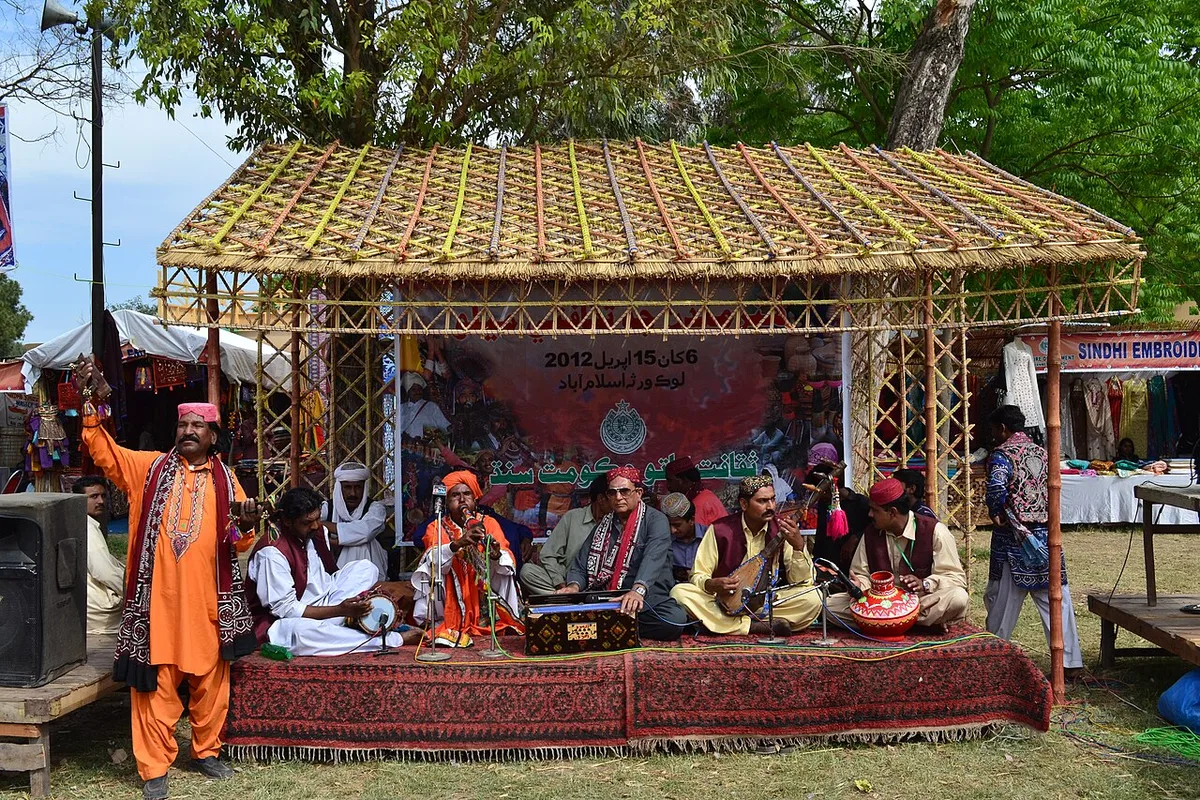
The festival’s musicians page names five acts for 21 and 22 November. It describes them as folk, Sufi and indigenous musicians from across Sindh, curated by the singer Saif Samejo.
- Salamat Sohrab Faqeer and Group
- Mohan Bhagat
- Mola Bux
- Jawahir Lal
- Adil Manganhar
The exact day and time for each act had not been published. Saif Samejo has a long link with the festival. Wikipedia names him among the well known people who have taken part in the festival, and in 2024 he led The Sketches in the closing music set.
The Safeer e Sindh Award and Who It Honours
The Safeer e Sindh Award is given each year at the festival. Safeer means ambassador, so the name means “ambassador of Sindh”.
The festival’s award page says it goes to people whose work promotes Sindh’s culture, art and tourism. It is not limited to writers.
In 2026 the award session takes place on Sunday 22 November. The programme lists six awardees, presented in conversation with a host and a guest speaker. Their names had not been announced on 17 November 2026. The festival says it will publish them on its website and social media pages before the ceremony.
Mohatta Palace, the Venue With Its Own History
This is the first time the festival is being held at Mohatta Palace. Earlier editions used a beach hotel, the Arts Council and a public library. The palace is a different kind of space, and its own story is worth knowing before you go.
A Summer Home Built in 1927
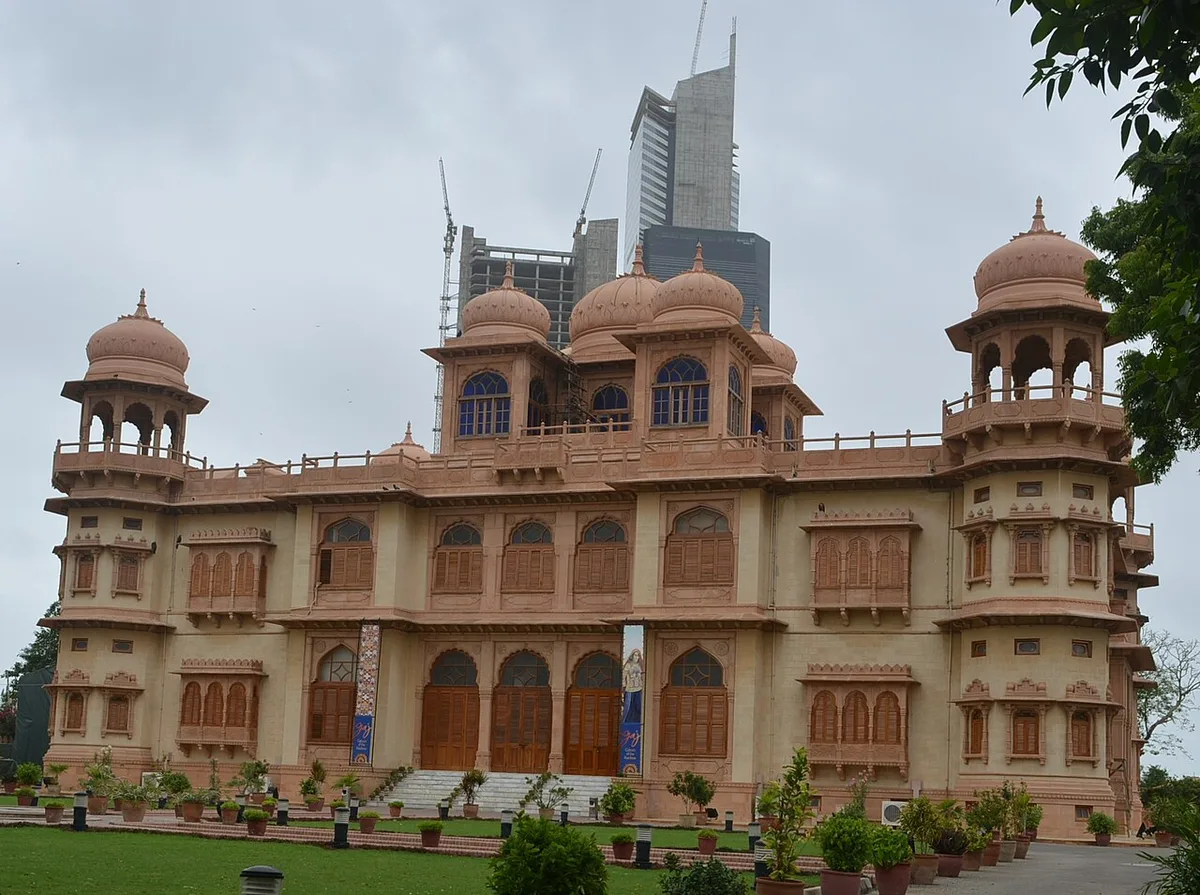
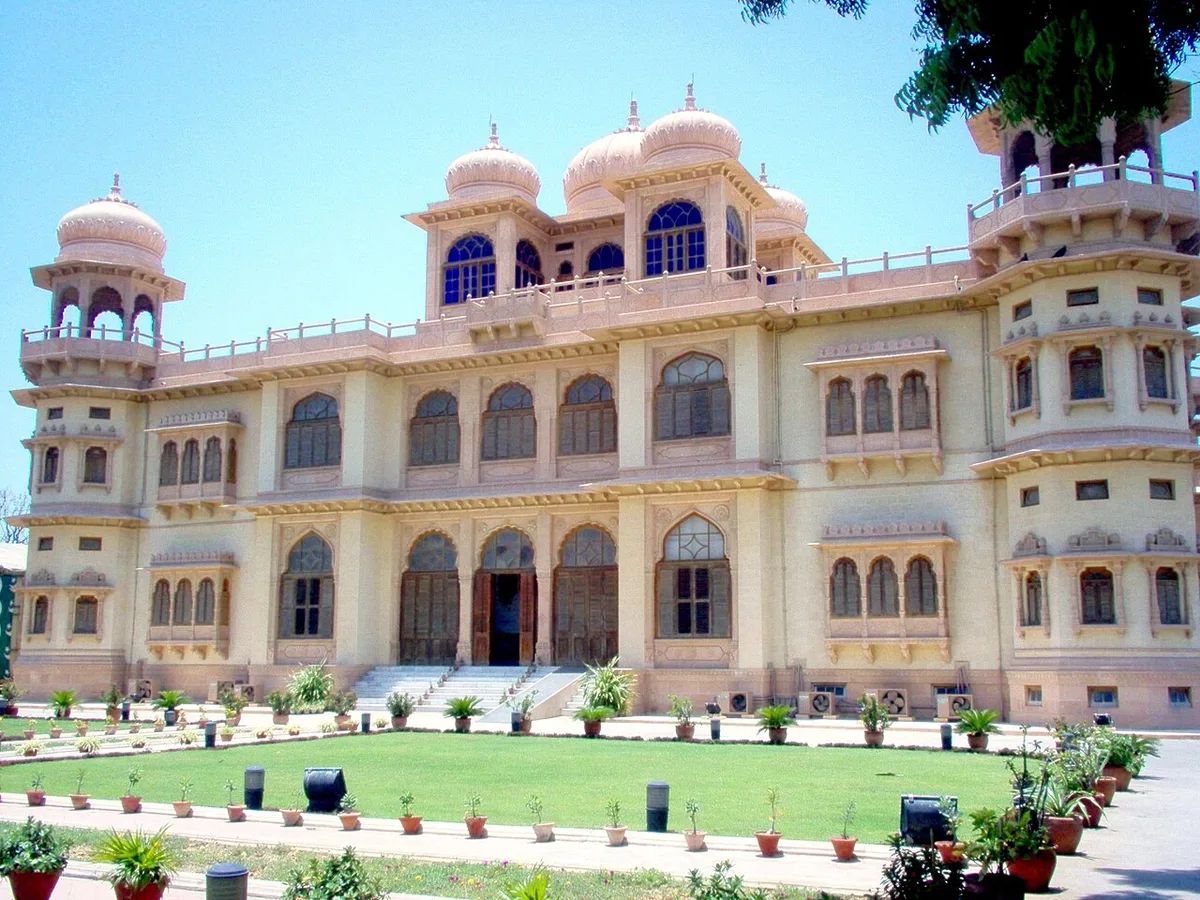
Mohatta Palace was built in 1927 as a summer home for Shivratan Chandraratan Mohatta. He was a Hindu Marwari businessman whose family roots lay in Rajasthan. He made his fortune manufacturing soap in Karachi, according to Wikipedia’s article on the palace.
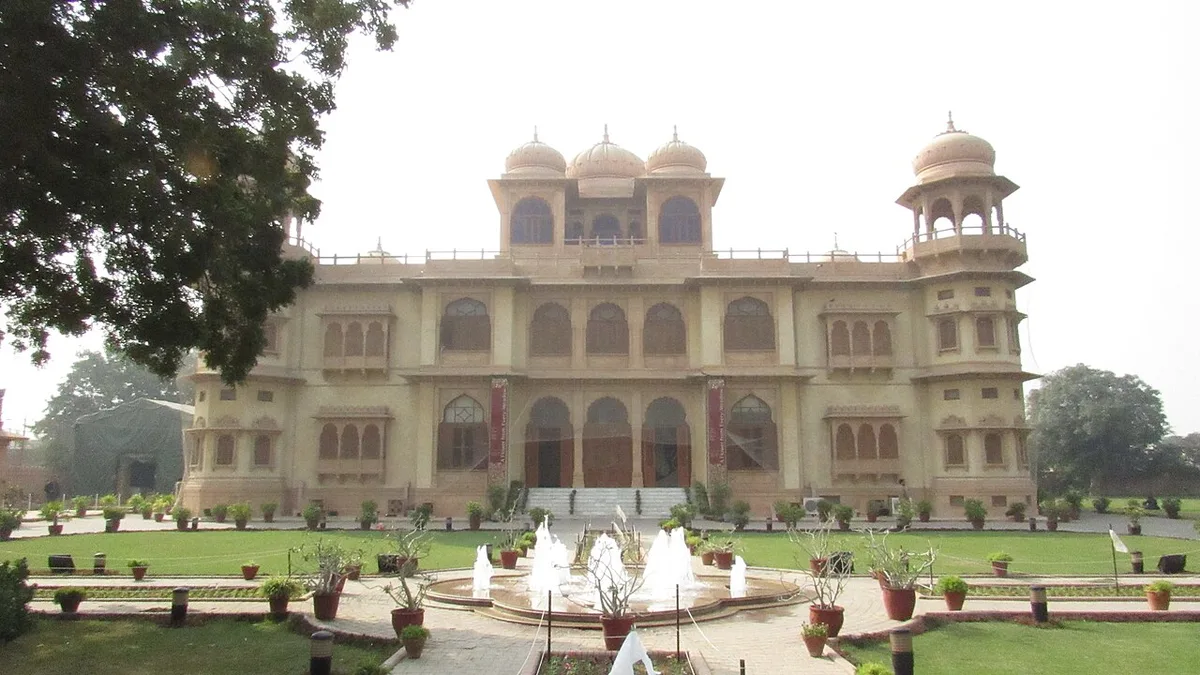
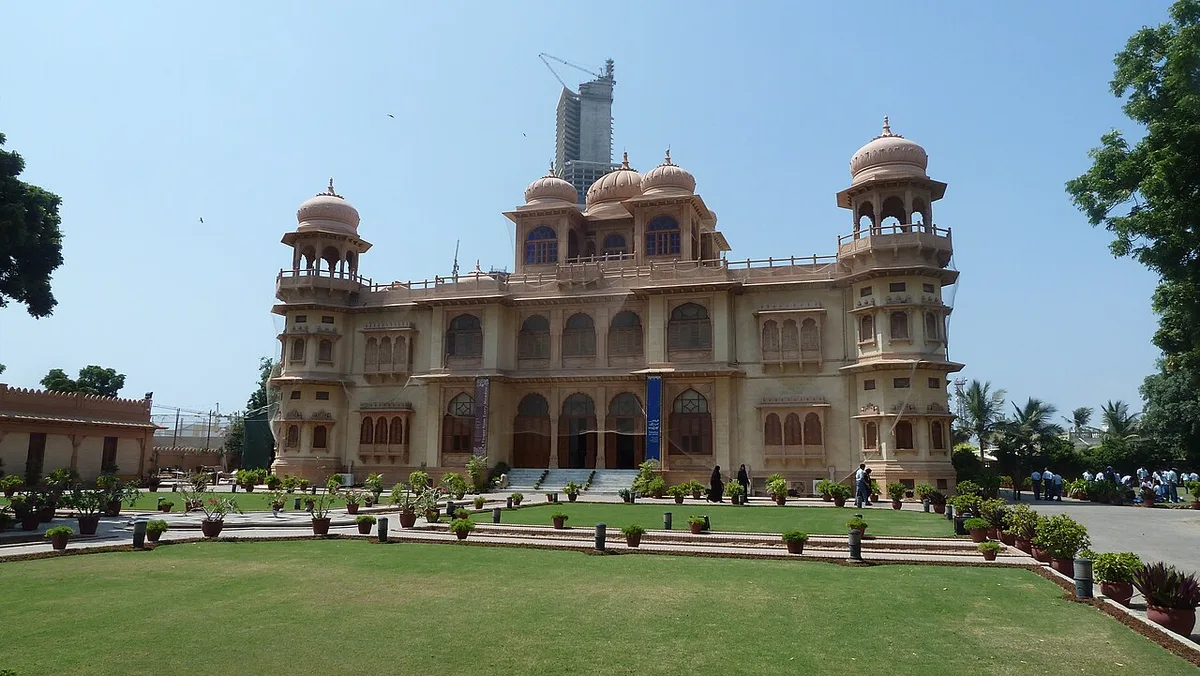
The architect was Ahmed Hussain Agha. He used pink stone from Jodhpur together with yellow stone from Gizri, close to Clifton. The festival’s visitor guide notes that this mix makes the walls look warm, almost rose coloured, in the afternoon light.
The building covers about 18,500 square feet. It has nine domes, with a larger one in the centre. Each corner has an octagonal tower. The stonework carries peacock, marigold and hibiscus motifs.
The ground floor held large rooms for receiving guests. The first floor had the family’s private rooms and a terrace that looks towards the sea. The Mohatta family used the house for about two decades, until they left for India in 1947.
From Government Office to Qasr e Fatima
After Partition, the Government of Pakistan took over the building for the Ministry of Foreign Affairs. In 1964 Fatima Jinnah, the sister of Muhammad Ali Jinnah, moved in. The house then became known as Qasr e Fatima, and it was the centre of her presidential campaign against Ayub Khan.
After Fatima Jinnah’s death, her sister Shireen Jinnah lived on the ground floor for many years. When Shireen Jinnah died in 1980, the palace was sealed.
Mohatta Palace as a Museum Since 1999
The Government of Sindh bought the palace in 1995 to turn it into a museum for the arts of Pakistan. A trust was set up to manage it. The trust deed bars the building from being sold or used for any other purpose. Mohatta Palace Museum formally opened in 1999.
Its exhibitions have covered the treasures of the Talpur Mirs, calligraphy, Gandhara art, the textiles of Pakistan and the stone tombs of Makli. The Express Tribune notes that the building is a recognised historic monument under the Government of Sindh.
If the stone graves of Makli interest you, PakSindh has a full guide to the Makli necropolis in Thatta. Our article on the Talpur Mirs of Sindh covers the rulers whose treasures filled the museum’s first show.
Getting to Mohatta Palace and Finding Your Way Inside
The museum sits in Old Clifton, between Hatim Alvi Road and Motilal Goverdhandas Road. It is a short drive from Clifton Beach. Our guide to Clifton Beach for families covers the area nearby.
The festival’s visitor guide gives three ways to get there.
- Ride hailing or taxi: search for “Mohatta Palace Museum” and set the drop off on Hatim Alvi Road.
- Car: parking details were due on the festival website closer to the date.
- Public transport: buses run along Clifton’s main roads. Check your route to Old Clifton before you leave home.
The Layout of Gates, Stages and Stalls
According to the festival map, the grounds have two entry gates. Inside there is a session stage, a separate music stage, book stalls, other stalls and a food area.
There is also a help desk for directions and lost items, a first aid point and toilets. The guide says volunteers at the help desk will assist families whose group gets separated.
What to Bring on the Festival Day
The visitor guide suggests a short list.
- Your pass, on your phone or printed.
- A separate pass for each person in your group, children included.
- Some cash. Stall holders sell directly, so cash helps at book and craft stalls.
- A light shawl. Late November evenings in Karachi can be cool.
Books, Ajrak and Food at the Festival Stalls
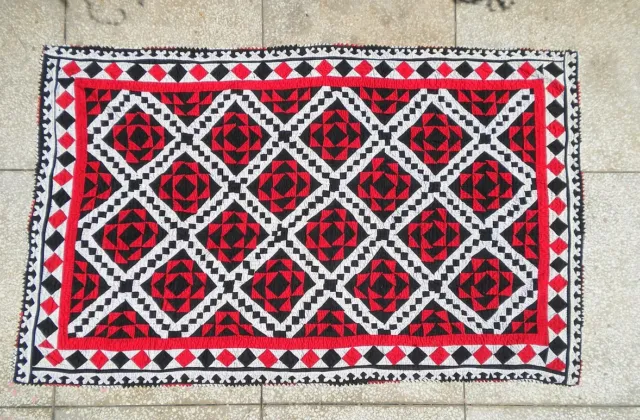
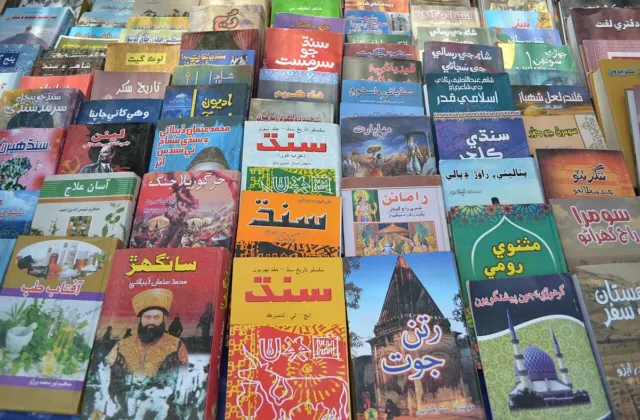
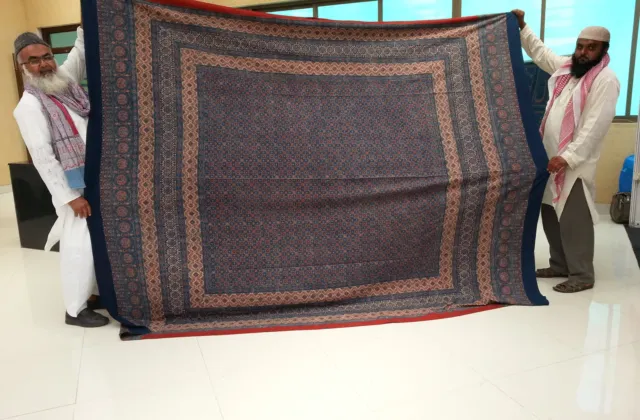
Stalls have been part of the festival since the start. At the first edition in 2016, Dawn reported stalls of books, paintings, traditional food, quilts, ajrak and Sindhi dresses.
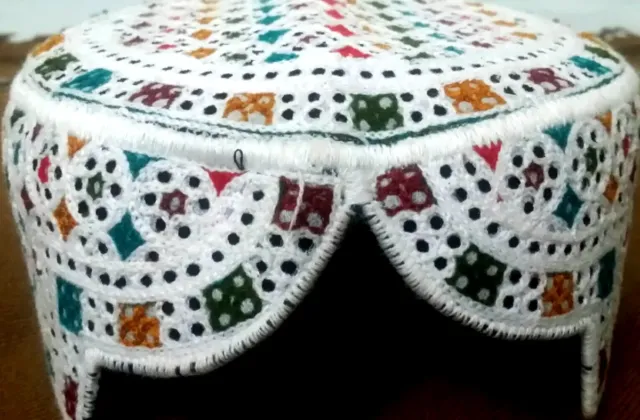
In 2025 the Express Tribune again described stalls selling ajrak, rilli and Sindhi caps, with many families stopping to buy. The 2026 guide says many visitors come “for the books and the ajrak as much as the talks”.
If you plan to shop, it helps to know what you are looking at. PakSindh has detailed guides to the history of the Sindhi ajrak, the Sindhi topi and its designs, and the patchwork ralli quilt of Sindh.
For 2026 the festival lists four kinds of stalls: book stalls, cultural stalls, food stalls, and brand, bank and institution stalls. Stall bookings for this year are now closed.
Sindh Literature Festival History From 2016 to 2025
The festival has been held eight times before this year. There was no festival in 2018. The 2020 edition was cancelled because of COVID 19. The festival’s own history page lists every edition, and newspaper reports fill in the details.
Who Started the Festival and Why
The festival was started in 2016 by two journalists, Naseer Gopang and Zohaib Kaka. Naseer Gopang is its founder and producer, and Zohaib Kaka is its managing director. The Sindh Literary Foundation organises it.
According to the festival, it aims to give writers in Sindh, both established and new, a public stage. It also covers subjects beyond books, such as languages, tourism, education, the economy and technology.
The Early Years at Beach Luxury Hotel
The first festival opened in November 2016 at the Beach Luxury Hotel in Karachi. Dawn reported that it began with a live performance by the Sufi singer Abida Parveen.
The same report described faqirs reciting Shah Latif’s verses from Sur Hassaini. These are the faqirs who sing the Shah jo Risalo every evening at his shrine in Bhit Shah. Our article on Shah Abdul Latif Bhittai explains who he was and why his poetry still matters in Sindh.
The second festival ran from 27 to 29 October 2017, again at the Beach Luxury Hotel. Its sessions dealt with Sindhi culture, the Sindhi language, new Sindhi writing and social issues in the province.
After a gap in 2018, the third festival was held from 22 to 24 February 2019 at the same hotel. That year the Information Department of the Government of Sindh and the Endowment Fund Trust joined as co organisers. Sufism and Karachi’s own past were recurring subjects.
The Pandemic Gap and the Arts Council Years
The festival planned for March 2020 was cancelled because of COVID 19. The organisers have written that they lost it just two days before it was due to open.
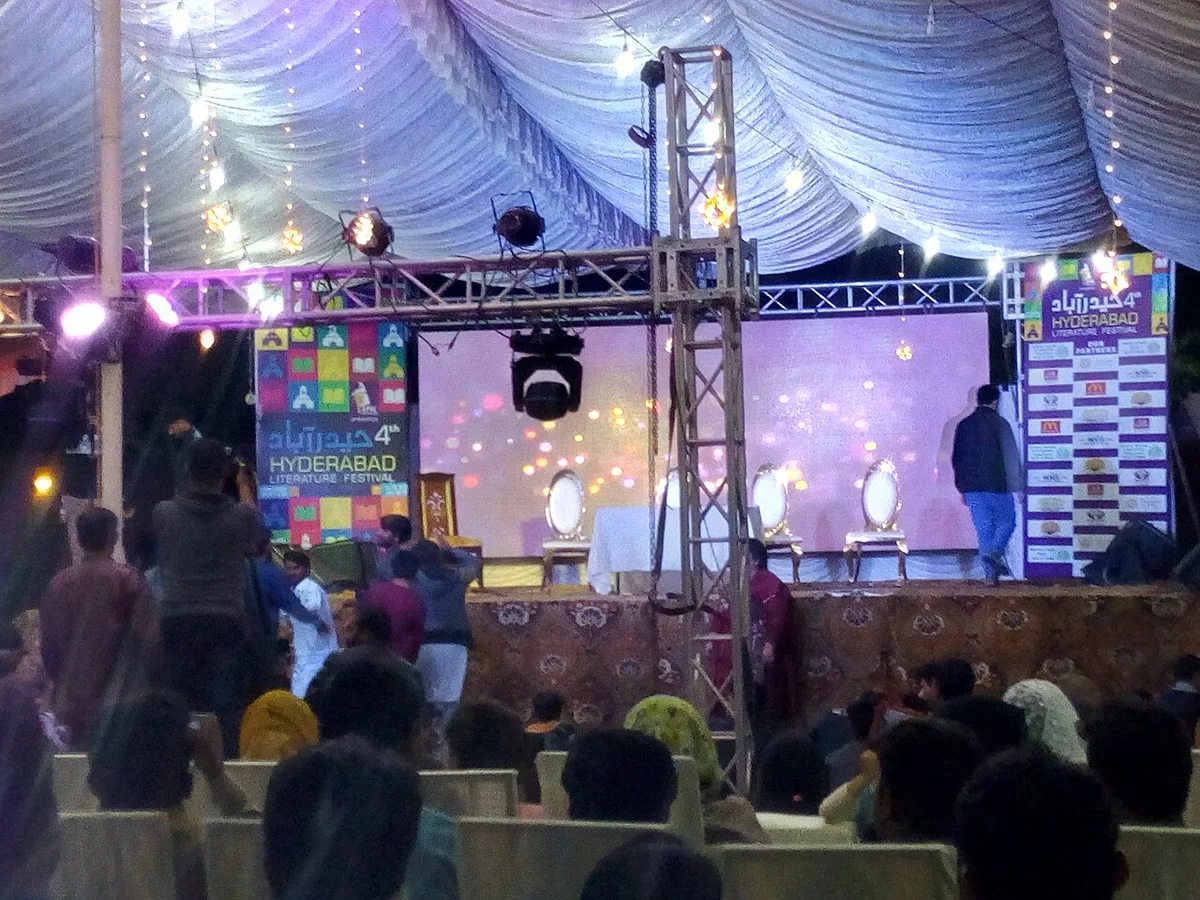
The fourth edition went ahead from 12 to 14 March 2021 at the Arts Council of Pakistan, Karachi.
The fifth festival, from 18 to 20 March 2022, marked 100 years since the discovery of Mohenjo Daro. The main stage was designed around the ancient city. A theme song called “Mohenjo Daro” opened the event. It was written by the Sindhi poet Ali Akash and composed by Saad Alavi.
That edition had 28 sessions, including one where archaeologists from Pakistan and abroad discussed Mohenjo Daro. Ten books were launched. A multilingual mushaira brought together poets from every province, and there were two music nights. You can read more about the site in our article on the history of Mohenjo Daro.
The sixth festival took place from 3 to 5 March 2023. Its theme, Aalam Sabh Abaad Kareen, is a line about wishing the whole world to flourish. The organisers used it to draw attention to climate change.
Frere Hall and the Save Indus Edition
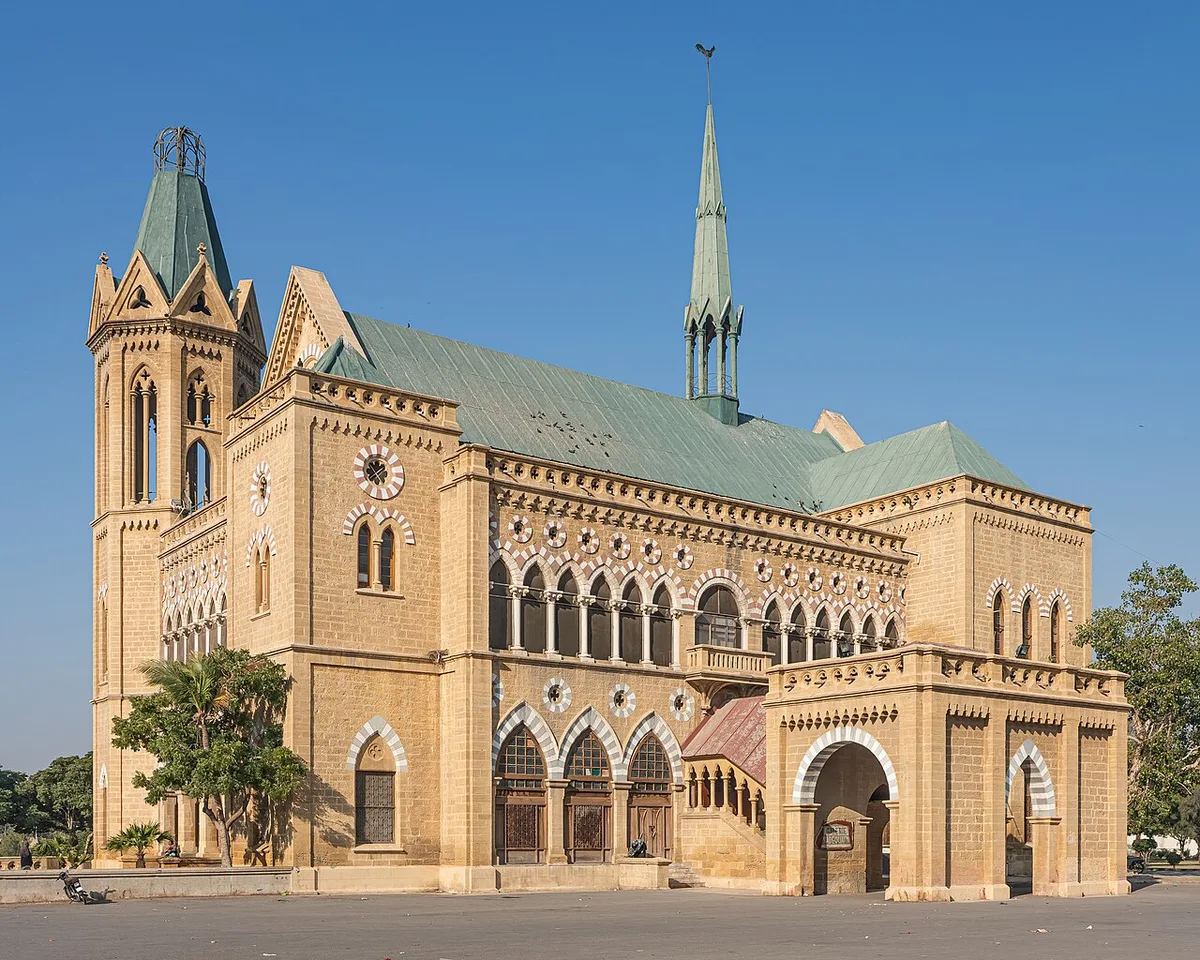
In March 2024 the festival joined Lahooti Melo for a two day event at Frere Hall, Karachi, on 2 and 3 March. It was a joint event with Lahooti Melo. The festival’s numbered seventh edition came later that year.
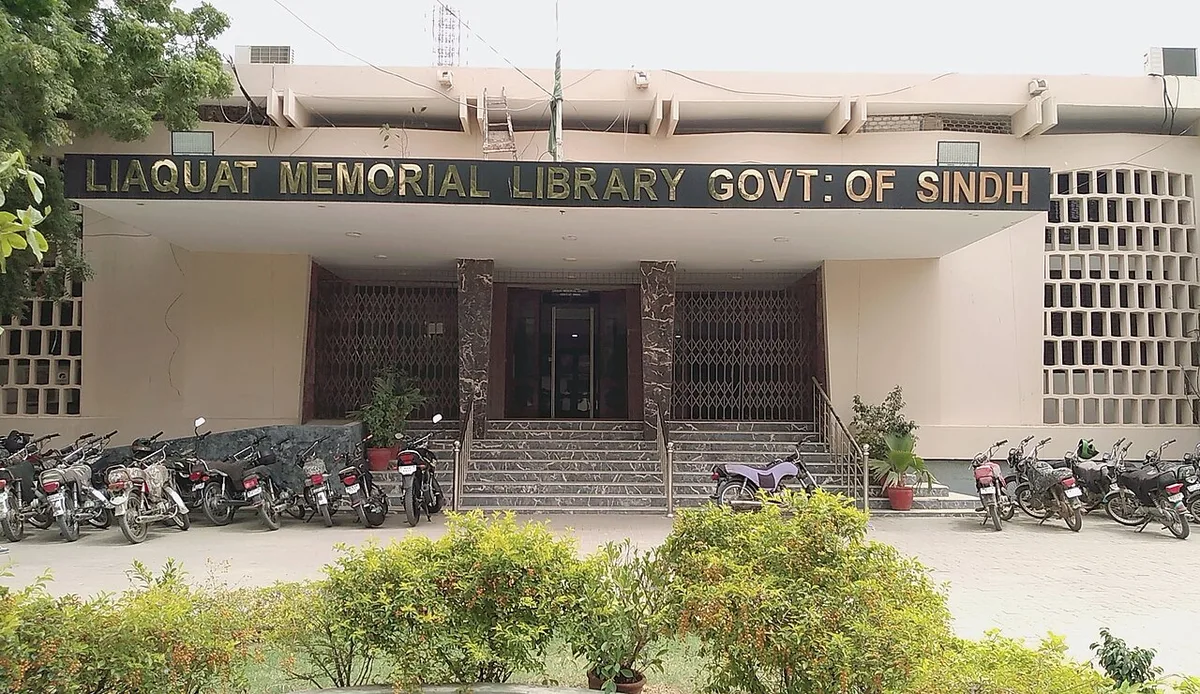
The seventh festival was held on 14 and 15 December 2024 at Liaquat Memorial Library, Karachi. Its theme was “Save Indus, Save Life”. Sessions looked at the river’s place in the ecology, economy and heritage of Sindh.
The festival’s report on that edition names many of its sessions. A panel called “Case of Indus River” was moderated by Dr Ayoub Shaikh, with Naseer Memon and Ihsan Leghari among the speakers. A session titled “Evening with a Living Legend” honoured the actor Mustafa Qureshi. Another looked back on the work of the writer Amar Jaleel.
There was also a humour session called “Mazahgiri” and a screening of the film Indus Echoes: Sindhu Jee Goonj, followed by a talk with its makers. Book launches were held in a space called the Sambara Gallery. Music came from Manjhi Faqeer, and The Sketches, led by Saif Samejo, closed the festival.
The 8th Edition Back at the Beach Luxury Hotel
The eighth festival returned to the Beach Luxury Hotel on 15 and 16 November 2025. Reports give its theme in two slightly different forms. The Express Tribune wrote “Celebrate the Power of the World”. The News wrote “Celebrate the Power of the Word”.
Dawn’s report on the first day said the event was opened on the hotel lawn by the Sindh Local Government Minister, Syed Nasir Husain Shah. Two subjects came up again and again that day, the 27th Amendment and proposed canals on the Indus River.
On the second day, Dawn reported a set of personal stories about work and study. A software company founder from rural Sindh described starting out with a borrowed laptop. The chief conservator of the Sindh Wildlife Department spoke about river flows and the sea. A panel of young lawyers, doctors and political workers discussed how the new generation sees Sindh.
An opinion piece in The News by Dr Naazir Mahmood described other parts of that edition. It mentioned a new series of 15 minute micro talks, a panel on the Indus River and a session on contemporary Sindhi literature. It also mentioned a talk linking the seven heroines of Shah Latif’s poetry to the ideas of Carl Jung.
The same piece noted that the festival relied on support from the Sindh Culture Department, the Endowment Fund Trust for Heritage, the Sindh Education Foundation and media partners. It also gave much of the credit for running the event to its young volunteers.
What Past Editions Suggest About the 2026 Programme
Because the full 2026 session list was not public yet, it helps to look at what has stayed the same over the years. These points come from reports on earlier editions. They are a guide to the usual format, not a promise about this year.
- Language and literature sessions. Reports on the 2017, 2024 and 2025 editions all mention sessions on Sindhi writing or the Sindhi language. Our guide to the Sindhi language, its scripts and dialects gives useful background for these talks.
- Book launches. The 2022 edition launched ten books, and the 2024 edition held a string of launches in its own gallery space.
- A mushaira. Poetry sessions were reported in 2017, 2022 and 2024. The 2022 one was multilingual.
- Music in the evening. Live music was reported at the 2016, 2017, 2022, 2024 and 2025 editions, from Abida Parveen’s opening set in 2016 to The Sketches closing the 2024 festival.
- The Indus and the environment. Water, climate and the river have been main topics since 2023.
- Talks on current affairs. Politicians, lawyers and journalists have spoken on politics, law and the economy of Sindh.
Tips for a Good Day at the Sindh Literature Festival
These tips come from the festival’s own guidance and from the format of earlier editions.
Plan Around the Sessions You Want Most
Once the programme is published, pick two or three sessions you do not want to miss. The session stage and the music stage are separate, so check which stage each event is on.
For the busiest events, the inauguration, the Saturday music evening and the Sunday award session, the festival advises coming early.
Choose the Right Language Sessions
Sessions run in Sindhi, Urdu and English. If you only follow one or two of these, check the language listed for each session before you sit down.
Visiting With Family and Children
Children are welcome and need their own free pass. The festival says it has spaces for children, and the help desk can assist if your group gets separated.
Respect the Museum Building
Mohatta Palace is a recognised historic monument and a working museum. Follow the instructions of volunteers and staff, and use the marked gates, stages and stall areas.
Other Ways to Take Part in the Festival
Visiting is not the only way to be involved. For 2026, the festival invited volunteers to help at the gates, on stage and with guests. Volunteer applications closed on 10 November 2026.
Publishers, artisans and food sellers usually run stalls, but stall bookings for 2026 have closed. For general questions the festival lists contact@sindhliteraturefestival.com. For interviews, photos and press passes it lists press@sindhliteraturefestival.com.
The festival also posts updates on Facebook, Instagram, X, TikTok and YouTube. Its website has a separate Watch page as well.
Details Not Yet Published for the 9th Edition
To keep this guide accurate, here is a short list of what the festival had not announced by 17 November 2026.
- The full programme, with session titles and times.
- Official gate opening and closing times for each day.
- The names of the six Safeer e Sindh Award winners.
- Parking arrangements near Mohatta Palace.
- A formal theme for 2026. The history page says it is still to be announced, while the festival’s own event listings use the line “Celebrate the Power of Words”.
- The full list of speakers beyond the five names above.
We will not fill these gaps with guesses. Please check the festival website and its social media accounts for the latest updates before you travel.
Why the Festival Matters for Sindhi Culture
For readers of PakSindh, the festival is a chance to hear Sindhi writers, poets and musicians in person, in Karachi, for free. It also gives space to Urdu and English, and to writers and artists from other parts of Pakistan.
It takes place a couple of weeks before Sindhi Culture Day, which falls on Sunday 6 December in 2026. Our article on the Sindhi topi and Sindhi Culture Day explains how that day is marked.
Holding the festival at Mohatta Palace also links two parts of Karachi’s past. One is a stone house built by a Marwari trader in the 1920s. The other is the long tradition of Sindhi poetry, music and craft that fills its garden for two days this November.
Sources and Further Reading on the Festival
- Sindh Literature Festival 2026, dates, venue and free pass, official festival guide, 26 October 2026.
- SLF 2026 page with speakers and musicians, Sindh Literature Festival.
- Mohatta Palace to host ninth Sindh Literature Festival, The Express Tribune, 25 October 2026.
- Report on the first day of the 8th festival, Dawn, 16 November 2025.
- Sindh’s literary defiance, Dr Naazir Mahmood, The News, 24 November 2025.
- Sindh Literature Festival opens with Abida Parveen’s performance, Dawn, 5 November 2016.
- Mohatta Palace, Wikipedia.

Leave a Comment