

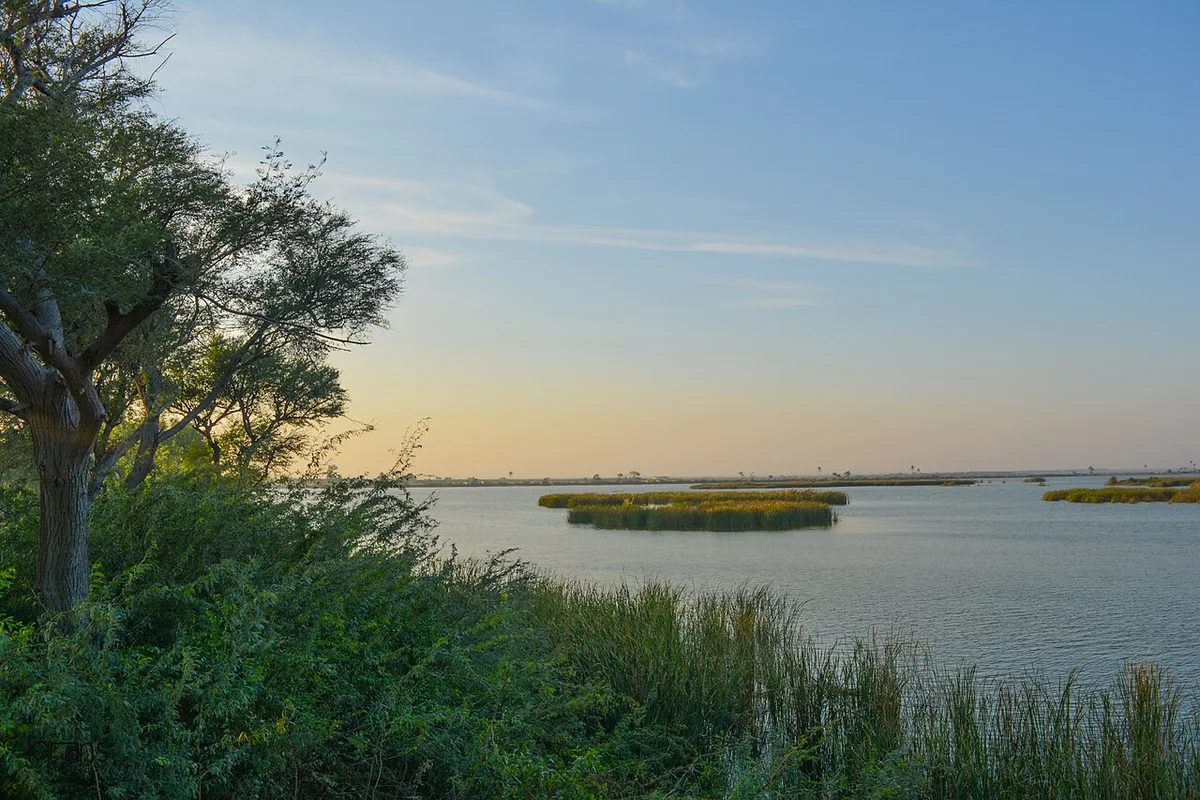
Haleji Lake is a reservoir and wildlife sanctuary in Thatta district, southern Sindh. It sits a short way off the National Highway between Karachi and Thatta. The British built it up during the Second World War to send fresh water to Karachi, where large numbers of Allied troops were based. Today it is better known for its winter birds, its crocodiles and its slow decline.
In this article (39)
- Haleji Lake at a Glance: Key Facts and Figures
- From Salty Marsh to Wartime Reservoir for Karachi
- The Second World War and the Allied Troops
- Which Year Was Haleji Lake Completed?
- Roads, Pipes and a Dak Bungalow
- How Haleji Lost Its Place in the Water Supply
- Ramsar Site and Wildlife Sanctuary Status Explained
- Area of the Lake: Why Figures Differ
- Migratory Birds of Haleji: Flamingos, Pelicans and More
- Species Named by Reliable Sources
- How Many Species Have Been Recorded
- Bird Numbers Have Fallen Sharply
- Crocodiles of Haleji Lake: What the Reports Say
- How Many Crocodiles Live at Haleji
- Crocodiles and the Nearby Villages
- Current Water and Environmental Condition of Haleji
- Pollution, Tree Cutting and Litter
- Restoration Plans and What Came of Them
- Is There a WWF Wetland Centre at Haleji Lake
- How Haleji Lake Differs from Keenjhar Lake
- How to Reach Haleji Lake from Karachi and Thatta
- Distance from Karachi and Thatta
- Public Transport and Getting Around
- Best Season and Time of Day for Visiting Haleji
- What to See and Do at Haleji Lake
- The Annual Haleji Lake Marathon
- Safety Tips for a Day Trip to Haleji Lake
- Nearby Places to Add to Your Haleji Lake Trip
- Keenjhar Lake on the Road to Hyderabad
- Makli Necropolis and Its Stone Tombs
- Shah Jahan Mosque in Thatta Town
- Chaukhandi Tombs Near Karachi
- Frequently Asked Questions About Haleji Lake
- When was Haleji Lake built as a reservoir?
- Is Haleji Lake a Ramsar site?
- Are there crocodiles in Haleji Lake?
- When do the birds come to Haleji Lake?
- How far is Haleji Lake from Karachi?
- Sources and Further Reading on Haleji Lake
This guide is in three parts. Part one goes back to the 1920s and the war years, when Haleji was dug out to feed Karachi’s taps. The second covers its legal protection, the birds, the crocodiles and the state of the water today. The third part is practical: how to get there, when to go, what to see, how to stay safe and which places to add to the same trip.
Haleji’s area, its distance from Karachi and its bird counts all change from report to report, since they shift with rainfall, water level and survey method. In the table below a range is shown wherever reliable sources do not match.
Haleji Lake at a Glance: Key Facts and Figures
| Item | Details and source |
|---|---|
| Location | Thatta district, Sindh, Pakistan |
| Type | Artificial freshwater lake with marshes and brackish seepage lagoons around it (Ramsar) |
| Built up as a reservoir | Between about 1940 and 1943, during the Second World War (Dawn; Express Tribune; KW&SC) |
| Ramsar site | Site no. 101, designated on 23 July 1976 (Ramsar Sites Information Service) |
| Protected area | Wildlife sanctuary under Sindh law |
| Area | About 4 to 18 square km, depending on the source; the Ramsar site covers 1,704 hectares |
| Distance from Karachi | About 70 to 100 km, depending on the source and the starting point |
| Waterbirds | 50,000 to 100,000 a year in the Ramsar entry; far fewer in recent counts |
| Crocodiles | Mugger (marsh) crocodiles; estimates range from about 200 to 500 |
| Best season | November to February, when migratory birds are present |
From Salty Marsh to Wartime Reservoir for Karachi
Before it became a reservoir, Haleji was a low, salty depression. Seasonal water collected there after rain. In a 2017 article for Dawn, Dr Shershah Syed describes it as marshland near Thatta. He writes that the British started work in the mid 1920s, after a detailed survey of the land, the habitat and the climate.
The Second World War and the Allied Troops
Then came the Second World War, and with it a sudden rush of soldiers into Karachi. Karachi became a base for large numbers of Allied troops, and the city needed more water. According to Dr Syed, the British government decided to increase the capacity of Haleji on an emergency basis.
The work had three main steps. The salt water was drained out. An embankment was built around the lake. A canal from the Indus was then dug to fill it with fresh water. The Express Tribune adds that Haleji became the first water source for thousands of American and British troops stationed in Karachi.
Which Year Was Haleji Lake Completed?
Sources give slightly different dates. A 2026 Dawn report says the lake was built between 1940 and 1943. The Express Tribune (2016) says it was formed in 1940 and commissioned in 1942. The Anadolu news agency also gives 1942 as the year it was commissioned.
The Karachi Water and Sewerage Corporation (KW&SC) offers a useful detail. Its history page says the wartime works at Haleji added 10 million gallons a day (MGD) to Karachi’s supply in 1943. A second stage added another 10 MGD in 1953. So 1943 is a fair date for the first water supply scheme, while the earthworks began a little earlier.
Roads, Pipes and a Dak Bungalow
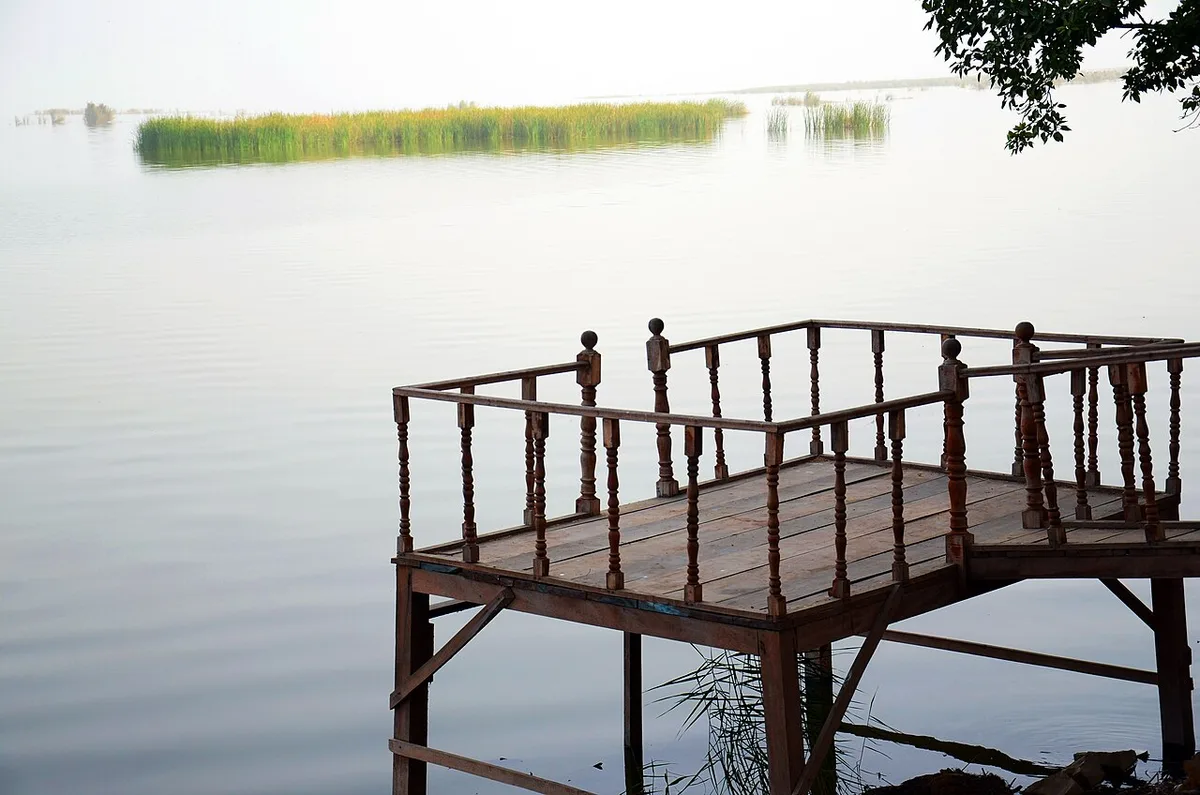
Dr Syed records how the lake was set up for visitors as well as for water. A wide unpaved road was built around it. A dak bungalow, a type of government rest house, and a small staff colony stood near the water. Large cement pipes were laid along the bank, partly hanging over the lake, so that visitors could stay the night in them and fish.
As a schoolboy in the early 1960s he came here overnight: by train to Jungshahi, then on a bullock cart to the bank. Fishing needed a permit, which was bought in Karachi for a small fee. By 2017, he wrote, the pipes had gone and the dak bungalow had been closed for repairs for about ten years.
How Haleji Lost Its Place in the Water Supply
After the Kotri Barrage was completed in 1955, Karachi began to draw most of its Indus water through Keenjhar Lake instead. A 2022 study of the city’s water system says that from then on, Haleji was not viable except as emergency storage.
In 1994 the lake lost its feeding canal. The Express Tribune reported in 2016 that the canal from Keenjhar was cut when a large drainage work was built. After that the lake became a stagnant body of salty water. A Sindh wildlife official told Anadolu that inflow from the Indus began to fall in 2000 and stopped completely in 2018.
Ramsar Site and Wildlife Sanctuary Status Explained
Haleji has two kinds of protection. It is a wildlife sanctuary under Sindh law, and it is a Ramsar site, which means a wetland of international importance under a global treaty signed in Ramsar, Iran, in 1971.
The Ramsar Sites Information Service lists Haleji Lake as site no. 101. It was designated on 23 July 1976 and covers 1,704 hectares. Its short description says the lake is artificial, fresh and has a water level that goes up and down. Brackish seepage lagoons lie around it, and the water holds a lot of aquatic plants.
The sanctuary dates are less clear. The Express Tribune says the Sindh government notified Haleji as a wildlife sanctuary and notified it again in 1977. A Sindh Wildlife Department officer told Dawn that the department made it a protected area in 1972. With 1972 in one paper and 1977 in another, I could not pin down the first notification year.
Area of the Lake: Why Figures Differ
Ask for the size and you get four answers. Wikipedia gives 6.58 square km for the lake. Dawn in 2017 gave a surface area of about 4 square km. Anadolu in 2026 said the lake is spread over 18 square km. The Ramsar site itself is 1,704 hectares, or about 17 square km, which includes the marshes and lagoons around the open water.
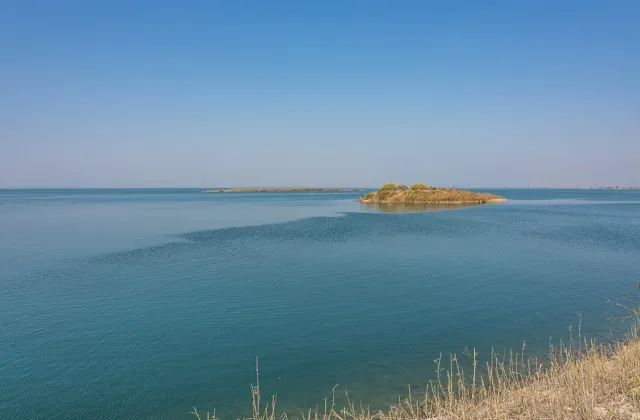
My reading: the open water covers only a few square kilometres, and the 17 square km figure counts the marsh and lagoons too. In a drought year the water pulls back from the bank; after the 2022 floods it spread out again.
Migratory Birds of Haleji: Flamingos, Pelicans and More
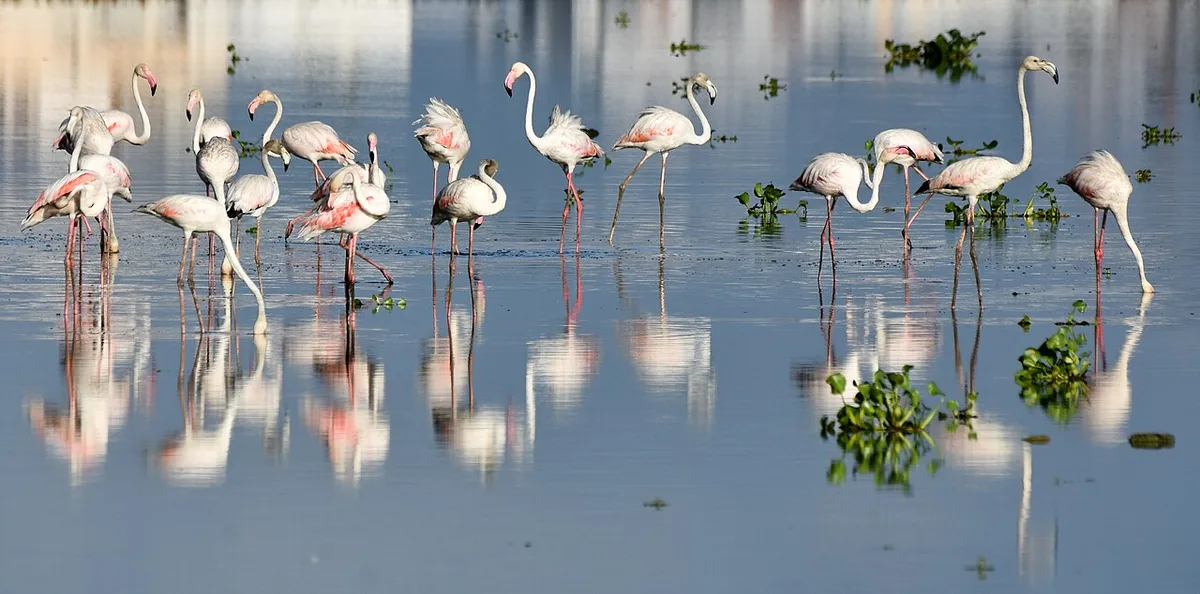
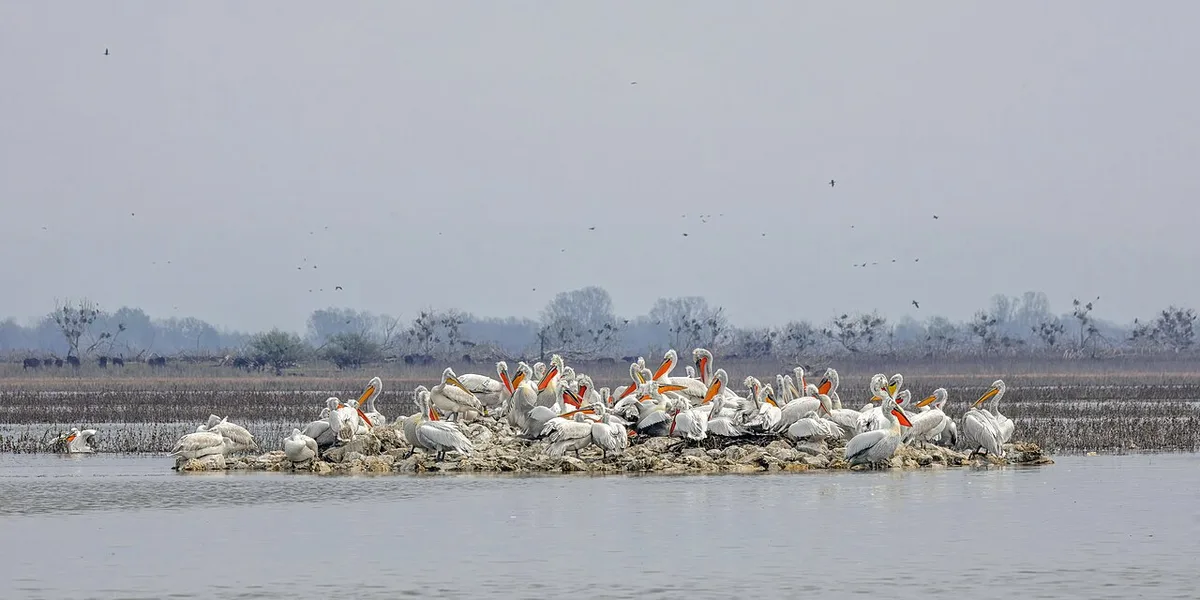
Birds are the main reason people know this lake. The Ramsar entry calls Haleji one of the most important breeding, staging and wintering areas for waterbirds in southern Pakistan. That entry puts the yearly count at 50,000 to 100,000 birds.
Many of these birds fly in from Central Asia and Siberia for the winter. They travel down a route that bird experts call the Indus Flyway. Anadolu describes this as a journey of about 4,500 km, with stops at lakes and reservoirs in Pakistan.
Species Named by Reliable Sources
The Ramsar entry names the Dalmatian pelican, the Eurasian wigeon (called the European wigeon in older lists) and the black coot. It also says thousands of black crowned night herons roost in the area.
Dr Syed’s 2017 Dawn article lists birds that he says visit every year. These include the flamingo, the Dalmatian pelican, falcons, harriers, Pallas’s fish eagle, teals, jacanas, the pintail and the northern shoveler.
A 2026 Dawn report adds the northern pintail, the white tailed lapwing, the Egyptian vulture, the pheasant tailed jacana, mallards, other ducks, waders and pelicans. Dawn in 2022 also mentions coots, purple moorhens, kingfishers and teals.
How Many Species Have Been Recorded
Species counts are not consistent. Dawn in 2004 mentioned 222 species. In 2020 a Sindh Wildlife Department conservator told the Express Tribune that 112 species had been recorded, of which 36 were native. Dr Syed’s 2017 piece gives “more than 341 types of species”, without saying whether fish, reptiles and plants are in that number.
Put side by side, the published counts run from about 110 to about 340, and each one was taken in a different year by a different team.
Bird Numbers Have Fallen Sharply
Recent counts are far below the Ramsar figure. The Express Tribune reported that only about 4,000 birds were recorded in 2019. After some restoration work, the number that winter rose above 60,000, according to the wildlife conservator.
The decline has returned since then. In 2026 a Sindh Wildlife Department official told Anadolu that about 40,000 birds visited Haleji in 2025. He said the number for 2026 was about 40 percent lower than in 2025. His list of reasons was short: no fresh water, less food for the birds, and dirty water.
Crocodiles of Haleji Lake: What the Reports Say
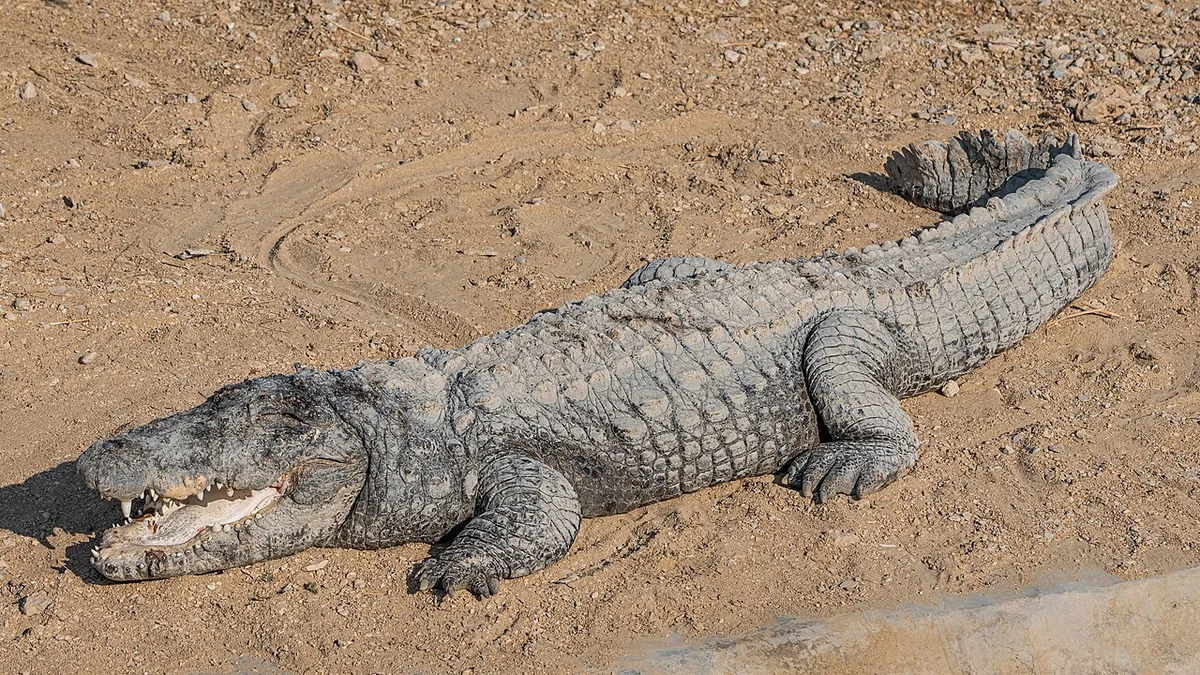
Haleji is also home to the mugger crocodile, also called the marsh crocodile. This species lives in fresh water across South Asia.
The crocodiles were not always there. A wildlife department official told Dawn in 2022 that seven crocodiles were released into the lake as a gift from Mumtaz Ali Bhutto, who was then chief minister of Sindh. Anadolu gives a different account: a pair of crocodiles was released in the 1970s, and their number grew into the hundreds.
How Many Crocodiles Live at Haleji
Dawn in 2022 cited official figures of about 200 marsh crocodiles. In 2020 a Sindh wildlife officer told the Express Tribune that roughly over 200 had been sighted in and around the lake, but stressed that this was only a rough estimate. In 2026 the sanctuary’s officer told Anadolu that the lake holds 400 to 500 crocodiles, which he called the largest population in Pakistan.
So the published range is about 200 to 500. No exact count has been published in the sources used here.
Crocodiles and the Nearby Villages
The crocodiles are a real risk for people who live around the lake. Heavy rain in July 2022 pushed the lake over its banks, and Dawn’s Thatta reporter wrote that crocodiles slipped out through cracks in the embankment. Villagers near Jungshahi caught one that had come into a village.
The same report says villagers blamed the crocodiles for the death of an 11 year old girl, injuries to several people, and the loss of goats, cows and a buffalo. So when you visit, stand well back from the bank.
Current Water and Environmental Condition of Haleji
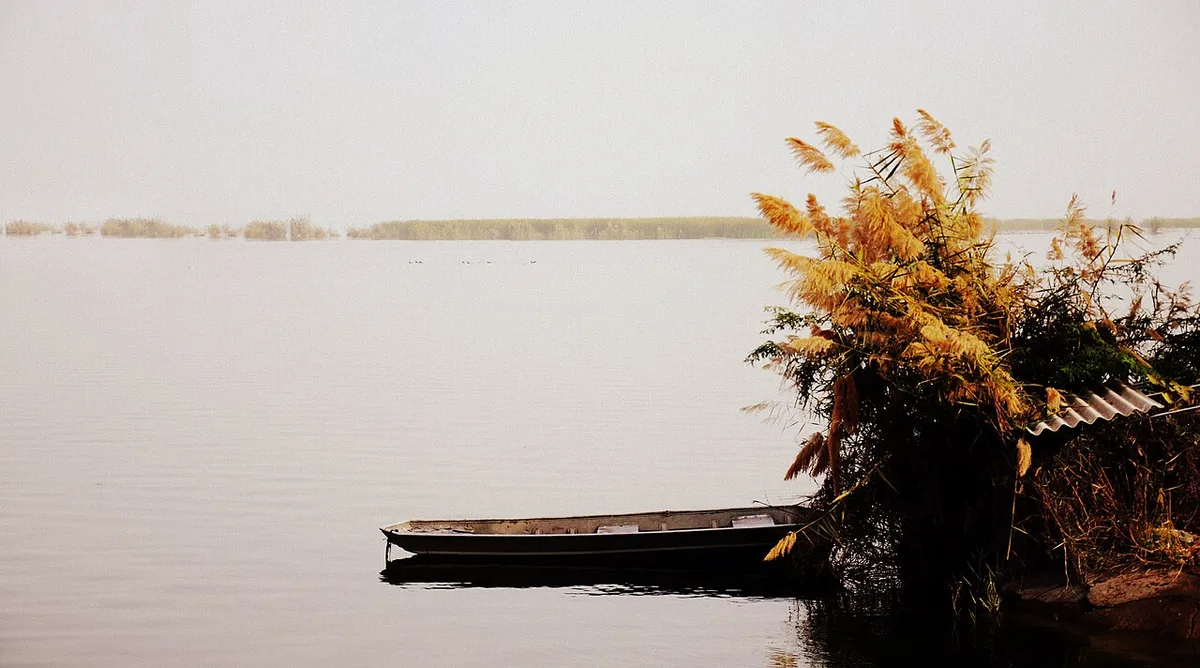
The lake is in poor health. A February 2026 report in Dawn says it is slowly drying. The officer in charge of the sanctuary, Sohail Ahmed Khoso, told the paper that no fresh water from the Indus had reached the lake for eight years. In his words, the water is taken for projects such as K IV before it ever gets to Haleji.
He described Haleji as a stagnant water body, with no inflow and no outflow. He told Anadolu that the water now in the lake is left over from the very heavy rains of 2022. To make up for the loss of natural food, the department has been feeding the birds, though he said this is not enough.
Pollution, Tree Cutting and Litter
Dr Syed’s 2017 article lists other problems. Local people and visitors cut trees for firewood. Picnic groups throw plastic bags and bottles on the bank. The office at the entrance and the old iron gate that controlled the water were in bad condition. Much of the lake had turned to marsh with little or no water.
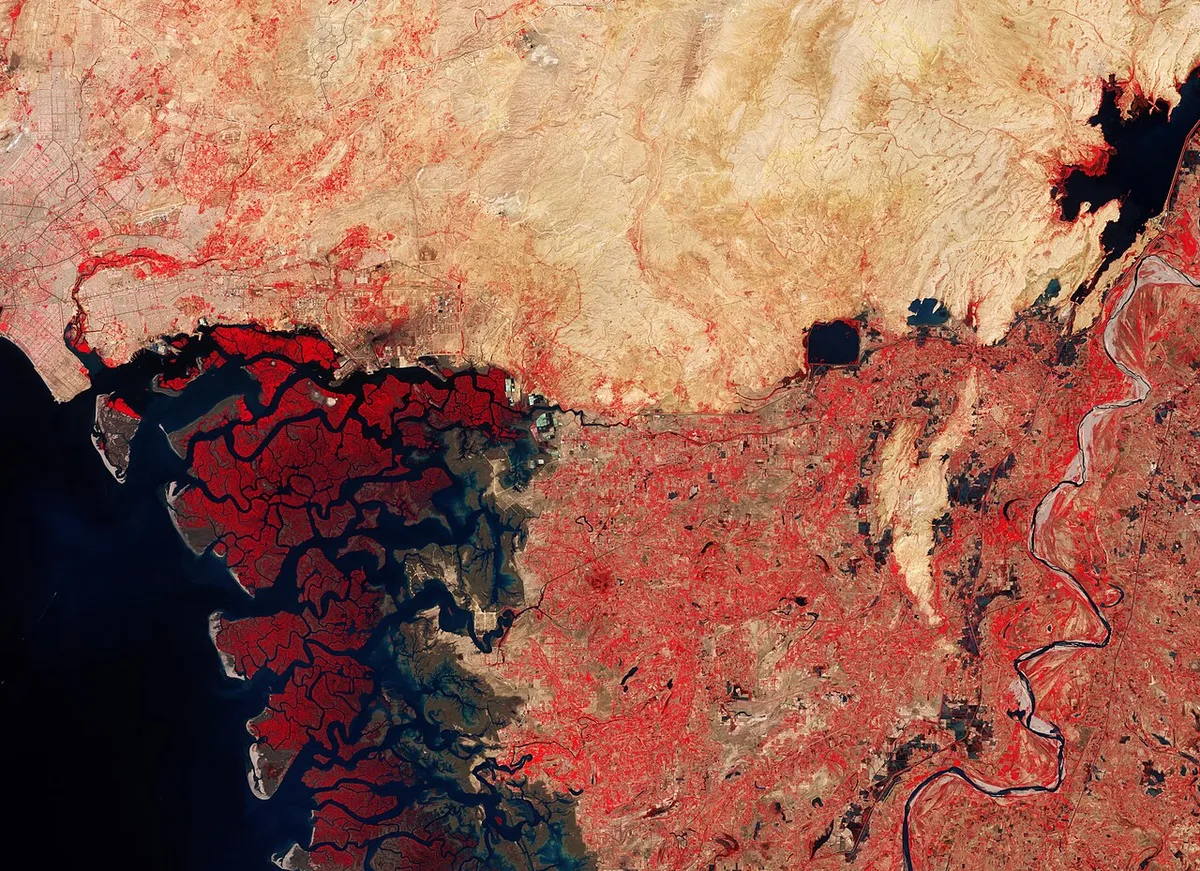
The Express Tribune reported in 2016 that the dissolved salts in the water were above international limits and not fit for drinking. A team that lined up satellite pictures of Thatta from 1990 and 2020 measured a big loss of wetland at both Haleji and Keenjhar. Their 2024 paper blames new farmland, growing towns, pumped groundwater and hotter, drier weather.
Restoration Plans and What Came of Them
There have been several plans to revive the lake. In 2016 the Express Tribune reported a Sindh government project worth about Rs6 billion. It included stronger embankments and a new 18 km canal, with the aim of sending 65 MGD of extra water to Karachi. The sources used for this guide do not say whether that canal was finished.
In 2019 and 2020, four Sindh departments worked on a smaller restoration. The Express Tribune said the wildlife department used about Rs500,000 for quick work, much of it on bird feed. The Sindh government had also set aside Rs12 million, including money to renovate the information centre at the sanctuary. An official said that money had not yet been released at the time.
Is There a WWF Wetland Centre at Haleji Lake
Some travel blogs place a WWF wetland centre at Haleji. I went through WWF Pakistan’s own reports to test that. WWF Pakistan runs a well known Wetland Centre in Karachi, which its annual reports describe as being in Karachi. No reliable source found for this guide places a WWF wetland centre at Haleji itself.
WWF does have a long link with the lake. The Duke of Edinburgh, then president of WWF, visited Haleji in 1982 and called it a bird watchers’ paradise, according to the Express Tribune. Dr Syed wrote in 2017 that WWF had developed a sanctuary area for crocodiles at the lake with limited resources. In its 2023 annual report, WWF Pakistan lists Haleji Lake among the places it took company staff on nature trips, next to Banbhore and Makli.
What visitors will find on site is a sanctuary office and an information centre run under the Sindh Wildlife Department. The Express Tribune mentions this centre in 2020. Its opening hours were not published in the sources used here, so ask at the gate.
How Haleji Lake Differs from Keenjhar Lake
Haleji and Keenjhar are both in Thatta district, and both became Ramsar sites on the same day in 1976. They are often confused, but they are quite different. Our full Keenjhar Lake guide covers the larger lake in detail.
| Feature | Haleji Lake | Keenjhar Lake |
|---|---|---|
| Ramsar site number | 101 | 99 |
| Ramsar site area | 1,704 hectares | 13,468 hectares |
| Main role today | Wildlife sanctuary; no longer a regular water source | Main storage lake for Karachi’s water |
| Water supply | Indus inflow stopped, according to the Sindh Wildlife Department | Fed by the Kalri Baghar Feeder from Kotri Barrage |
| Best known for | Winter birds and crocodiles | Boating, picnics and the Noori shrine |
| Position | Off the N5, between Karachi and Thatta | On the N5, north of Thatta toward Hyderabad |
In simple terms, Keenjhar is the big working reservoir and the busier picnic spot. Haleji is smaller and quieter, and most people go there for the birds. The Ramsar areas above come from the official Ramsar annotated list for Pakistan.
How to Reach Haleji Lake from Karachi and Thatta
Haleji lies close to the National Highway (N5), the main road from Karachi to Thatta. From Karachi, drivers head east on the N5 through Gharo toward Thatta. The lake is reached by a link road that turns off the highway before you get to Thatta.
The Express Tribune reported in 2020 that this link road is only about 6 km long. At that time it was in poor shape, and the short drive from the highway took about half an hour. Bilawal Bhutto Zardari asked for the road to be rebuilt during that 2020 visit; I found no later report saying it was done.
Distance from Karachi and Thatta
Published distances from Karachi range from about 70 to 100 km. The Express Tribune gave 70 km in 2016 and about 90 km in 2020. Dawn gave 77 km in 2017 and 88 km in 2026. Anadolu gave about 100 km. The gap comes from different starting points in a very large city.
A 2025 academic book chapter on the wetlands of Pakistan places the lake about 15 km northwest of Thatta city. Driving distance will be longer than that because of the road layout.
Public Transport and Getting Around
Buses and vans between Karachi and Thatta run along the N5. However, the sources used here do not describe a regular public service to the lake gate. A private car or a hired vehicle is the practical choice. Dr Syed’s memory of travelling by train to Jungshahi shows the old rail route, but it is not a convenient option for a day trip today.
Best Season and Time of Day for Visiting Haleji
Go in winter, between November and February. The Express Tribune notes that this is when thousands of migratory birds come to the lake. A 2025 academic chapter gives the same months for the Siberian migrants.
Early morning is usually the best time for birds. Light is softer, the air is cooler and there are fewer picnic groups. Summer in this part of Sindh is very hot, and there is little shade on the open embankment.
Bird numbers now change a lot from year to year, as the counts above show. In a dry year the count can fall to a few thousand, as it did in 2019, so look at recent Sindh news before driving out just to watch them.
What to See and Do at Haleji Lake
Haleji is a place for slow walking and watching, not for rides and stalls. These are the main things to enjoy.
- Birdwatching from the embankment and the old jetties. Pelicans, ducks, coots, herons and waders feed in the shallow parts, so binoculars help.
- A walk or drive around the lake on the embankment road. Dr Syed describes the round path used for the annual marathon as about 18.6 km long.
- Photography of the reed islands, old trees and the water at sunrise or sunset.
- The information centre run by the Sindh Wildlife Department, where staff may explain the sanctuary rules.
- Trees along the approach, which Dawn describes as eucalyptus, neem, peepal and coconut.
The Annual Haleji Lake Marathon
The Karachi branch of the Pakistan Medical Association held its first round the lake marathon at Haleji in 1990. According to Dr Syed, who has taken part every year, it is usually held on the last Sunday of November or the first Sunday of December. Health workers, students and members of the public run or walk the route.
Safety Tips for a Day Trip to Haleji Lake
Haleji is quiet and has few facilities. The 2017 Dawn piece found the rest house shut and the office run down, and the closest city is Thatta.
- Keep away from the water’s edge. Crocodiles live in the lake and in nearby ditches. Do not swim, paddle or let children play at the bank.
- Take extra care after heavy rain, when crocodiles have been reported outside the lake.
- Go in daylight and leave before dark. Dr Syed noted in 2017 that marathon organisers had begun to ask the police for protection.
- Carry enough drinking water, food and sun protection. Do not drink the lake water.
- Bring a kerosene or gas stove if you plan to cook. Do not cut trees for firewood.
- Take all plastic and rubbish home with you.
- Do not feed, chase or disturb the birds, especially in winter.
- Ask the staff at the gate about entry rules, and do what they say.
Nearby Places to Add to Your Haleji Lake Trip
Haleji fits easily into a full day on the N5. Several major sites of Thatta district are close by.
Keenjhar Lake on the Road to Hyderabad
Keenjhar is the larger lake north of Thatta, with boats, picnic areas and a resort run by the Sindh Tourism Development Corporation. Many bird watchers visit both lakes in one trip. See our Keenjhar Lake guide for the route and safety advice.
Makli Necropolis and Its Stone Tombs
Makli, on a ridge near Thatta, is one of the largest burial grounds in the world. It is a UNESCO World Heritage Site, with tombs from the Samma, Arghun, Tarkhan and Mughal periods. Read our Makli Necropolis guide before you go.
Shah Jahan Mosque in Thatta Town
Thatta’s Shah Jahan Mosque, from the Mughal period, is known for its rows of domes and blue and white tile work, and it is easy to see on the same stop as Makli. Our page on the Shah Jahan Mosque in Thatta explains its history and design.
Chaukhandi Tombs Near Karachi
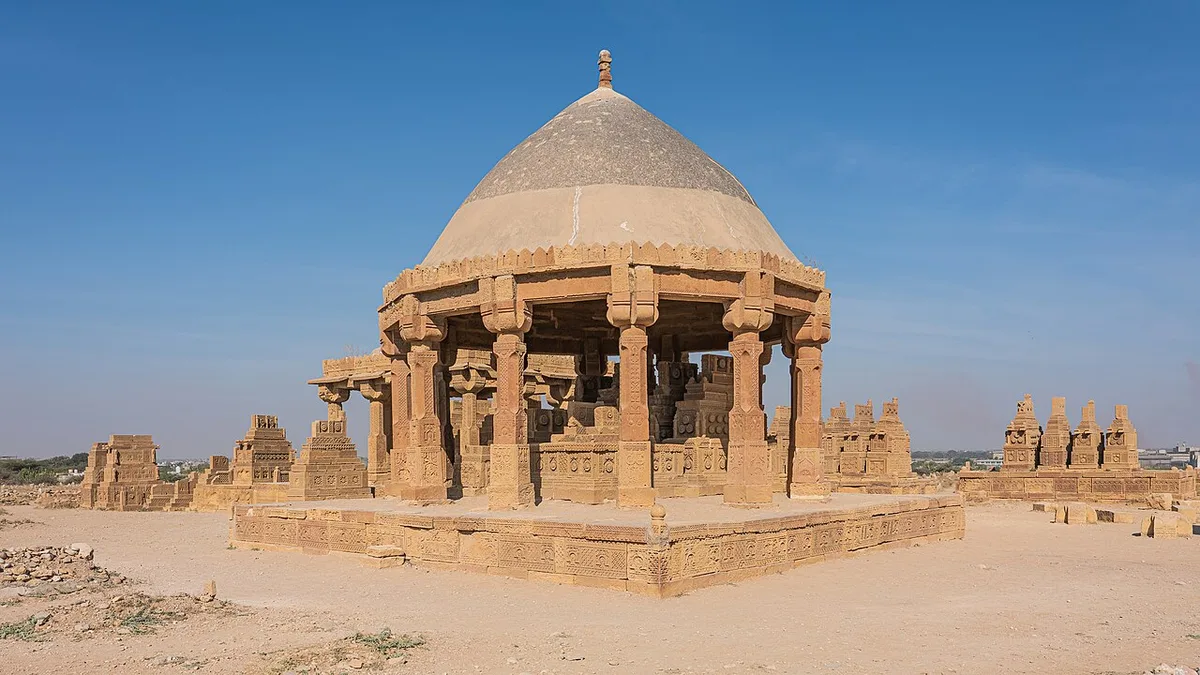
The Chaukhandi tombs stand beside the N5 on the way out of Karachi. They are known for their finely carved sandstone graves. You can stop there on the way to Haleji or on the drive home. Learn more in our article on the Chaukhandi tombs and their stone carving.
Frequently Asked Questions About Haleji Lake
When was Haleji Lake built as a reservoir?
It was built up as a reservoir during the Second World War. Sources give dates between 1940 and 1943. KW&SC says the first water supply scheme from Haleji added 10 MGD to Karachi in 1943.
Is Haleji Lake a Ramsar site?
Yes. It is Ramsar site no. 101, designated on 23 July 1976, with an area of 1,704 hectares. It is also a wildlife sanctuary under Sindh law.
Are there crocodiles in Haleji Lake?
Yes. Mugger crocodiles live in the lake. Published estimates range from about 200 to 500. Visitors should stay away from the water’s edge.
When do the birds come to Haleji Lake?
The best time is winter, from about November to February, in the early morning. Counts since 2019 have been much lower than in the past.
How far is Haleji Lake from Karachi?
Published figures range from about 70 to 100 km. Most of the drive is on the National Highway (N5), followed by a short link road of about 6 km.
Sources and Further Reading on Haleji Lake
- Ramsar Sites Information Service, Haleji Lake, site no. 101
- Ramsar Sites Information Service, Annotated List of Wetlands of International Importance: Pakistan (PDF)
- Dawn, Nature: The case of the disappearing lake, by Shershah Syed, January 2017
- Dawn, Haleji Lake begs for attention on World Wetlands Day, February 2026
- Dawn, Crocodiles unleash terror in villages around Haleji Lake, July 2022
- Dawn, Crocodiles deserting Haleji Lake, August 2004
- Anadolu Agency, World Wetlands Day report on Haleji Lake, February 2026
- Express Tribune, Haleji Lake’s revival under way, March 2016
- Express Tribune, Haleji Lake’s birds fly home, January 2020
- Express Tribune, Marsh crocs thriving in the wild, May 2020
- Karachi Water and Sewerage Corporation, About Us and history
- Management Options for Large Metropolitans on the Verge of a Water Stress, 2022
- Multitemporal image analysis of wetland dynamics in Thatta, 2024 (PubMed)
- Wetlands of Plains of Pakistan, Wiley book chapter, 2025
- European Space Agency, Western Pakistan satellite image, 2019
- WWF Pakistan, Annual Report 2023 (PDF)
- WWF Pakistan, Annual Report 2024 (PDF)

Leave a Comment