

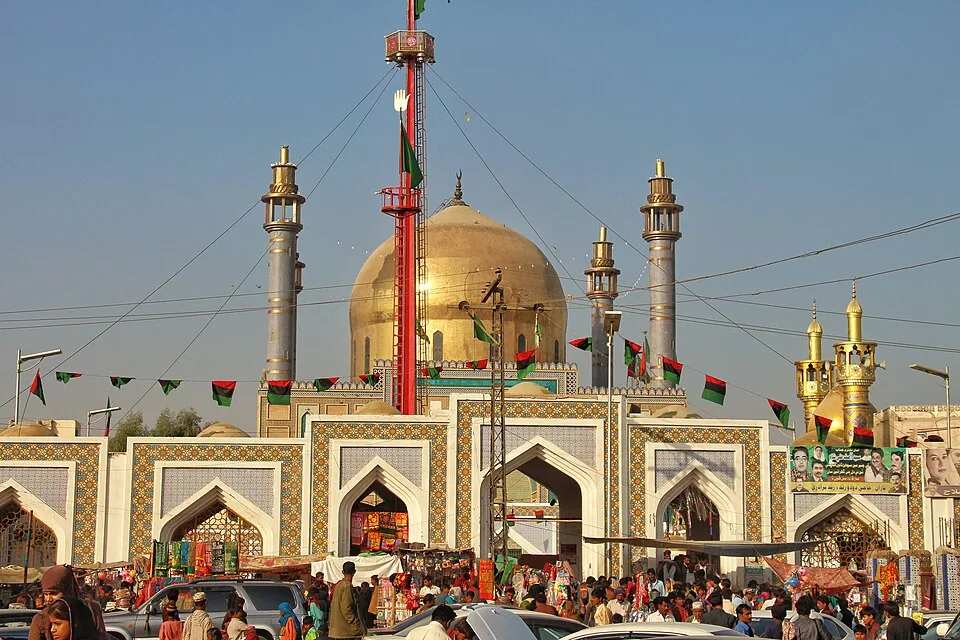
For most of the year Sehwan Sharif is a quiet town on the Indus Highway, a place travellers pass through on their way somewhere else, yet when 18 Sha’ban arrives the streets fill with devotees from every province, the drums begin in the shrine courtyard, and for three days the town holds one of the largest religious gatherings in Pakistan, the Lal Shahbaz Qalandar Urs, the death anniversary of the 13th century Sufi saint Lal Shahbaz Qalandar, whose 775th Urs is expected from Wednesday 27 to Friday 29 January 2027.
In this article (14)
- When Is the Next Lal Shahbaz Qalandar Urs?
- Who Was Lal Shahbaz Qalandar?
- What Happens at the Urs
- Dhamal, the Heart of the Urs
- Who Comes to the Urs
- The Shrine During the Urs
- How to Reach Sehwan Sharif
- Where to Stay
- What to Expect and How to Behave
- Safety at the Urs
- The Best Time to Arrive
- Two Places to Add to the Trip
- Questions People Ask
- Sources
Nobody agrees on exactly how many people come, because the estimates run from more than half a million pilgrims to around three million, although every account agrees on the simpler point that for those three days, with dhamal and music and poetry and wrestling and prayer filling the shrine and the streets around it, Sehwan becomes one of the busiest places in the country, and the crowds dwarf a town whose official population is only 322,000.
This guide covers the dates and the three day programme, what dhamal is and when to see it, the road from Karachi and Hyderabad, where to sleep and how to behave at the shrine, while the saint’s life and the shrine’s long history are told in our guide to Sehwan Sharif and the shrine of Lal Shahbaz Qalandar, and this article links to it wherever the detail belongs there rather than repeating it.
When Is the Next Lal Shahbaz Qalandar Urs?
Because the Urs follows the moon, its dates are fixed in the Islamic calendar at 18 to 20 Sha’ban, while the Islamic year is shorter than the Gregorian one, so the Urs slips about 11 days earlier on the Gregorian calendar every year, which means that a date falling in February one year will fall in January the next and in December the year after that.
The 775th Lal Shahbaz Qalandar Urs is expected from Wednesday 27 to Friday 29 January 2027, which is 18 to 20 Sha’ban 1448 AH, and the word expected matters here, because the dates have not yet been announced and the exact days depend on the sighting of the moon, so they may shift by a day in either direction.
That warning is worth taking seriously, because early announcements in January 2026 gave 9 to 11 February for the 774th Urs, whereas the Urs actually began on Saturday 7 February 2026, two days earlier than announced, and anyone planning travel should therefore check the local announcements in January 2027 before booking anything that cannot be changed.
| Year | Urs dates | Notes |
|---|---|---|
| 2026 | 7 to 9 February | 774th Urs, began on a Saturday |
| 2027 | 27 to 29 January, expected | 775th Urs, Wednesday to Friday |
For visitors deciding when to arrive, the nights of the 18th and the 19th are the ones to be there for, since the main dhamal takes place after sunset on those two nights and the final day, though still crowded, is calmer, and the full advice on timing is given in a later section of this guide.
Who Was Lal Shahbaz Qalandar?
His name was Usman Marwandi, and Lal Shahbaz Qalandar is the name the world remembers him by, a saint of the 13th century whose birth year most modern accounts give as 1177 and whose death year they give as 1274, although some traditions give different years, and who came from Marwand before spending the last part of his life in Sehwan, where he died on 18 Sha’ban 672 AH.
Every part of the name carries a meaning, because Lal means red, and tradition says he wore red, a colour his devotees still wear today, while Shahbaz means royal falcon, a Persian image for a soul that soars high, and Qalandar is the title of a wandering dervish, a man who lived outside ordinary social rules, owned little and followed an ecstatic form of Sufism.
He is described as a Sayyid whose family had roots in Baghdad and as a contemporary of Jalaluddin Rumi, and devotional books also place him beside Bahauddin Zakariya, Fariduddin Ganjshakar and Jalaluddin Bukhari as the Chahar Yar, the four friends, a well loved tradition that is told here as tradition, since the books reporting it were written long after his lifetime.
The saint belongs to no single community, for Sunni and Shia Muslims visit the shrine and Hindu devotees revere him too, as Jhulelal or Udero Lal, and one of the shrine’s two hereditary guardian families is Hindu, while Hindu devotees perform the mehndi ritual at the opening of the Urs, and his life, with the disputed dates set out in full, is told in our Sehwan Sharif guide.
What Happens at the Urs
Three days make up the Urs, and each day has its own shape, following a pattern set out in the Dawn report of the 774th Urs in February 2026, which is the pattern visitors should expect in 2027, beginning on the first day with the formal opening of the Urs, when a ceremonial chadar is laid at the shrine and special prayers are offered before the inaugural dhamal begins, and continuing later with Sugharan Ji Kachehri, a folk wisdom gathering where singers and storytellers perform.
On the second day the Urs belongs to words, because a literary conference brings poets and writers together to speak about the saint and about Sindhi literature, and on the third and last day it closes with a musical evening, with malakhro, traditional Sindhi wrestling, and with the distribution of the Shahbaz Awards.
Between those set pieces the shrine and the town never sleep, since bands of folk singers, the mandali, are invited from many regions of Pakistan, while naat and manqabat, devotional singing, goes on through the night, stalls sell sweets and toys and ajrak cloth and bangles, there are rides for children near the shrine, and volunteers serve langar, free meals, to pilgrims around the clock, and the Sindh Auqaf Minister who opened the 774th Urs in 2026 called it the largest Urs in the country.
Dhamal, the Heart of the Urs

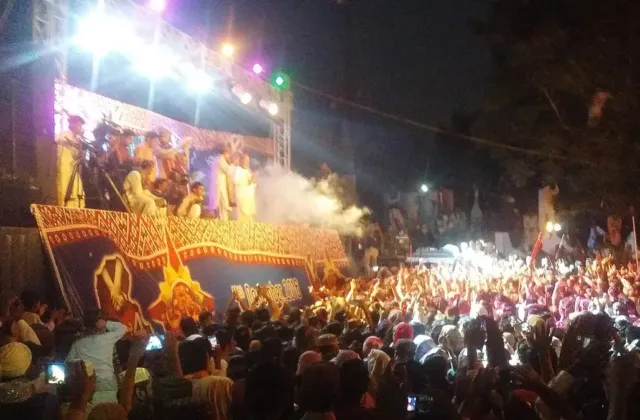
If the Urs has a sound, it is the dhol, because drummers beat it in the shrine courtyard while devotees move to the rhythm until they fall into a trance like state, and that is dhamal, the devotional dance that gives the Urs its sound and its movement, which is believed to have been performed by Lal Shahbaz Qalandar himself.
The main dhamal takes place in the evening, usually after sunset, and it runs late into the night, with the nights of the 18th and the 19th as the great dhamal nights, which is why most visitors time their arrival for the first day, so that they are already inside the courtyard when the drums begin.
Men and women both take part in dhamal, in separate parts of the courtyard, and the shrine is known as the chief shrine for malangs and qalandars, the wandering devotees who follow the saint’s way, whose matted hair and torn clothing come from a tradition reaching back to the Hindu Shaivite yogis of old Sehwan, and the shrine’s tolerance for them is part of what makes it unlike any other shrine in Sindh.
The song of the Urs is Dama Dam Mast Qalandar, sung in praise of the saint across South Asia, and the folk singer Reshma gained fame in the 1960s by singing a Saraiki version of it at the shrine, so that during the Urs it is sung everywhere, in the courtyard and in the streets and in the camps, wherever devotees gather.
Who Comes to the Urs

The crowd is the first thing that meets a visitor, and the numbers show why, because Wikipedia puts the figure at more than half a million pilgrims, Dawn reported around three million devotees expected at the 774th Urs in 2026 after about 2.8 million the year before, and Dunya News gave an estimate of around two million, so that somewhere in that range lies the true figure, and the scale is what matters, since the Urs brings many times the town’s official population of 322,000 into Sehwan.
They come from all four provinces of Pakistan and from abroad, travelling in groups, sometimes in a qafilah, a caravan, with many walking the last stretch to the shrine, and among them are Sunnis and Shias and Hindus who honour the saint as Jhulelal, while women come in large numbers and the shrine allows them a greater degree of freedom than most shrines in the country.
The malangs are the most visible devotees of all, wearing red and carrying peacock feathers and beads as they sing and dance through the town, and roving bands of women singers, known as chai wali or lote wali, sing devotional songs at the shrine in return for small alms, a practice found nowhere else in Sindh.
The Urs is also a fair, where families come with children and traders set up stalls and the town’s bazaar stays open late, so that for many visitors it is a social occasion as much as a religious one, a place to meet relatives and friends from other towns, and to spend three days among people who have travelled from every corner of the country for the same saint.
The Shrine During the Urs

Everything turns on the shrine, whose gilded dome, 110 feet high, can be seen from the Indus Highway long before the town comes into view, a dome first built in 1356 and greatly enlarged in 1639, with walls covered in white marble and glazed tiles and mirror work, and a gold plated main door given by the last Shah of Iran in the 1970s.
Inside, the saint’s tomb lies under the central dome, lit by small earthen oil lamps, while the tiled gateway leads into a courtyard that fills with devotees at every hour of the Urs, and the caretaker rings the shrine bell at 3:30 am every day, a sound the town wakes to whether or not the Urs is under way.
Entry to the shrine is free, with no ticket and no fixed visiting hour that the shrine has published, and during the Urs the courtyard is never empty, although the busiest hours are the evenings, when the dhamal begins and the courtyard fills to its edges, and the full history of the shrine, its building and its dome and its place in the history of Sehwan, is told in our Sehwan Sharif guide.
How to Reach Sehwan Sharif
Sehwan lies on the Indus Highway, and the road is the way most visitors arrive, with the Karachi road the one most visitors take, about 270 to 285 km on the Indus Highway and about 4 to 4.5 hours by bus, served by seven operators running air conditioned coaches, where outside the Urs period the fares run about Rs 1,000 to Rs 1,250 for economy, about Rs 1,450 to Rs 1,550 for executive, and about Rs 1,750 to Rs 2,000 for business, although those figures do not apply during the Urs, when fares are priced separately, so the fare should be checked when booking.
Hyderabad is closer, about 130 to 144 km, with the drive taking about 2 to 2.5 hours, and buses and vans run from Hyderabad through the day, following the Indus Highway all the way to Sehwan, which makes it the easiest approach for anyone already in upper Sindh.
Sehwan has a railway station, where the Bolan Mail and the Khushhal Khan Khattak Express stop, although the published timings are old, so current timings should be checked with Pakistan Railways before planning a train journey, and Pakistan International Airlines has run extra flights between Karachi and Sehwan during past Urs festivals, with Sehwan airport serving the town only during the Urs, which means the airline should be checked nearer the time and no flight relied on until it is confirmed.
During the Urs the roads near the shrine are closed to vehicles, so visitors walk in through security checks, and long delays should be expected on the approach roads, with extra time left on every leg of the journey, while inside Sehwan there is no formal public transport, and shared motorcycle rickshaws carry visitors between the bus stop and the railway station and the shrine.
Where to Stay
Sehwan is a small town, and beds are the scarcest thing at the Urs, so booking early is essential, with the booking confirmed by phone the day before travelling, because rooms that were available in the morning are often gone by the evening once the town begins to fill.
The Sindh Tourism Development Corporation runs the Lal Shahbaz Rest House in Sehwan Sharif, where a single bed room costs Rs 6,000 a night and a double bed room Rs 7,800 a night, at the prices listed in November 2026, bookable on the STDC website or by phone, with the total confirmed before paying, while Hotel Sehwan Divine, on the bypass road, is the best known hotel in town, with its own restaurant, and the Marjan Grand Hotel is the largest hotel in central Sehwan, with the Dum Dastagir Resthouse on Dargah Road offering basic budget rooms.
There are also musafirkhanas, rest houses where a charpai, a traditional woven bed, can be hired for the night, and older guides put an ordinary double room at about Rs 1,000 a night outside the Urs, with Urs prices as high as Rs 15,000 for a three night stay, although those prices are old, and the only safe advice is that prices rise sharply during the Urs, so a room should be seen before paying for it.
Many pilgrims do not book a room at all, camping in Lal Bagh Park or sleeping in the shrine courtyard, which costs nothing, although anyone planning to camp should bring bedding and a warm layer, because January nights are cool, and if Sehwan is full, Dadu is the nearest city with more rooms, while Hyderabad has the widest choice of all, so both work as a base, with Sehwan as a day trip, although a day trip means missing the night dhamal.
What to Expect and How to Behave
The Urs is a devotional gathering, and a little care goes a long way, beginning with removing shoes before entering the shrine and dressing modestly, while women should cover their heads, and anyone wishing to photograph worshippers should ask first, since photographing people in prayer is not acceptable.
Langar should be accepted politely when it is offered, because the free meals are served by volunteers to everyone, and refusing food that is offered with respect is taken badly, while bag checks should be expected at the shrine and children and valuables kept close in the crowds, since the shrine is busiest on Thursday evenings all year round and the courtyard is crowded at every hour during the Urs.
Women and families should read the advice in our Sehwan Sharif guide, which covers the subject in detail, and the town’s restaurants outside the shrine stay open around the clock during the Urs, with the bazaar staying open late, although cash should be carried, because card payments are not common in the small shops and stalls.
Safety at the Urs
The Urs is a huge gathering, and the security is heavy, with more than 5,000 policemen and 300 Rangers deployed in 2026, alongside more than 150 CCTV cameras inside the shrine and more than 250 outside, with standby platoons of the army and the navy and the Rapid Response Force, while the Sindh Government also used drone surveillance over the shrine and the town.
That is the scale of the gathering talking, because when a town of 322,000 takes in several times its own population in three days, the police presence has to match the crowd, and every approach to the shrine is watched, which is why visitors should follow the instructions of the shrine staff and the police, use the marked routes, and not try to push through a closed road.
Foreign visitors should note that the UK Foreign Office advises against all but essential travel to Sindh north of and including Nawabshah, and Sehwan is in that area, so current advice and local guidance should be checked before travelling, and someone told of the plans, while the 2026 Urs was held amid tight security and passed without incident, a reminder that the arrangements, however heavy, work when visitors follow them.
The Best Time to Arrive
Arriving by midday on the 18th and staying through the night of the 19th is the best plan, because those two nights carry the main dhamal, which is the heart of the Urs, and leaving early on the 20th or the next morning is wise, since the town empties slowly and the roads stay busy long after the last ceremony.
January is the cool season in Sindh, with mild days and cool nights, so a warm layer should be carried for the night dhamal in the open courtyard, and winter, from November to February, is the most comfortable season for a visit to Sehwan, although anyone who cannot come for the Urs will find an ordinary Thursday evening the next best time, when the shrine is at its liveliest, with the evening dhamal and the biggest weekly crowd, but without the crush of the Urs.
Two Places to Add to the Trip
Sehwan sits close to two places that are worth a day each, beginning with Manchar Lake, which lies roughly 20 km by road from the town, where the Mohana boat people live on houseboats on the water, and which is covered in our guide to Manchar Lake, and continuing with Ranikot Fort, the great wall of Sindh, a drive away through the Kirthar hills, which pairs well with Sehwan on a longer trip and is covered in our guide to Ranikot Fort.
Bhit Shah, the town of the poet Shah Abdul Latif Bhittai, is about two hours away, and its shrine is the other great Sufi centre of Sindh, covered in our guide to the life and poetry of Shah Abdul Latif Bhittai, while for a wider trip, our guide to the best places to visit in Sindh puts Sehwan alongside Mohenjo Daro, Makli, Keenjhar Lake and the Karachi beaches.
Questions People Ask
When is the Lal Shahbaz Qalandar Urs in 2027?
The expected window is Wednesday 27 to Friday 29 January 2027, which is 18 to 20 Sha’ban 1448 AH, although the dates are expected rather than announced, since the exact days depend on the sighting of the moon, so local announcements in January 2027 should be checked before travelling.
How long does the Urs last?
Three days make up the Urs, with the first opening on the inaugural dhamal, the second holding the literary conference, and the third ending with a musical evening, malakhro and the Shahbaz Awards.
Is there an entry fee for the shrine?
There is no entry fee and no ticket, although the roads near the shrine are closed to vehicles during the Urs, so visitors walk in through security checks.
Is the Urs safe for families and women?
It is a family gathering, and women come in large numbers, while thousands of police and Rangers are deployed, so children should be kept close, the marked routes used, and the instructions of the shrine staff and the police followed.
Can non Muslims attend the Urs?
The shrine welcomes visitors of all backgrounds, and Hindu devotees have a long place in the Urs, including the mehndi ritual at the opening, although visitors should dress modestly, remove their shoes in the shrine, and respect the worshippers.
How do I reach Sehwan from Karachi?
By road on the Indus Highway, about 270 to 285 km and about 4 to 4.5 hours by bus, with economy fares about Rs 1,000 to Rs 1,250 outside the Urs period, while Sehwan also has a railway station, and PIA has run extra flights during past Urs festivals.
Sources
- Dawn, 774th Qalandar Urs begins tomorrow in Sehwan, 6 February 2026. dawn.com
- Dawn, 774th Qalandar Urs kicks off amid tight security, 8 February 2026. dawn.com
- Dunya News, Urs of Hazrat Lal Shahbaz Qalandar to begin today, 7 February 2026. dunyanews.tv
- The Express Tribune, Sehwan thrums as Qalandar’s devotees gather for 774th urs, 8 February 2026. tribune.com.pk
- Wikipedia, Shrine of Lal Shahbaz Qalandar. en.wikipedia.org
- Trek.pk, Urs of Lal Shahbaz Qalandar. trek.pk
- Trek.pk, Sehwan Sharif: Lal Shahbaz Qalandar Shrine Guide. trek.pk
- Desi Month Date Today, Lal Shahbaz Qalandar Urs Date 2027. desimonthdatetoday.com
- Deda and Sons, Hazrat Lal Shahbaz Qalandar urs date. dedaandsons.com
- Wikivoyage, Sehwan. en.wikivoyage.org
- Pakera, STDC Resorts Booking in Sindh: Every Room Price, 2026. pakera.pk
- Sasta Ticket Price, Karachi to Sehwan Bus Ticket Price, Timings, Online Booking. sastaticketprice.com
- DailyLife.pk, Lal Shahbaz Qalandar: The Shrine at Sehwan Sharif. dailylife.pk
- UrduPoint, Sehwan Sharif and Ranikot Fort Guide 2026. urdupoint.com
- Take Your Backpack, Urs of Lal Shahbaz Qalandar, February 2027. takeyourbackpack.com

Leave a Comment