

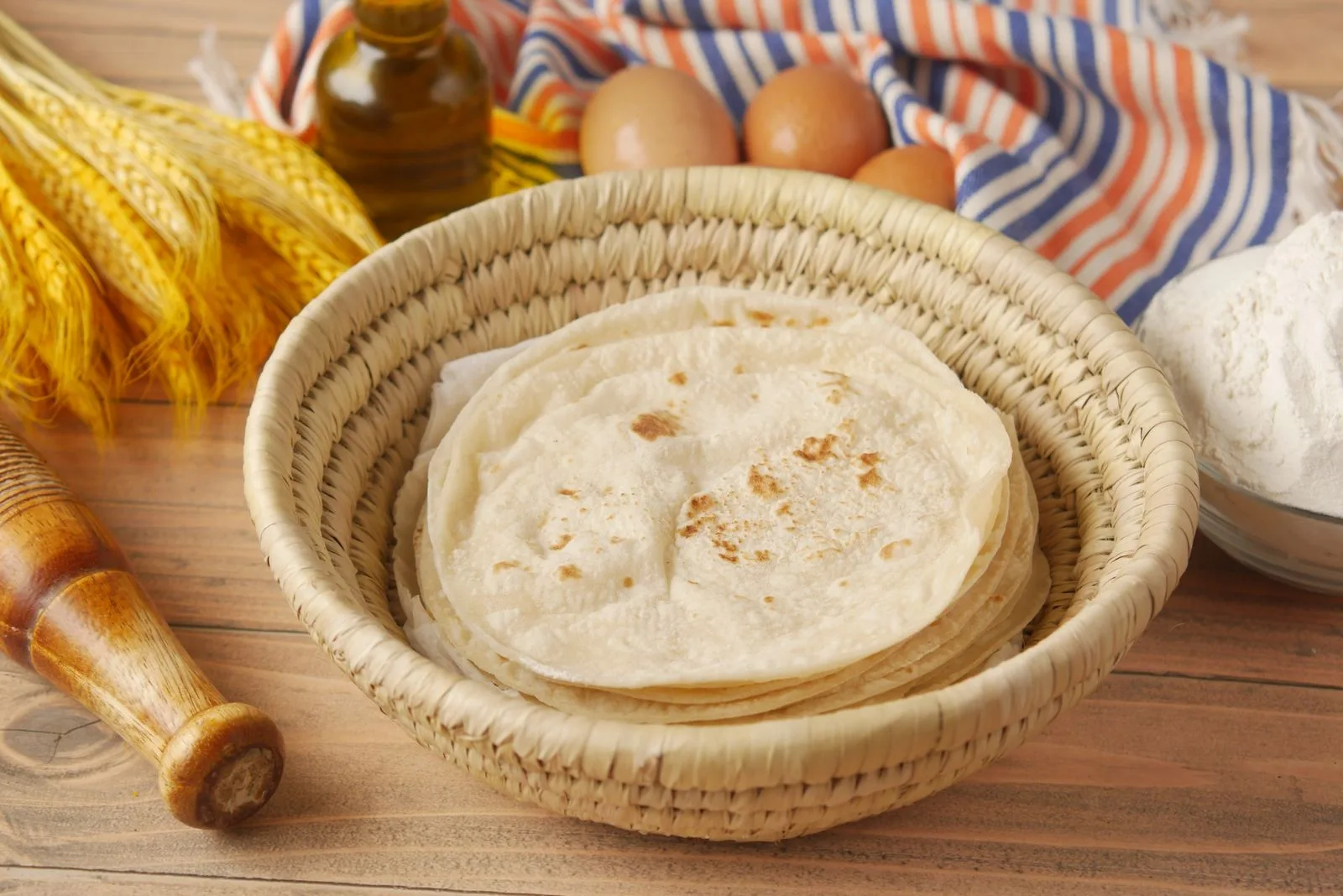
A Sindhi Mitho Lolo is a sweet flatbread that Sindhi homes cook for Thadri, the festival of cold food. It is thick, golden and heavy with ghee, made from whole wheat flour, jaggery and cardamom. It is cooked a day before the festival and eaten cold the next day, often with white butter or curd rice.
In this article (30)
- What Is Sindhi Mitho Lolo?
- Mitho Lolo and Thadri
- Sindhi Mitho Lolo Recipe Overview and Timings
- Ingredients for This Sindhi Mitho Lolo Recipe
- Equipment You Need
- How to Make Sindhi Mitho Lolo
- Step 1. Dissolve the Jaggery and Sugar
- Step 2. Rub the Ghee into the Flour
- Step 3. Knead a Firm Dough
- Step 4. Rest the Dough
- Step 5. Shape the Lolo
- Step 6. Cook Slowly on the Tawa
- Step 7. Brush with Ghee
- Step 8. Cool and Store
- How to Serve Mitho Lolo
- Tips for a Soft Inside and Crisp Outside
- Common Mistakes When Making Mitho Lolo at Home
- Variations on the Sindhi Mitho Lolo Recipe
- Mitho Lolo and Sindhi Koki: What Is Different?
- How to Store Mitho Lolo
- Approximate Nutrition per Lolo
- Frequently Asked Questions About Mitho Lolo
- Is Mitho Lolo the same as Lola?
- Can I use sugar instead of jaggery?
- Why is the dough so hard?
- How long does Mitho Lolo keep?
- Is Mitho Lolo eaten hot or cold?
- What is Thadri?
- More Sindhi Recipes to Try at Home
- Sources
This guide gives the full Sindhi Mitho Lolo recipe with exact quantities, a slow and patient method, serving ideas, storage notes and answers to the questions most cooks ask the first time. Every fact in it comes from the recipe sources listed at the end, and the quantities follow the recipe cards that agree with each other most closely.
What Is Sindhi Mitho Lolo?
Sindhi Mitho Lolo is a sweet whole wheat flatbread from Sindhi cooking. The name tells the story in two words. Mitho means sweet in Sindhi, and lolo means a flatbread. It is also called Mithi Maani, Mitho Loli, Lola and gur jo lolo, which means the lolo made with jaggery. One name changes from home to home, but the dish stays the same: a thick round of sweetened wheat dough, cooked slowly on a tawa and finished with ghee.
It is not a roti and it is not a dessert served after a meal. It sits in between. It is a festive bread, rich enough to be a treat on its own, plain enough to be eaten for breakfast or as a snack with tea. The dough is stiff, much firmer than roti dough, and the bread is rolled thick. That thickness is the point. A thin sweet roti would dry out and turn hard. A thick lolo cooks slowly, stays soft inside and turns crisp and golden outside.
Only a few things go into it. Whole wheat flour gives the body. Jaggery gives the deep, dark sweetness that sugar alone cannot give. Ghee gives the short, crumbly texture and the rich flavour. Cardamom gives the scent. Some homes add a pinch of crushed fennel seeds. That is the whole list, and it has stayed the same for generations. There is no yeast, no baking powder and no milk in the classic version. The sweetness comes from the jaggery water kneaded into the dough, so every bite tastes the same.
The lolo is heavy food. One piece is filling, and two are a full meal for most people. That is why it suits a festival day so well. It is cooked once, it keeps for days without a fridge, and it can be carried, shared and eaten cold. In Sindhi homes in Pakistan and India, and in Sindhi families living abroad, it is one of the dishes that still marks the old calendar, even when the rest of the week looks like any other week.
Mitho Lolo and Thadri
Thadri is the festival that gives Sindhi Mitho Lolo its place in the year. Thadri is also called Shitla Satam or Satain. It falls in the month of Shravan, on the seventh day of the waning moon, which comes seven days after Raksha Bandhan. The word thad means cold in Sindhi, and the rule of the day is simple: no fire is lit in the kitchen. Everything is cooked the day before and eaten cold.
That rule shapes the whole menu. Families cook a day ahead, and the food has to survive a night and still taste good cold the next day. Mitho Lolo is made for exactly that. It is cooked the day before Thadri, left to cool, and eaten cold on the festival day with white butter, curd rice, satpura and choori laddoo. The same is true of the other Thadri dishes: koki, stuffed karela, sanna pakora and a sweet yogurt dish called saata. All of them are cooked a day ahead and eaten cold.
Thadri is kept by many Hindu Sindhi families as a fast for the health of children and everyone in the house, and it honours the goddess Shitala. In some homes seven small lolas, called akhri tikdi, are also cooked and kept on the eyes during the prayer. The festival is also tied to Gogro and Nagpanchami and to Saptami, and the same cold food rule applies on those days too. The lolo is not only a Thadri dish, though. Families make it through the year, and some make it after a recovery from chickenpox, when plain and cooling food is the custom.
The festival link is also the reason the lolo is cooked so slowly. A bread that must last a day and still taste good cannot be rushed. The slow cook drives out the moisture and lets the jaggery caramelise gently at the edges. That is what gives the lolo its keeping quality and its colour. A lolo cooked in a hurry on a high flame looks done on the outside and stays raw inside, and it will not keep. The patience is part of the recipe, not an extra.
Sindhi Mitho Lolo Recipe Overview and Timings
| Detail | Information |
|---|---|
| Recipe Name | Sindhi Mitho Lolo |
| Also Called | Mithi Maani, Mitho Loli, Lola, gur jo lolo |
| Cuisine | Sindhi |
| Course | Breakfast or snack, festival food |
| Makes | 4 to 5 lolo |
| Soaking Time | 2 to 4 hours for the jaggery and sugar |
| Preparation Time | 15 minutes |
| Cooking Time | 30 to 40 minutes for the whole batch |
| Difficulty | Easy, but slow |
| Best Served With | White butter, curd rice, satpura, choori laddoo |
Ingredients for This Sindhi Mitho Lolo Recipe
| Ingredient | Quantity |
|---|---|
| Whole wheat flour (atta) | 2 cups, about 250 g |
| Jaggery (gur), powdered or cut small | 3/4 cup |
| Sugar, as an alternative to part of the jaggery | 1/2 cup in place of the jaggery |
| Water | 1/2 cup, plus a little more for kneading |
| Ghee for the dough (moyan) | 4 tablespoons |
| Cardamom (elaichi) powder | 1 tablespoon |
| Ghee to brush on the cooked lolo | 1 tablespoon |
| Fennel seeds (saunf), lightly crushed, optional | A pinch |
The quantities above follow the recipe card that the sources agree on most closely. Two cups of flour, 3/4 cup of jaggery or 1/2 cup of sugar, 1/2 cup of water and 4 tablespoons of ghee in the dough are the figures that repeat across the recipe sources. One source uses a mix instead: 1/4 cup of sugar and 1/4 cup of jaggery together. That mix works well, because the jaggery gives the traditional flavour and the sugar gives a crisp edge. Use the mix if you like, and keep the total sweetener the same.
Use good jaggery if you can. Pale and soft jaggery dissolves fast and tastes mild. Dark jaggery takes longer to dissolve and gives a deeper colour and a stronger taste. Either one works. Powder it or cut it small before soaking, so it dissolves fully. Lumps of undissolved jaggery make dark spots in the dough and sweet patches in the cooked bread.
The ghee matters as much as the flour. Four tablespoons rubbed into the flour is the moyan, the fat that makes the inside short and crumbly. Use less and the lolo turns hard and dry. Use much more and it turns greasy and falls apart. If ghee is short, some homes use oil instead, but ghee gives the old flavour and the better crust. Keep a little extra ghee aside for brushing at the end. That last brushing is not a garnish. It soaks in while the lolo cools and keeps it soft.
Equipment You Need
A wide bowl for mixing, a rolling pin and board, a heavy tawa or flat griddle, a flat spatula, a plate and a clean cloth. A heavy iron tawa is best, because it holds an even heat through the long slow cook. A thin tawa heats in patches and burns the lolo in spots. A stand mixer can knead the dough if you have one, but hands work just as well, and most Sindhi cooks knead it by hand.
How to Make Sindhi Mitho Lolo
The method has three parts: dissolve the sweetener, make a firm dough with ghee rubbed in, and cook slowly on a low flame. None of it is hard. All of it needs patience. Give the jaggery time to dissolve, give the dough time to rest, and give each lolo time on the tawa. Rushing any one of these shows in the result.
Step 1. Dissolve the Jaggery and Sugar
Put the jaggery and sugar in a bowl with the 1/2 cup of water. Leave it aside for 2 to 4 hours, or overnight if that suits you better. Stir it now and then. The jaggery must dissolve fully, until the water is a clear dark syrup with no grains and no lumps at the bottom. One source melts the jaggery and water together on the stove instead, brings it to a boil, takes it off the heat and lets it cool. That works too, and it is faster. Whichever way you choose, let the syrup cool to room temperature before it goes into the flour. Hot syrup makes the dough sticky and the ghee runny.
Step 2. Rub the Ghee into the Flour
Put the flour in a wide bowl. Add the cardamom powder and the fennel seeds if you are using them, and mix. Add the 4 tablespoons of ghee a little at a time and rub it into the flour between your palms for two minutes. You want the texture of coarse breadcrumbs. Squeeze a little in your fist. If it holds its shape, you have enough moyan. This rubbing is where the flaky and crumbly inside comes from, so do not cut it short. The flour should look sandy and feel cool, not wet.
Step 3. Knead a Firm Dough
Pour the jaggery water in little by little and bring the flour together. Add a spoon of plain water only if the dough needs it. Knead it into a firm dough, much firmer than roti dough. It should feel stiff under your hands and hold its shape when you press it. A soft dough is the most common mistake with this recipe, and it gives a chewy lolo instead of a crisp one. The dough is ready when it is smooth on the outside and does not stick to your fingers.
Step 4. Rest the Dough
Cover the dough with a damp cloth and leave it for 15 to 20 minutes. The rest lets the flour drink the water fully and makes the dough easier to roll. Do not skip it, and do not leave it for hours. A long rest softens the dough and makes it sticky, which is the opposite of what you want.
Step 5. Shape the Lolo
Divide the dough into 4 or 5 equal balls. Take one ball at a time and roll it into a thick round disc, thicker than a roti and about the size of a small plate. The sources differ a little on the exact thickness, from a quarter of an inch to half an inch, so judge by feel: it should look and feel thick in the hand, not thin and flat. Keep the rest of the balls covered with the damp cloth while you work, so they do not dry out. If the edge splits while you roll, pinch it shut with two fingers and carry on.
Step 6. Cook Slowly on the Tawa
Heat the tawa on a low flame. Put the lolo on the dry tawa and let it cook slowly. Do not turn the flame up. A lolo needs 30 to 40 minutes for a batch of 4 to 5, which is about 7 to 8 minutes for each one. Flip it at regular intervals, so both sides colour evenly. Brown patches will appear, and the edges will turn a deeper golden colour. Press down gently with the spatula now and then, so the middle cooks through. If the outside darkens fast while the middle is still soft, the flame is too high. Take the tawa off the heat for a minute and turn the flame down before you carry on.
Step 7. Brush with Ghee
When both sides are golden and the lolo feels firm, take it off the tawa and put it on a plate. Brush it with ghee while it is still hot, or dip it briefly in a mix of ghee and oil. The hot bread drinks the ghee in, and that is what keeps it soft as it cools. Leave it for a few minutes so the ghee soaks in fully. Cook the rest of the lolo the same way.
Step 8. Cool and Store
Let each lolo cool on its own, not stacked in a pile while still hot. Stacking traps steam and makes them soft and soggy. Once they are at room temperature, put them in an airtight container. They stay good for 4 to 6 days at room temperature, and some homes find they keep for more than a week. That keeping quality is the reason the lolo was made a day ahead for Thadri in the first place.
How to Serve Mitho Lolo
Sindhi Mitho Lolo is best the next day, eaten cold, the way Thadri asks for it. Break it into pieces and eat it with white butter, which melts slowly into the warm crumb if the lolo is still a little warm, or sits in soft curls on a cold piece. Curd rice is the classic partner on the festival day, cool and plain against the sweet bread. Satpura and choori laddoo sit on the same plate at festival time, and a spoon of pickle or a bowl of boondi raita adds a sharp note that balances the sweetness.
Through the year, most people eat it simpler: a lolo with a cup of tea in the morning, or a piece as an evening snack. Children often ask for the sweet version with sugar instead of jaggery, which tastes lighter and looks paler. There is no rule about when to eat it. The festival link is the history, not a limit.
Tips for a Soft Inside and Crisp Outside
Dissolve the jaggery fully. Grains left in the syrup burn on the tawa and leave bitter spots. Give it the full 2 to 4 hours, or melt it on the stove and let it cool.
Use the full moyan. Four tablespoons of ghee in the dough is what makes the inside short and crumbly. Cut it down and the lolo turns hard.
Keep the dough firm. If it feels like roti dough, it is too soft. Knead in a spoon of dry flour and carry on. A firm dough rolls thick and cooks crisp.
Work on a low flame. The lolo cooks from the outside in, and a high flame burns the surface before the middle is done. Low and slow is the whole secret.
Roll thick and even. A disc that is thin in the middle and thick at the edge cooks in patches. Take a moment to even it out before it goes on the tawa.
Brush with ghee while hot. The ghee soaks in as the bread cools and keeps it from drying out. A dry lolo is almost always one that missed this step.
Cool them apart. Stacking hot lolo traps steam and softens the crust. Let each one cool on its own first.
Common Mistakes When Making Mitho Lolo at Home
Adding all the water at once. The dough turns sticky, and sticky dough cannot be rolled thick. Add the jaggery water a little at a time.
Rolling it thin. A thin lolo is not a lolo. It dries out, turns hard and loses the soft middle that makes it good.
Cooking on a high flame. The outside goes dark while the inside stays raw. The colour fools you into taking it off too early.
Skipping the rest. Dough that has not rested tears when you roll it and cooks unevenly.
Using only sugar. It works, but the taste is flat and pale next to jaggery. If you have jaggery, use it, or use the mix of half sugar and half jaggery.
Storing them hot. Steam in a closed box makes the crust soft and the bread stale fast. Cool first, then store.
Variations on the Sindhi Mitho Lolo Recipe
Every family makes this lolo a little differently, and the changes are small. Some homes use only sugar, which gives a paler and lighter lolo. Some use only jaggery, which gives a darker and deeper taste. The mix of the two is the middle path and the one most recipe writers recommend. Some add a pinch of crushed fennel seeds to the dough, which gives a gentle warmth at the back of the taste. Some leave out the cardamom, and some add a little more, up to a full tablespoon for the batch.
A smaller batch is easy. One cup of flour, 2 to 3 tablespoons of jaggery or sugar, 1/4 cup of ghee and 1/2 teaspoon of cardamom powder makes two lolo, with the same method and the same slow cook. That version suits a small family or a first try. A larger batch keeps just as well, so many homes make five at once and eat them through the week.
Some homes cook the lolo on a sigri, the old coal stove, the way it was done before gas stoves. The method is the same, and the slow heat of the sigri suits it well. Others use oil in place of ghee in the dough, which makes a lighter lolo and suits a vegan table. The flavour is not the same, but the shape and the keeping quality are.
Mitho Lolo and Sindhi Koki: What Is Different?
Sindhi Mitho Lolo and Sindhi koki are cousins, and the family likeness is easy to see. Both are thick flatbreads made from whole wheat flour, both use ghee rubbed into the flour as moyan, and both are cooked slowly on a tawa. Our Sindhi Koki guide uses the same stiff dough and the same slow fry, and it also has a place at Thadri. The difference is the taste. Koki is savoury, packed with onion, green chilli and coriander. Lolo is sweet, with jaggery or sugar and cardamom in place of the onion and chilli.
The two also differ in how they are shaped and cooked. Koki is pressed out by hand and cooked twice, first dry to set the shape and then fried in ghee until crisp. Lolo is rolled with a pin and cooked once, slowly, on a low flame. Koki is breakfast food, eaten hot with dahi and chai. Lolo is festival food, cooked a day ahead and eaten cold. Together they show the two sides of Sindhi flatbread: one savoury and one sweet, made from the same flour and the same patience.
How to Store Mitho Lolo
A cooked lolo keeps well, which is the point of it. In an airtight container at room temperature it stays good for 4 to 6 days, and some homes keep it for more than a week without any change in taste. Keep the container dry and cool, and take out only what you need, so the rest stays sealed. Do not put it in the fridge. The cold dries it out and makes it hard. If a lolo does go a little firm after a few days, warm it on a tawa over a low flame for a minute on each side and brush it with a little ghee. The warmth and the ghee bring it back.
Approximate Nutrition per Lolo
By a rough count, one lolo from this recipe comes to about 450 to 500 calories, with around 8 grams of protein, 65 to 70 grams of carbohydrates and 18 to 20 grams of fat. Most of the swing in those numbers comes from the ghee brushed on at the end. The whole wheat flour gives it a fair amount of fibre, and the jaggery gives small amounts of iron and minerals, though not enough to call it a health food. It is rich and filling by design. One piece is a full snack, and two are a meal.
Frequently Asked Questions About Mitho Lolo
Is Mitho Lolo the same as Lola?
Yes. Lola is another name for the same bread. It is also called Mithi Maani, Mitho Loli and gur jo lolo. The name changes from home to home and from region to region, but the dish is the same sweet flatbread made with whole wheat flour, jaggery and ghee.
Can I use sugar instead of jaggery?
Yes. Half a cup of sugar replaces 3/4 cup of jaggery in this recipe. The taste will be lighter and the colour paler. Many homes use a mix of the two, 1/4 cup of sugar and 1/4 cup of jaggery, which gives the traditional flavour of jaggery and the crisp edge that sugar gives.
Why is the dough so hard?
The dough is meant to be firm, much firmer than roti dough. A soft dough gives a chewy lolo instead of a crisp one. The firmness comes from the small amount of water and the ghee rubbed into the flour. If the dough will not come together at all, add water a spoon at a time until it holds.
How long does Mitho Lolo keep?
Four to 6 days in an airtight container at room temperature, and some homes find it keeps for more than a week. Keep it cool and dry, and do not store it while it is still hot. Warm a firm lolo on a tawa over a low flame and brush it with ghee to bring it back.
Is Mitho Lolo eaten hot or cold?
Both, but cold is the traditional way. For Thadri it is cooked a day ahead and eaten cold the next day, because no fire is lit on the festival day. Through the year most people eat it at room temperature, or still a little warm from the tawa with white butter.
What is Thadri?
Thadri, also called Shitla Satam or Satain, is a Sindhi festival in the month of Shravan, on the seventh day of the waning moon, seven days after Raksha Bandhan. The word thad means cold. No fire is lit in the kitchen on the day, so all the food, including Mitho Lolo, is cooked the day before and eaten cold.
More Sindhi Recipes to Try at Home
If you liked making this lolo, these other Sindhi recipes are on PakSindh too.
- Sindhi Koki, a crisp onion flatbread made from the same stiff dough and slow tawa cooking
- Sai Bhaji, the green vegetable curry Sindhis often eat with koki or rice
- Sindhi Dal Pakwan, the weekend breakfast of crisp pakwan and chana daal
- Sindhi Curry, a tangy besan and tamarind curry
Sources
- My Culinary Expressions, Mitho Lolo Recipe, Sindhi Mithi Maani, Thadri Satain Recipes. myculex.com
- SecondRecipe, Mitho lolo, Sindhi sweet flatbread. secondrecipe.com
- Yummy Tales of Tummy, Mitho Lolo Recipe, Sindhi gur jo lolo. yummytalesoftummy.com
- Simply Tadka, Sindhi Mitho Lolo Recipe, Sindhi Sweet Flatbread Recipe. simplytadka.com
- Ribbons to Pastas, Mitho Lolo, Sindhi Sweet Flat Bread. ribbonstopastas.com

Leave a Comment