

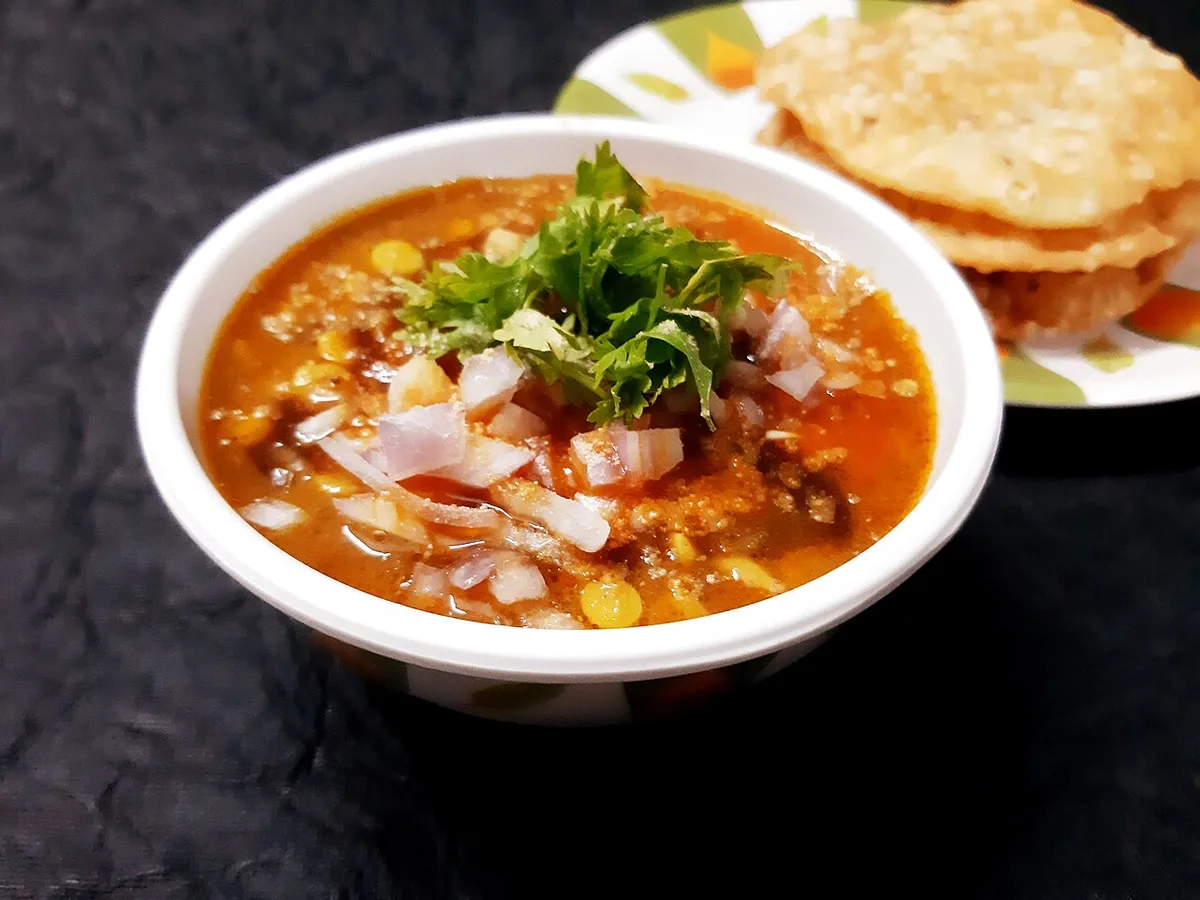
Ask any Sindhi family what Sunday morning smells like and most will give the same answer: hot oil, cumin and a pot of chana dal on the stove. It usually means somebody in the kitchen is about to fry pakwan. The full dish is a plate of crisp fried flatbread called pakwan, a bowl of soft, lightly spiced chana dal, a spoon of tamarind chutney and a handful of raw onion on top. Nothing in it is fancy, yet it is one of the best known dishes of Sindhi cuisine.
In this article (37)
- Sindhi Dal Pakwan Recipe at a Glance
- What Dal Pakwan Is and Why It Matters
- The History of Dal Pakwan in Sindh
- Fried Breads in a Hot, Dry Land
- From Thick Tikkad to Crisp Pakwan
- A Dish Shared by Hindus and Muslims
- Dal Pakwan After 1947 and the Sindhi Diaspora
- Dal Pakwan Day on 11 April
- Ingredients for Sindhi Dal Pakwan
- Ingredients for the Crispy Pakwan
- Ingredients for the Chana Dal
- For the Chutneys and the Topping
- How to Make Crispy Pakwan Step by Step
- Step 1: Make a Stiff, Short Dough
- Step 2: Roll Thin and Prick Well
- Step 3: Fry Slowly Until Golden
- How to Cook Sindhi Chana Dal for Pakwan
- Step 1: Soak and Boil the Dal
- Step 2: Prepare the Tempering
- Step 3: Finish with Sourness
- Tamarind and Green Chutneys for Dal Pakwan
- Sweet and Sour Tamarind Chutney
- Fresh Coriander and Mint Chutney
- How to Serve Dal Pakwan the Sindhi Way
- Common Mistakes and Practical Tips
- Why Pakwan Turns Soft or Chewy
- Why the Dal Tastes Flat or Mushy
- Storing Pakwan and Dal for Later
- Popular Variations of Dal Pakwan
- Frequently Asked Questions About Dal Pakwan
- Is dal pakwan from Pakistan or India?
- Which dal is used in dal pakwan?
- Why is my pakwan puffing up like puri?
- Can I make pakwan without maida?
- When is Daal Pakwan Day celebrated?
- Is dal pakwan healthy for daily eating?
- Bringing Sindhi Breakfast to Your Table
In this guide I give you a full home recipe for Sindhi dal pakwan, with measured ingredients, timings and the small tricks that decide whether your pakwan snaps or bends. Before the recipe, I also look at where the dish comes from, why it became the Sunday breakfast of Sindhis on both sides of the border, and how families serve it today. Where sources disagree about its history, I say so.
Sindhi Dal Pakwan Recipe at a Glance
| Dish | Crisp fried flatbread (pakwan) with chana dal and chutneys |
| Region | Sindh, now carried by Sindhis across India and the diaspora |
| Usual meal | Breakfast, most of all on Sunday |
| Main ingredients | Plain flour (maida), chana dal, cumin, ajwain, tamarind |
| Serves | 4 people (about 12 pakwan) |
| Soaking time | 2 hours for the dal |
| Cooking time | About 1 hour in total |
| Difficulty | Medium (the frying needs patience) |
| Diet | Vegetarian; vegan if you use oil instead of ghee |
What Dal Pakwan Is and Why It Matters
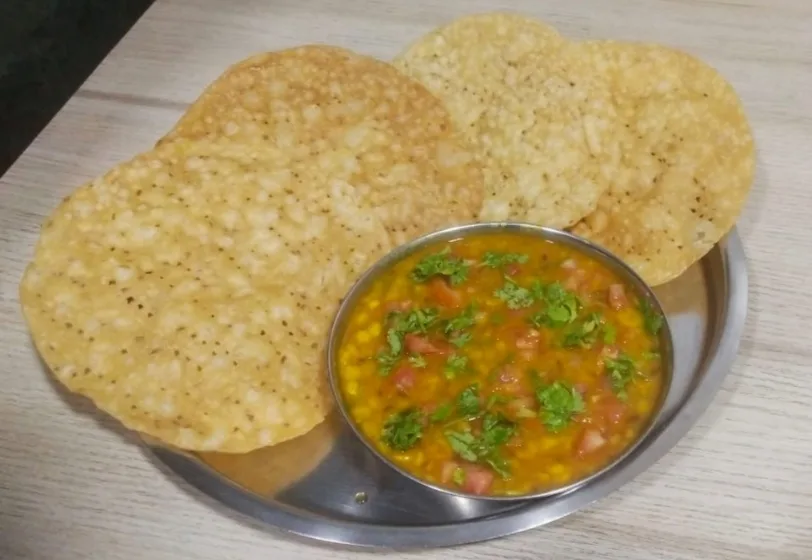
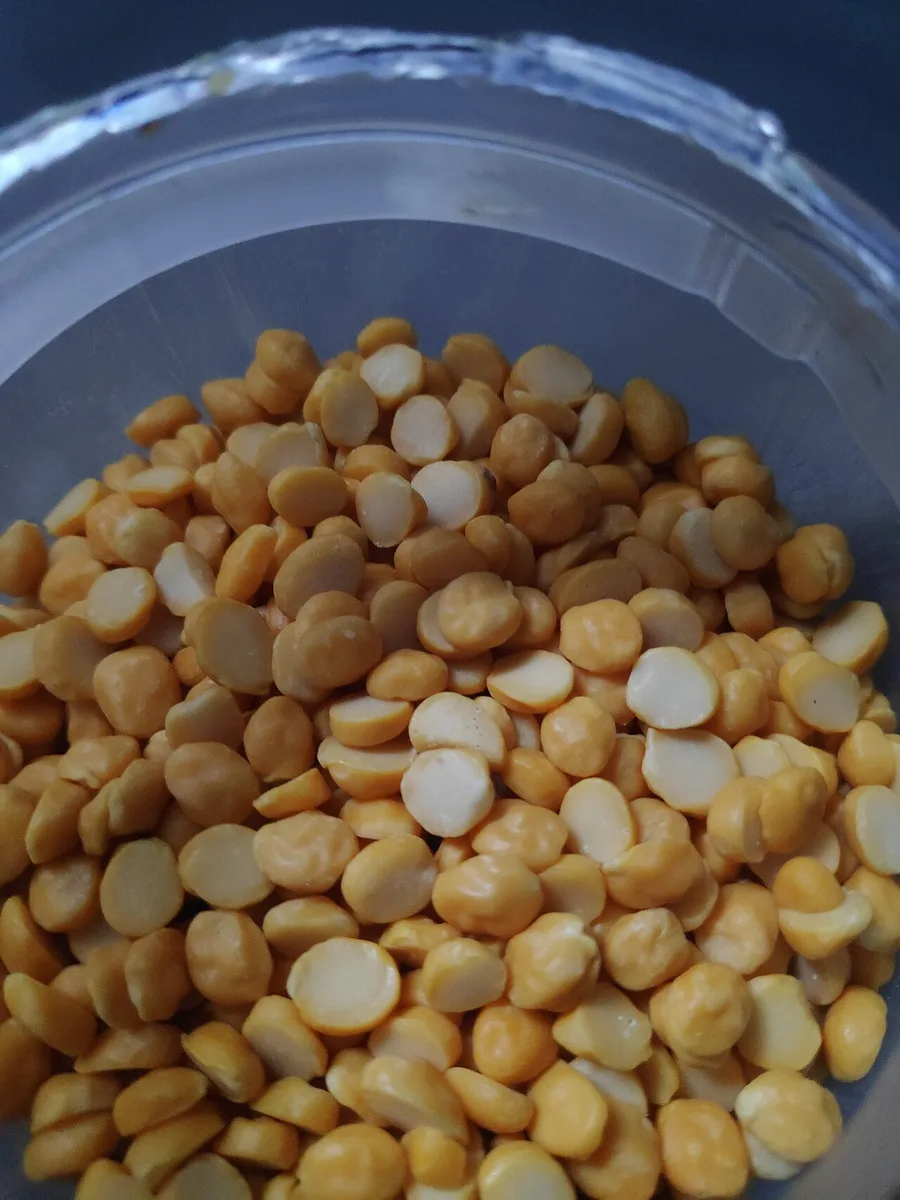
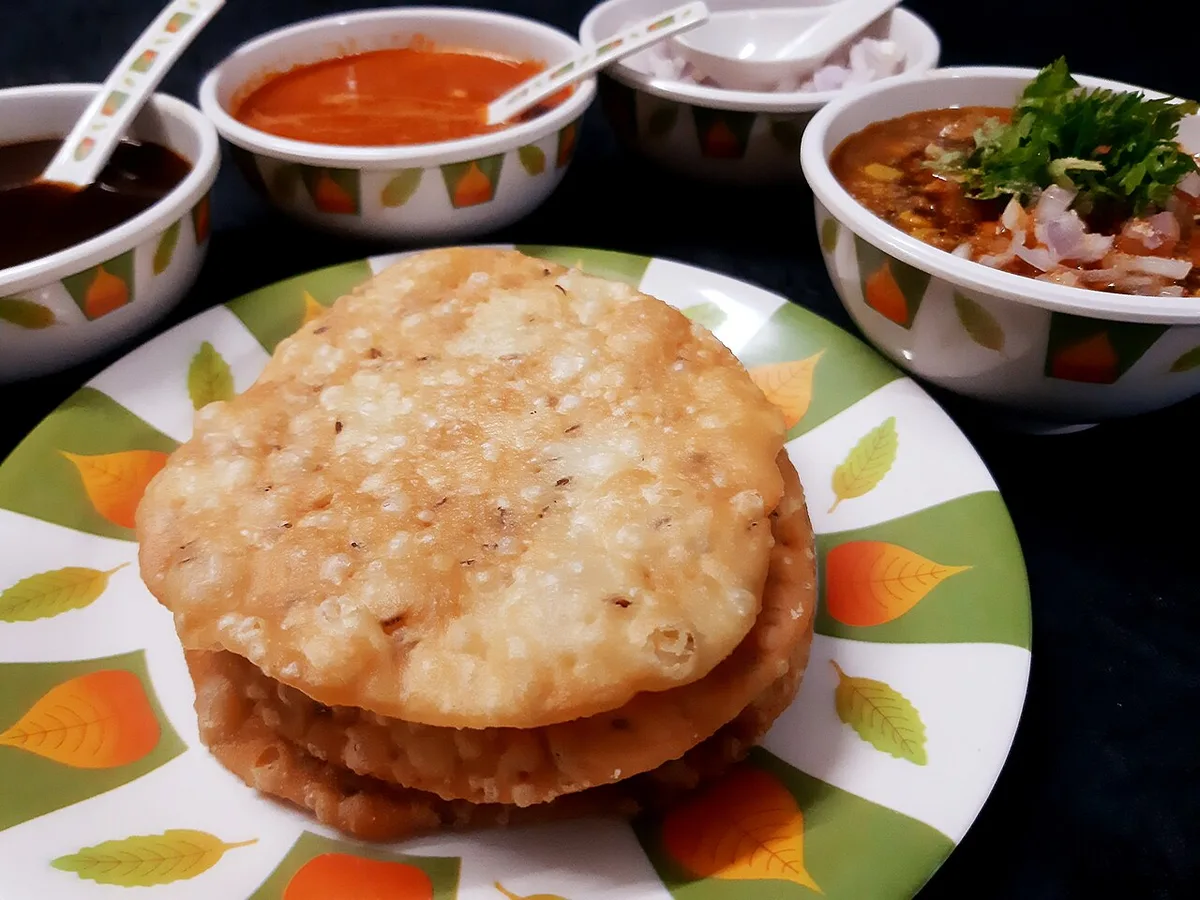
The name tells you most of the story. Dal is the lentil part, and in this dish it is almost always chana dal, the split and skinned form of the small brown desi chickpea. Pakwan is the bread. It is made from plain flour with cumin and ajwain, rolled thin, pricked all over and fried until it is pale gold and stiff, a little like a large, flat, flaky biscuit.
Neither part is very exciting alone. The dal is mild and the pakwan is plain. Writing about a Sunday plate in Chembur, Mumbai, food writer Sachin Bhandary quoted a friend who said that neither the dal nor the pakwan is special alone, and the magic happens when they meet. I think that is exactly right. You break the pakwan, scoop the dal, add chutney and onion, and every bite has crunch, softness, sourness and heat at the same time.
Dal pakwan is not a daily meal for most families. It is heavy, it takes time, and it belongs to slow mornings. In many Sindhi homes it is the dish for Sunday breakfast, for guests who stay overnight, and for festival mornings. Because it only turns up once a week, people look forward to it, and they remember it long after they leave home.
The History of Dal Pakwan in Sindh
There is no old manuscript that records the first pakwan, so any history of the dish is partly memory and partly reasoning. But some things we can say with fair confidence.
Fried Breads in a Hot, Dry Land
Sindh is hot for much of the year, and fried breads that keep for days made practical sense there. Several food writers link pakwan to this need: a roti goes stale in hours, while a well fried pakwan stays crisp in a closed tin. This sounds sensible to me, but I could not find any old text that proves it, so please read it as a guess.
From Thick Tikkad to Crisp Pakwan
One theory, given to The Indian Express in 2025 by food entrepreneur Biraja Rout, connects pakwan with an older Sindhi bread called tikkad. Tikkad was a thick bread of whole wheat flour and gram flour, roasted on a tawa. In his account, Sindhi cooks later moved to refined flour and deep frying, and pakwan was the result. It is an interesting idea, but it is one person’s account, and many Sindhis say pakwan was already made in Sindh long before 1947.
A Dish Shared by Hindus and Muslims
Sindhi food has always been shared across faiths. In a 2019 piece for Dawn’s Prism, food writer Maryam Jillani spoke to Sindhis in Pakistan, India and abroad, and found a cuisine that “refuses to identify itself” with either country. She mentions one pairing I had not heard of before. Some families eat daal pakwan with sweet lola, a thick bread soaked in syrup, next to the salty dal.
Today the dish is most closely tied to Sindhi Hindu families, but it belongs to the food of Sindh as a whole. You will find the same chana dal, tamarind and cumin flavours in many Muslim Sindhi kitchens too, alongside dishes such as Sindhi koki and sai bhaji.
Dal Pakwan After 1947 and the Sindhi Diaspora
Partition changed the story of this dish. A large number of Sindhi Hindus left Sindh in 1947 and settled in India and further abroad. They took very little with them, but they took their recipes.
Writer Pooja Makhijani, whose grandparents came from Karachi and Hyderabad, wrote for Food52 in 2017 that her Sindhi friends grew up in places as far apart as Chile, Dubai and South Africa, yet their food memories were nearly identical. Daal pakwan was one of the breakfasts she named. She also described Chembur in Mumbai and Ulhasnagar near Mumbai, where many refugee families were settled in camps and barracks after Partition.
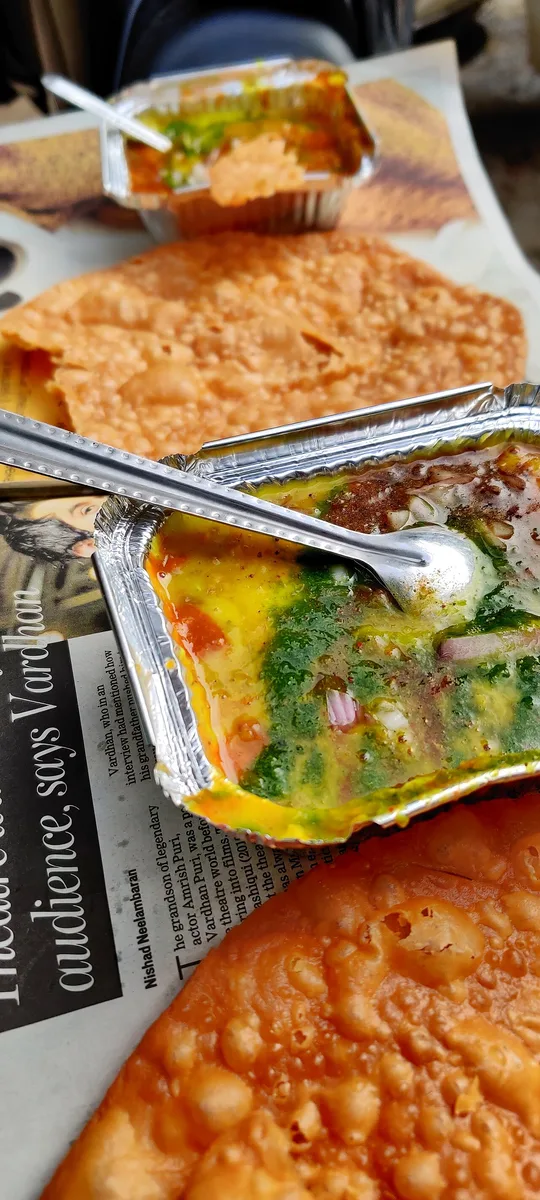
Those camp neighbourhoods became famous for Sindhi breakfast shops. In Chembur, Ulhasnagar and similar areas, small stalls cook dal in large pots from early morning, and on Sundays the popular ones can run out before late breakfast. People who had lost their homes could still cook this on a Sunday, and for many of them that plate was the closest thing to Sindh.
Dal Pakwan Day on 11 April
The dish now even has its own day. According to a 2021 report in Sindh Courier, Sindhis in Bhopal began the idea of Daal Pakwan Day, and the message spread through WhatsApp groups. Because dal pakwan is the Sunday breakfast for so many Sindhis, they fixed 11 April, a Sunday that year, as the day. It sits next to Sindhi Divas on 10 April and close to Cheti Chand, which makes April a festive month for Sindhi culture.
If you are interested in the wider culture behind dishes like this, our pages on Sindhi culture and the history of the Sindhi ajrak are good places to continue.
Ingredients for Sindhi Dal Pakwan
This recipe serves four people and makes about twelve pakwan of around 15 cm across. Use cups of 240 ml. For flour and dal I also give the weight in grams.
Ingredients for the Crispy Pakwan
| Ingredient | Quantity | Note |
|---|---|---|
| Plain flour (maida) | 2 cups (about 250 g) | The base of the bread |
| Fine semolina (suji) | 2 tablespoons | Optional; I like the extra crunch |
| Cumin seeds (zeera) | 1 teaspoon | Lightly crushed between the palms |
| Ajwain (carom seeds) | ½ teaspoon | Adds a sharp, thyme like aroma |
| Black pepper | ½ teaspoon, coarsely crushed | Classic Sindhi touch |
| Salt | ¾ teaspoon | Adjust to taste |
| Ghee or oil (moyan) | 3 tablespoons | Rubbed into the flour |
| Water | About ½ cup | Pour in a little at a time |
| Oil for frying | Enough for a karahi | Any neutral oil |
Ingredients for the Chana Dal
| Ingredient | Quantity | Note |
|---|---|---|
| Chana dal | 1 cup (about 200 g) | Washed and soaked for 2 hours |
| Water | 3 to 3½ cups | For boiling |
| Turmeric (haldi) | ½ teaspoon | Added while boiling |
| Salt | 1 teaspoon | Adjust to taste |
| Oil or ghee | 2 tablespoons | For the tempering |
| Cumin seeds | 1 teaspoon | For the tempering |
| Green chillies | 2, slit | Use less for children |
| Red chilli powder | 1 teaspoon | Kashmiri chilli gives colour with less heat |
| Coriander powder | 1 teaspoon | Adds body |
| Dry mango powder (amchur) | 1 teaspoon | The sour note Sindhis love |
| Garam masala | ¼ teaspoon | Optional |
For the Chutneys and the Topping
- Tamarind chutney: a lemon sized ball of tamarind (about 50 g), 3 tablespoons jaggery or sugar, ½ teaspoon roasted cumin powder, ¼ teaspoon red chilli powder, a pinch of black salt.
- Green chutney: 1 cup fresh coriander, ½ cup mint leaves, 2 green chillies, 1 small garlic clove, juice of half a lemon, salt and a splash of water.
- Topping: 1 large onion finely chopped, a little chopped coriander, and a lemon cut into wedges.
How to Make Crispy Pakwan Step by Step
Pakwan is where most first attempts go wrong. You want it to break with a snap. A puri is too soft and a cracker is too hard. Three things matter: a stiff dough, thin rolling and low, steady heat.
Step 1: Make a Stiff, Short Dough
Put the flour, semolina, cumin, ajwain, black pepper and salt in a wide bowl. Add the ghee or oil and rub it into the flour with your fingertips for two or three minutes. Squeeze a little in your fist. If it keeps its shape, you have rubbed in enough. This step is called adding moyan, and it is what makes pakwan flaky.
Add the water a little at a time and press the dough together. Do not knead it like chapati dough. You want a firm, slightly rough dough, stiffer than you think. Cover it and rest it for 20 minutes.
Step 2: Roll Thin and Prick Well
Divide the dough into twelve balls. Roll each one into a circle about 15 cm across and 2 mm thick, so that it is thinner than a paratha but not paper thin. Then prick the whole surface many times with a fork. This is not decoration. Steam escapes through the holes. Without them the pakwan puffs into a puri.
Step 3: Fry Slowly Until Golden
Heat the oil on medium heat, then turn it down to medium low. Aim for roughly 160°C. A pinch of dough dropped in should float up slowly with small bubbles. If it hisses and jumps up right away, the oil is too hot.
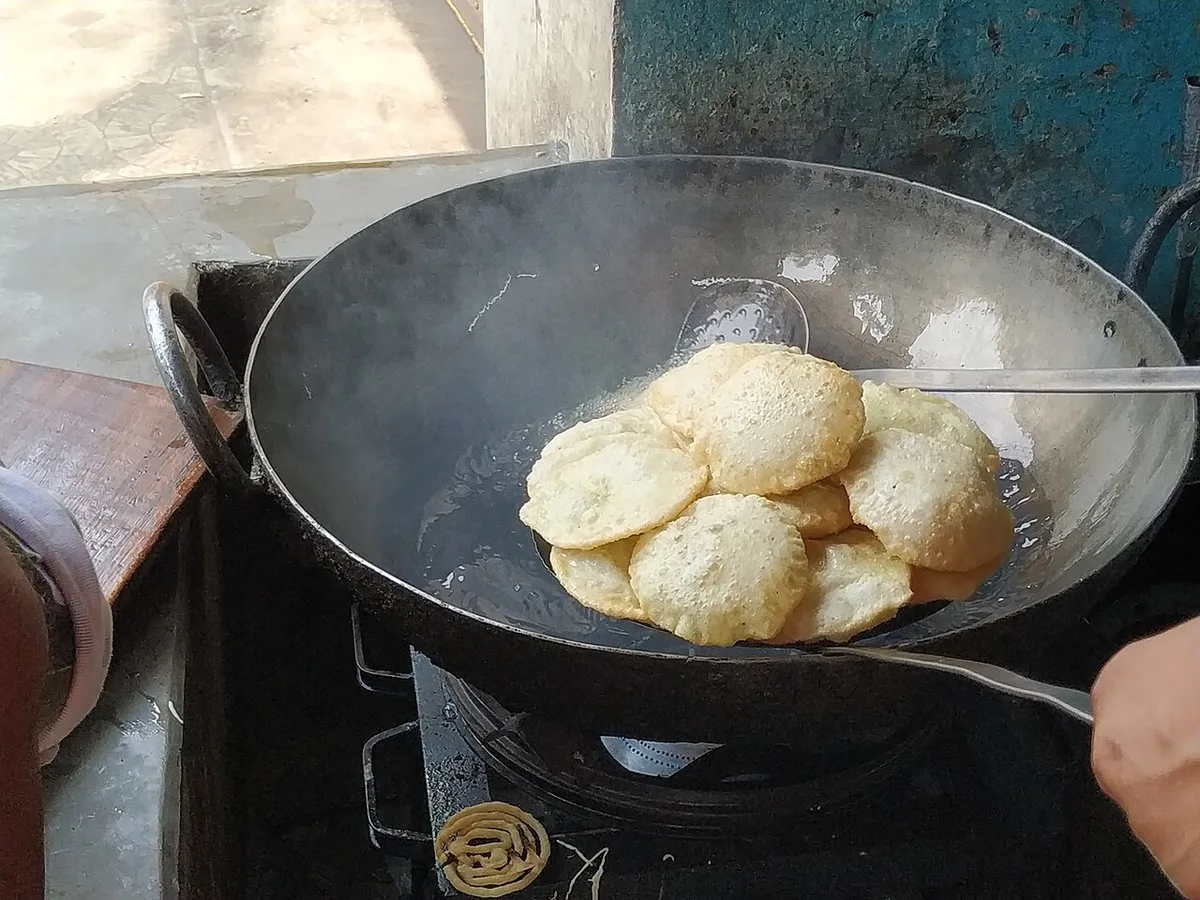
Slide in one pakwan at a time. Keep it pushed under the oil with a slotted spoon. Fry for about two minutes on each side, until it is light golden and firm. Lift it out, drain it standing on its edge or on a rack, and let it cool. Pakwan becomes crisper as it cools.
Hot oil browns the outside fast and leaves the middle chewy. Cool oil does the opposite, and the bread drinks it up. Making a test pakwan first saves the rest of the batch.
How to Cook Sindhi Chana Dal for Pakwan
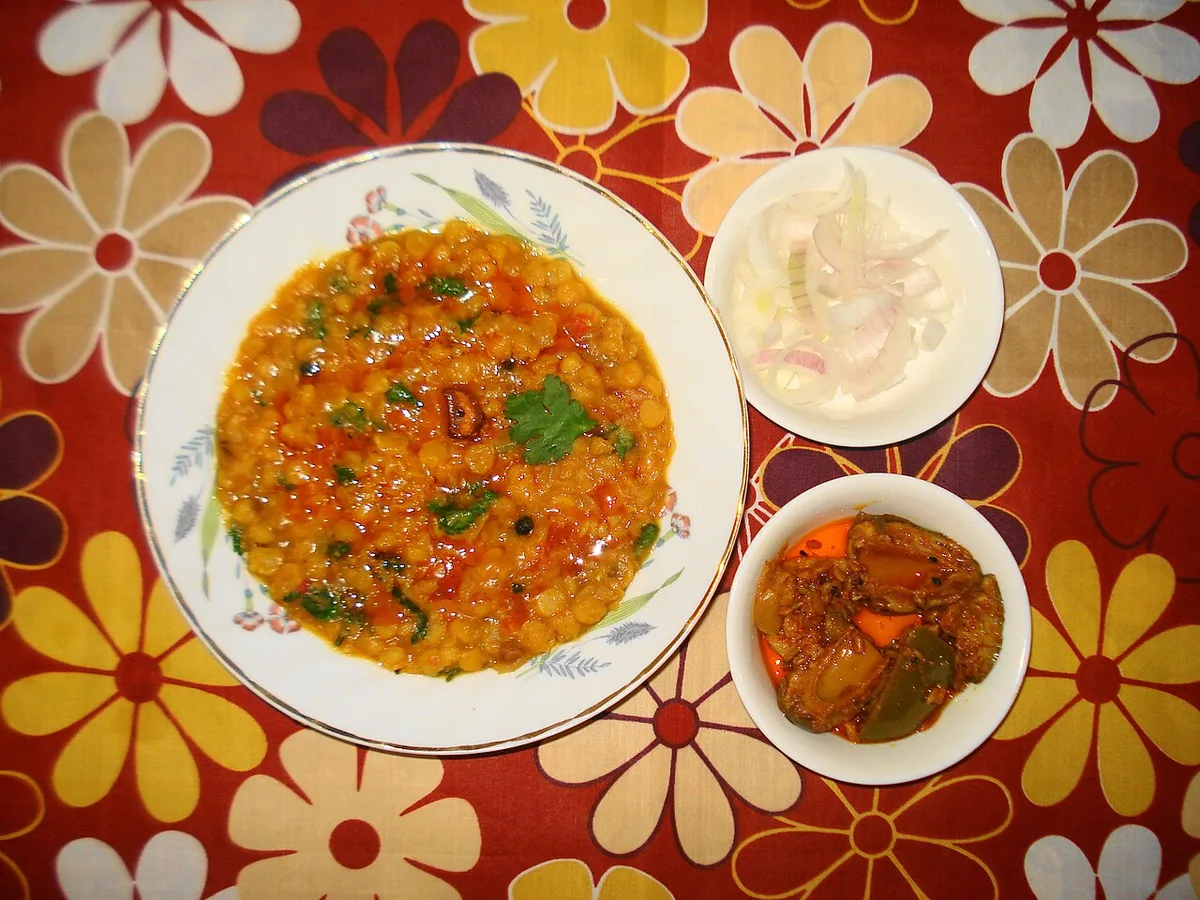
Sindhi chana dal for pakwan is thicker than everyday dal. Each grain should squash under a spoon yet keep its shape in the pot. A completely smooth, mashed dal is not what you want here.
Step 1: Soak and Boil the Dal
Wash the chana dal in three or four changes of water and soak it for two hours. Drain it, then put it in a pot with 3 cups of fresh water, the turmeric and the salt. Bring it to a boil and skim off the white foam that rises.
Lower the heat, cover and simmer for 35 to 40 minutes, until the dal is soft. If you use a pressure cooker, two or three whistles on medium heat should do it. Pinch one grain after cooking. It should squash with almost no effort.
Step 2: Prepare the Tempering
Heat the oil or ghee in a small pan. Add the cumin seeds and let them crackle. Add the slit green chillies, then turn off the heat and quickly stir in the red chilli powder and coriander powder so they do not burn. Pour this tempering, called tarka, over the dal.
Step 3: Finish with Sourness
Stir in the amchur and garam masala, and simmer for five more minutes. Lightly mash a few spoonfuls of dal against the side of the pot to thicken it. The dal should coat the back of a spoon but still pour. Taste it now. A good Sindhi dal for pakwan is mildly spicy, a little sour and well salted, because the pakwan itself has very little flavour.
Tamarind and Green Chutneys for Dal Pakwan
Chutneys turn a simple breakfast into a full plate. Most Sindhi families make at least one, and many make both.
Sweet and Sour Tamarind Chutney
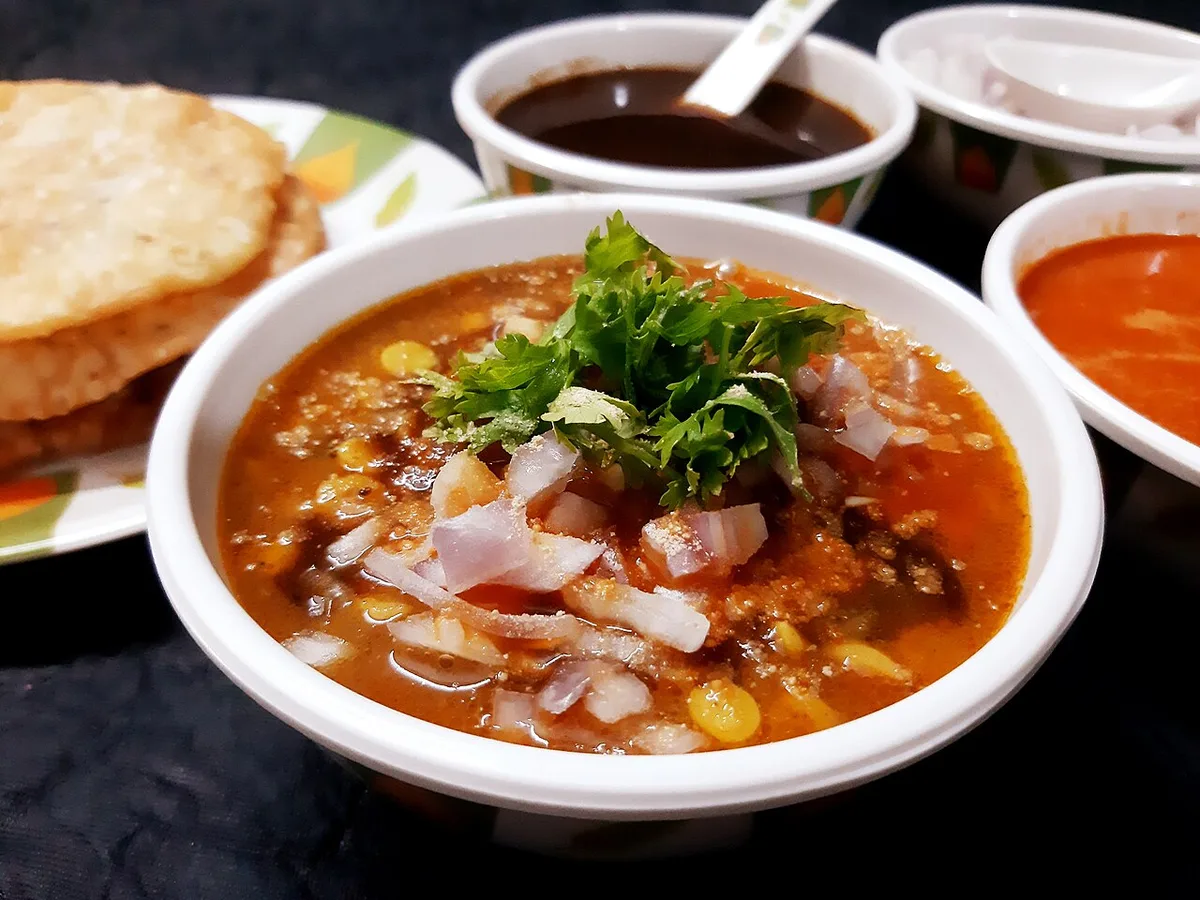
Soak the tamarind in one cup of hot water for 20 minutes. Squeeze it well and strain out the seeds and fibres. Put the pulp in a small pan with the jaggery, roasted cumin, red chilli powder and black salt. Simmer for 8 to 10 minutes until it is as thick as ketchup. It thickens more as it cools.
Fresh Coriander and Mint Chutney
Blend the coriander, mint, green chillies, garlic, lemon juice and salt with two or three tablespoons of water until smooth. Keep it cold until serving so that it stays bright green. You can make both chutneys a day ahead and keep them in the fridge.
How to Serve Dal Pakwan the Sindhi Way
There is no single correct way to eat dal pakwan, but most families follow a similar order. Here is how I would set the plate.
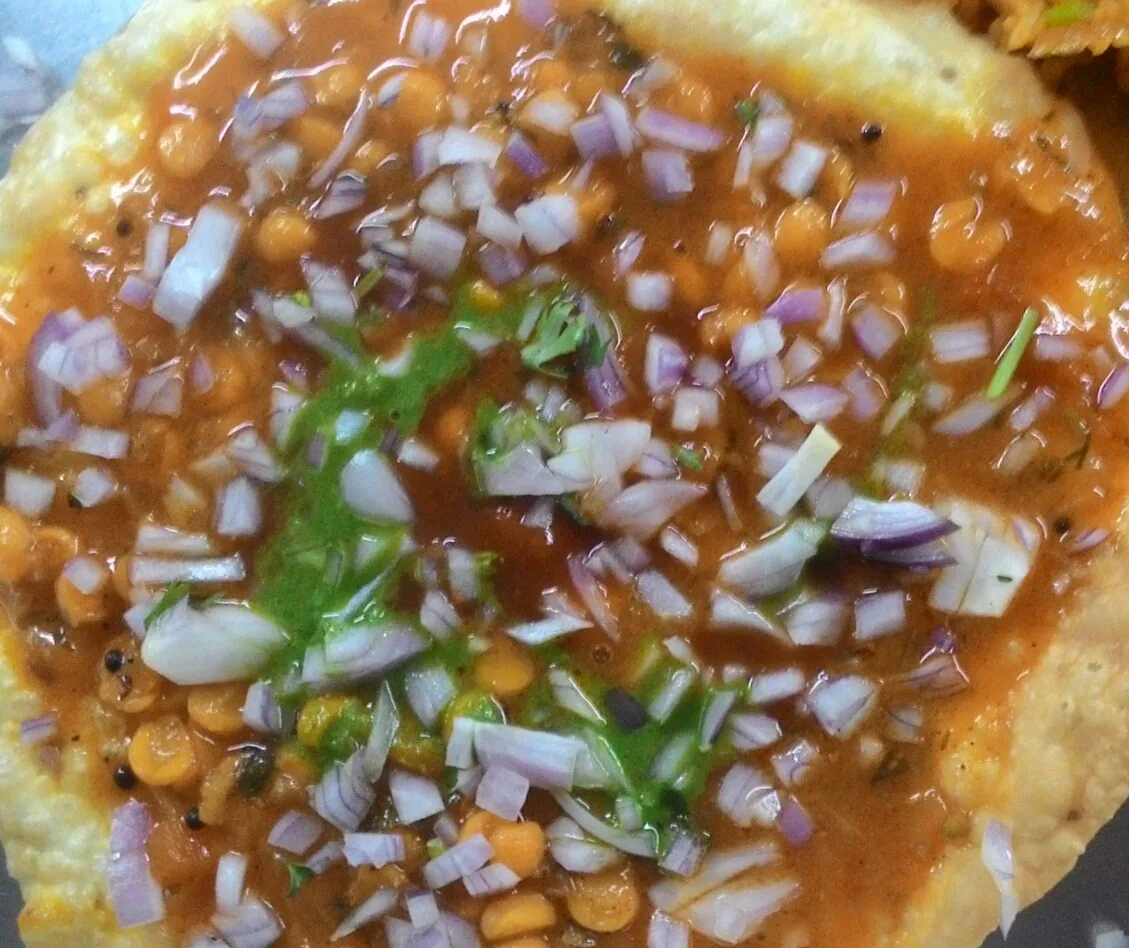
- Place one or two pakwan on a plate, or break them into large pieces.
- Pour hot chana dal over or beside the pakwan.
- Add a spoon of tamarind chutney and a little green chutney.
- Scatter chopped onion and fresh coriander on top.
- Squeeze lemon over it and eat at once, before the pakwan softens.
Some people dip pieces of pakwan into the dal instead of pouring it on, so that every bite stays crisp. Others like it a little soft. Both are fine. Many Sindhi homes serve it with sweet tea, and some add a simple dessert such as meethi lola as Dawn’s writer described.
If you are planning a full Sindhi table for guests, dal pakwan in the morning goes well with Sindhi curry kadhi or Sindhi biryani later in the day.
Common Mistakes and Practical Tips
After a few rounds, most people get dal pakwan right. These are the problems I see most often, with simple fixes.
Why Pakwan Turns Soft or Chewy
- Dough too soft: a soft dough gives a soft bread. Keep it stiff and rest it.
- Not enough moyan: if the ghee is less than about 3 tablespoons for 2 cups of flour, the pakwan loses its flaky layers.
- Rolled too thick: thick pakwan stays chewy in the centre. Aim for about 2 mm.
- Oil too hot: high heat colours the outside before the inside dries. Fry low and slow.
Why the Dal Tastes Flat or Mushy
- Too much water or time: the dal breaks down completely. Check it early.
- Not enough salt or sourness: the bread has almost no taste of its own, so season the dal boldly. Add amchur or a squeeze of lemon.
- Burnt spices: always add the powdered spices off the heat in the tempering.
Storing Pakwan and Dal for Later
Fried pakwan keeps well. Let it cool completely and keep it in an airtight tin. It will stay crisp for four or five days. Many families fry a batch on Saturday night and only cook the dal on Sunday morning. The dal keeps in the fridge for two days; warm it with a splash of water before serving.
Popular Variations of Dal Pakwan
The core of the dish is the same everywhere, but small changes appear from family to family and from city to city.
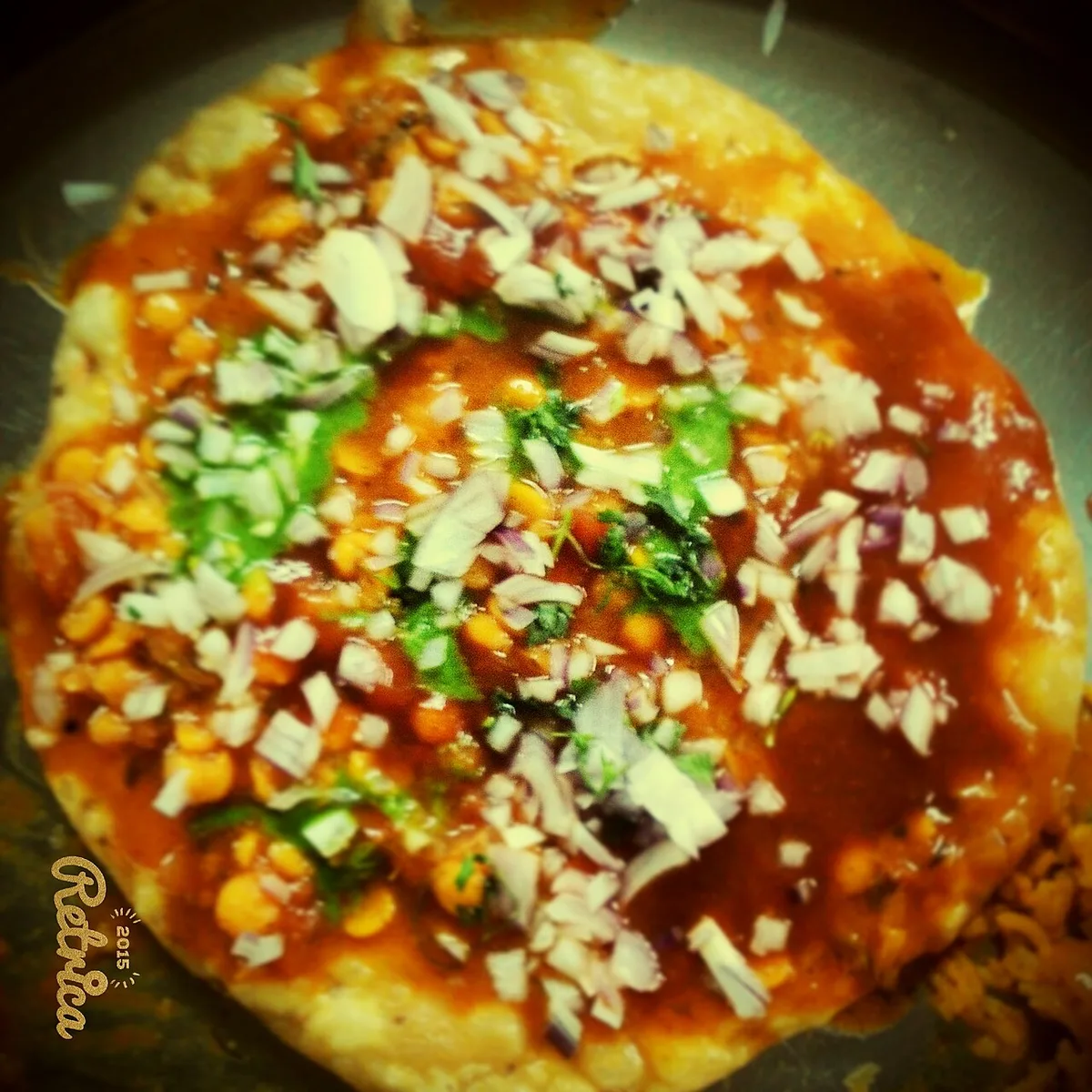
- Khatta meetha dal pakwan: extra tamarind chutney and a little jaggery in the dal for a sweet and sour taste.
- Onion loaded version: a thick layer of raw onion and green chilli, common at street stalls.
- With sweet lola: as Dawn’s article described, some families pair the savoury plate with a sweet, syrupy flatbread.
- Mini pakwan: small rounds with a spoon of dal on each, served at parties and weddings.
- Whole wheat pakwan: part whole wheat flour for a nuttier bread, closer to the older tikkad style.
Whichever one you make, try to keep all three parts in balance. The bread gives crunch, the dal gives comfort, and the chutney gives life.
Frequently Asked Questions About Dal Pakwan
Is dal pakwan from Pakistan or India?
The dish comes from Sindh, which is now a province of Pakistan. After 1947, Sindhi Hindus who moved to India and other countries carried it with them, so today it is popular in both countries and across the Sindhi diaspora.
Which dal is used in dal pakwan?
Traditional dal pakwan uses chana dal, the split and skinned desi chickpea. Some cooks add a little moong dal, but chana dal is the standard choice.
Why is my pakwan puffing up like puri?
Your pakwan puffs when steam is trapped inside. Prick the rolled dough all over with a fork, and keep the dough stiff. Holding it under the oil with a spoon helps too.
Can I make pakwan without maida?
Yes. You can use half whole wheat flour and half plain flour, or add a little semolina. It comes out a bit heavier. Roll it thin and fry it slowly and it will still crunch.
When is Daal Pakwan Day celebrated?
Sindhi groups began marking Daal Pakwan Day on 11 April in 2021, starting from Bhopal, as reported by Sindh Courier. It falls a day after Sindhi Divas and close to Cheti Chand.
Is dal pakwan healthy for daily eating?
Chana dal gives protein and fibre, but pakwan is deep fried and made with refined flour, so the dish is rich. Most families treat it as a weekend breakfast rather than an everyday meal, and that is a sensible way to enjoy it.
Bringing Sindhi Breakfast to Your Table
Dal pakwan asks for a little planning: soak the dal, rest the dough, fry with patience. In return it gives you a breakfast that has fed Sindhi families for generations and travelled with them across borders and oceans. Make the pakwan the night before, cook the dal in the morning, and put both chutneys on the table. Then call everyone in while the bread is still crisp.
If you enjoyed this recipe, try our guides to Sindhi sai bhaji, Sindhi koki and palla machhi next. Together they give a good picture of everyday Sindhi cooking.

Leave a Comment