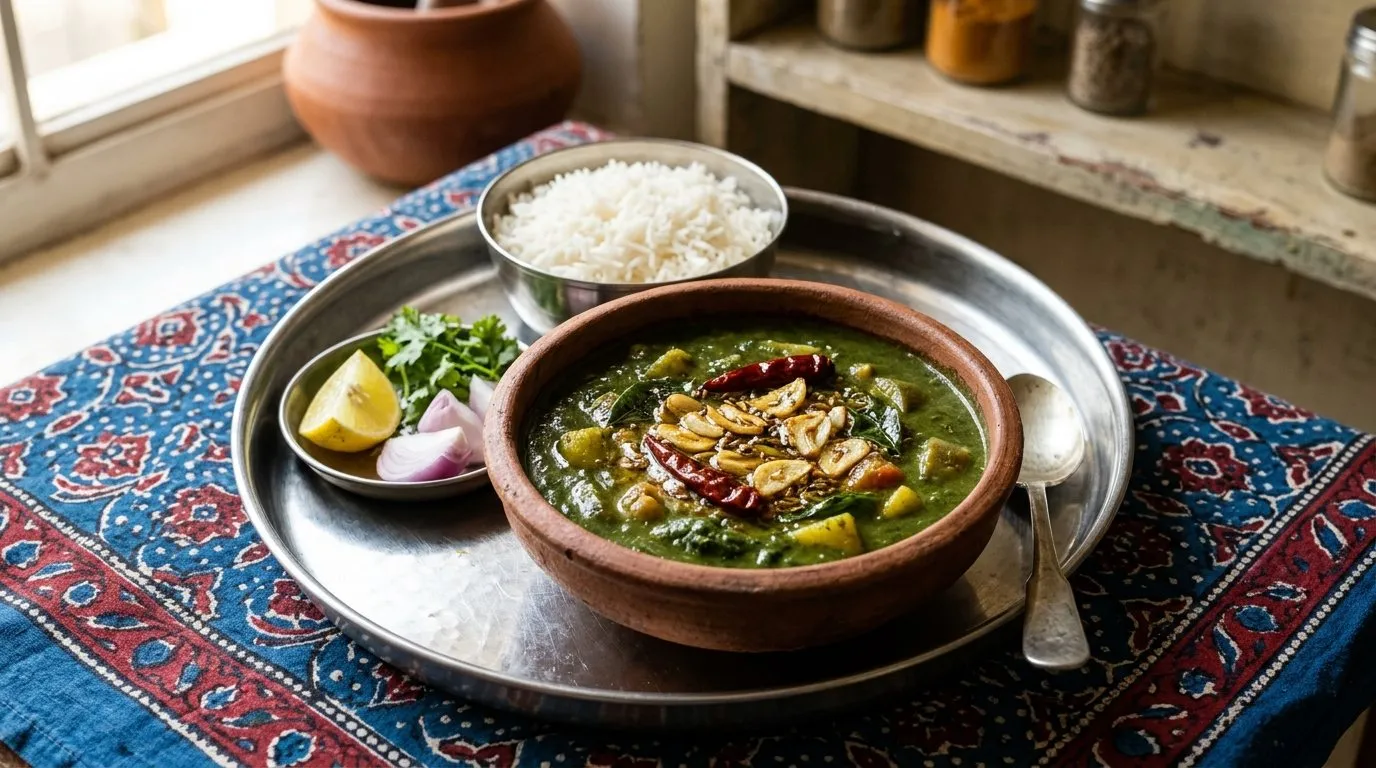
If there is one dish in Sindhi home cooking that tastes like a Sindhi home, it is Sai Bhaji (سائي ڀاڄي). The name simply means “green vegetables”, and that is what it is: spinach and dill cooked down with chana daal and a handful of seasonal vegetables, then mashed and finished with a sizzling garlic tarka. It is simple, cheap, nourishing, and it appears on dining tables from Hyderabad to Mumbai, wherever Sindhi families have settled.
In this article (10)
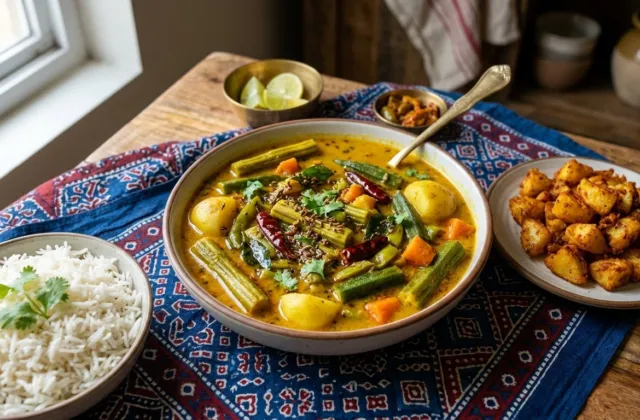
The classic Sindhi lunch: Sai Bhaji, rice and aloo tuk
Sai Bhaji is almost never eaten alone. The traditional plate is Sai Bhaji with plain boiled rice (sometimes called bhaji chawal), crispy aloo tuk (potato slices fried twice and sprinkled with chilli and amchur) and a slice of onion or lemon. Many families cook it every week, often on the same day, and it is one of the first dishes young cooks learn.
Why the vegetables matter
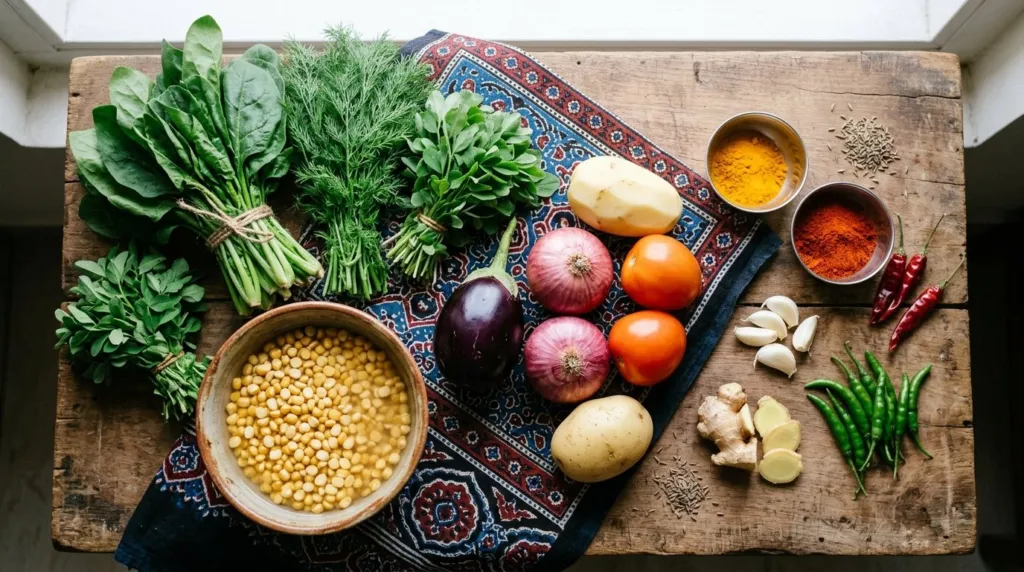
Spinach and chana daal are the base, but every household adds its own mix. Eggplant and potato are the most common; bottle gourd, carrot, okra or a few pieces of pumpkin are also used. Dill (soya) is important: its fresh, slightly sweet aroma is what makes the dish taste Sindhi rather than like a regular saag. In winter, when greens are cheap and tender, many cooks also add fenugreek leaves.
The daal does two jobs. It adds protein, which makes Sai Bhaji a complete vegetarian meal with rice, and it gives the curry its thick, creamy body after mashing.
Tips for the best Sai Bhaji
- Do not over-blend. The traditional way is to mash with a wooden ghotni. A few seconds with a hand blender is fine, but a smooth puree loses the homestyle texture.
- Use very little water. Spinach releases a lot of water while cooking. Start with half a cup; you can always add more.
- Make the tarka at the end. Golden garlic and red chillies poured over just before serving give Sai Bhaji its signature smell. Do not let the garlic turn dark.
- Soak the daal. One hour of soaking makes sure the chana daal becomes completely soft with the vegetables.
Variations
Sai Bhaji with meat: some families in Sindh cook it with mutton or chicken, especially in winter. Brown 300 g of meat with the onions and cook until half done before adding the greens. No pressure cooker? Simmer it in a covered pot and add a little hot water if it starts to stick. Lunch box: leftover Sai Bhaji keeps well for two days in the fridge and tastes great with a paratha.
Storing Sai Bhaji
It keeps for two to three days in the fridge and also freezes well, so it is worth making a large pot. Add the garlic tarka fresh when you reheat it; a new tarka brings the flavour straight back.
Frequently asked questions
Can I use frozen spinach?
Yes. Use about 400 g frozen spinach and skip the added water. Fresh dill still makes a big difference.
Is Sai Bhaji healthy?
It is one of the lighter Sindhi dishes: mostly vegetables and lentils, with modest oil. The ghee tarka can be made with less oil if you prefer.
What is aloo tuk?
A Sindhi side dish of potato rounds that are fried, pressed flat, fried again until crisp, then sprinkled with salt, red chilli and dry mango powder. It is the classic companion to Sai Bhaji and Sindhi Curry.
More Sindhi recipes
Sai Bhaji is part of a whole family of everyday dishes in Sindhi cuisine. You may also like:
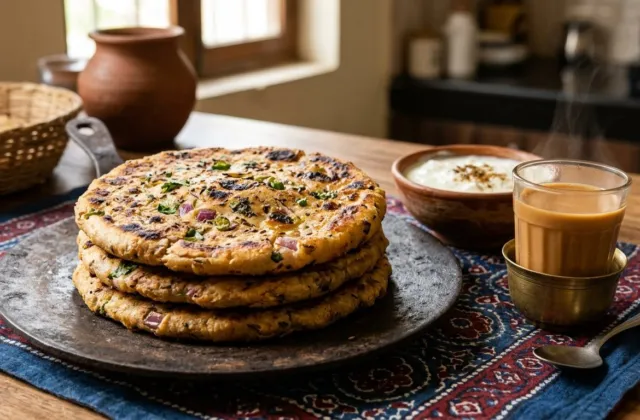
- Sindhi Koki: crisp onion flatbread that also goes well with Sai Bhaji
- Sindhi Curry: tangy besan and vegetable curry
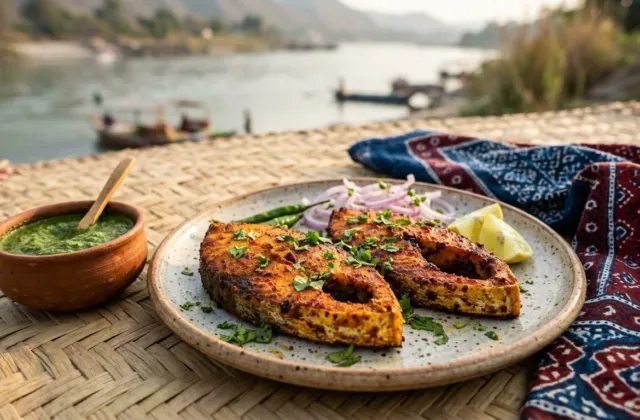
- Palla Machhi: fried Palla fish from the Indus